
How Incoterms Affect Landed Cost: Guide for Importers and E-commerce
Learn how Incoterms affect landed cost, import duties, taxes, freight and customs costs. Compare EXW, FOB, CIF, DAP and DDP for better sourcing decisions.
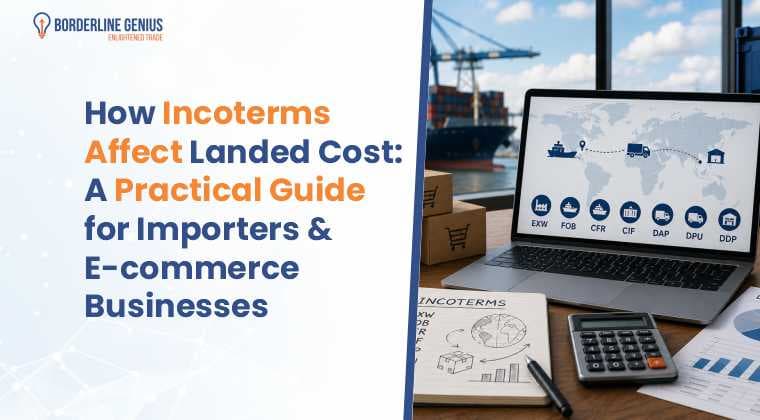
Two suppliers can offer the same product at very different prices and still end up costing your business roughly the same amount. The reason is often hidden in the Incoterm.
A supplier offering a product for $20 under EXW is not necessarily cheaper than a supplier offering the same product for $23 under DDP. Under EXW, the buyer takes on substantially more responsibility for arranging transportation and handling the shipment. Under DDP, the seller takes on much more of the delivery and import responsibility.
The supplier price may be different, but so is the collection of costs sitting behind that price.
This is why Incoterms and landed cost are closely connected.
Incoterms® rules establish standardized responsibilities between buyers and sellers for delivery, transportation, costs, and risk. The International Chamber of Commerce's current rules are Incoterms® 2020.
For importers, manufacturers, ecommerce businesses, and procurement teams, understanding the relationship between Incoterms and landed cost is essential.
The wrong comparison can make an expensive supplier look cheap.
The right comparison is based on the total cost of getting the goods where your business needs them.
What Are Incoterms?
Incoterms® are standardized international trade rules that define certain responsibilities, costs, and risks between buyers and sellers in a sales contract.
They help answer practical questions such as:
-
Who arranges transportation?
-
Who pays for transportation?
-
Who handles export clearance?
-
Who handles import clearance?
-
Who pays applicable duties and taxes?
-
At what point does risk transfer from seller to buyer?
-
Where is the seller considered to have delivered the goods?
The ICC publishes 11 Incoterms® 2020 rules, covering different combinations of transportation responsibilities and delivery arrangements.
Common Incoterms used in international purchasing include:
-
EXW — Ex Works
-
FCA — Free Carrier
-
FOB — Free on Board
-
CIF — Cost, Insurance and Freight
-
CFR — Cost and Freight
-
DAP — Delivered at Place
-
DDP — Delivered Duty Paid
These rules are not simply shipping options.
They affect who is responsible for costs that can ultimately contribute to landed cost.
That is why Incoterms should be treated as an important input when estimating the total cost of an imported product.
What Is the Relationship Between Incoterms and Landed Cost?
Landed cost is intended to show what a product costs your business after the relevant costs of acquiring and moving it to a defined destination have been considered.
A simplified landed cost formula is:
Landed Cost = Product Cost + Freight + Insurance + Duties + Taxes + Brokerage + Handling + Other Applicable Costs
But who pays those costs can depend on the commercial terms agreed with the supplier.
That is where Incoterms enter the calculation.
For example, under EXW, the buyer generally takes responsibility for arranging the movement of goods from the seller's premises.
Under DDP, the seller takes on much more responsibility and delivers the goods to the agreed destination with import clearance completed and applicable duties and taxes handled by the seller, subject to the precise contract and destination requirements.
The costs have not disappeared.
The contractual responsibility for those costs has changed.
For landed cost calculation, that distinction is critical.
If a freight charge is already included in a supplier's quoted DDP price, adding the same freight cost again would overstate the buyer's landed cost.
Conversely, if a buyer receives an EXW quote and only uses the supplier invoice price in its cost analysis, the business may significantly underestimate what the product will actually cost.
Why Incoterms Matter When Comparing Suppliers
Consider two suppliers offering the same product.
|
|
Supplier A |
Supplier B |
|
Product price |
$20 |
$23 |
|
Incoterm |
EXW |
DDP |
|
Buyer-arranged freight |
Yes |
No |
|
Buyer import clearance |
Yes |
No |
|
Buyer duties/taxes |
Potentially applicable |
Seller responsibility under DDP |
|
Quoted price |
Lower |
Higher |
If you compare only the product price, Supplier A wins.
But the comparison is incomplete.
Supplier A's $20 price leaves the buyer responsible for costs that Supplier B's $23 DDP price may already incorporate.
Suppose Supplier A requires another $6.50 per unit for freight, duties, brokerage, and other applicable costs.
The comparison becomes:
Supplier A: $20 + $6.50 = $26.50
Supplier B: $23 DDP = $23
The supplier with the higher product price is actually cheaper on the relevant delivered-cost basis.
This is the central relationship between Incoterms and landed cost:
An Incoterm can change which costs the buyer must account for when determining the effective cost of acquiring imported goods.
How Different Incoterms Affect Landed Cost
Not all Incoterms create the same cost profile.
The following examples focus on some of the rules most relevant to importers and international purchasing.
EXW and Landed Cost
Under EXW (Ex Works), the seller generally makes the goods available at its premises or another named place. The buyer takes on significant responsibility for arranging the movement of the goods.
That can leave the buyer responsible for costs such as:
-
Pickup from the supplier
-
Export-related arrangements
-
Main transportation
-
Insurance, if required
-
Import clearance
-
Duties and taxes
-
Destination transportation
-
Other applicable charges
This means the supplier's EXW price can represent only a relatively small part of the buyer's eventual landed cost.
Example
Suppose:
Product price: $20,000
Freight: $3,000
Insurance: $500
Duties: $1,500
Brokerage and handling: $700
The buyer's effective cost before considering any other applicable charges is:
$25,700
The supplier's invoice still says $20,000.
That is precisely why an EXW quotation should not be compared directly with a DDP quotation based only on the supplier price.
FOB and Landed Cost
Under FOB (Free on Board), the seller delivers the goods on board the vessel at the named port of shipment. Under the Incoterms® 2020 rule, the seller handles the required export formalities, while the buyer takes responsibility for the main carriage and subsequent costs.
For an importer, an FOB quotation therefore typically means the buyer needs to account for additional costs after the agreed delivery point.
These can include:
-
Ocean freight
-
Insurance
-
Import clearance
-
Duties
-
Taxes
-
Destination handling
-
Inland transportation
FOB can therefore provide a useful basis for comparing suppliers when buyers have control over their freight arrangements.
But again, the quoted product price is not the landed cost.
FOB example
A supplier quotes:
$20,000 FOB
The buyer then incurs:
Freight: $3,000
Insurance: $500
Duty: $1,500
Brokerage and destination charges: $700
Estimated landed cost:
$25,700
The $20,000 quotation is therefore only one component of the buyer's total acquisition cost.
CIF and Landed Cost
Under CIF (Cost, Insurance and Freight), the seller arranges and pays for the cost of carriage and insurance to the named port of destination. However, CIF does not mean the seller has taken responsibility for all costs associated with getting the goods through import and to the buyer's final destination.
Import clearance, duties, taxes, and subsequent transportation can still create costs for the buyer depending on the transaction and destination.
This is a common source of misunderstanding.
A buyer may see:
CIF price = $24,000
and assume that most import costs have already been accounted for.
But the final landed cost may still include:
-
Import duty
-
Import taxes
-
Customs brokerage
-
Port or terminal charges
-
Inland transportation
-
Other destination costs
So CIF can reduce the number of costs the buyer needs to arrange compared with EXW or FOB, but it does not automatically equal landed cost.
DAP and Landed Cost
DAP (Delivered at Place) means the seller delivers the goods to the named destination, ready for unloading. Under DAP, the buyer generally handles import clearance and pays applicable import duties and taxes.
This creates an important distinction.
The seller may arrange transportation to the destination, but the buyer can still have significant import-related costs.
A DAP quotation might therefore include:
-
Product
-
Export-side transportation
-
Main international freight
-
Delivery to the named destination
But the buyer may still need to account for:
-
Import clearance
-
Customs duties
-
Import taxes
-
Destination-related charges
-
Unloading, depending on the precise arrangement
Therefore:
DAP price ≠ final landed cost
The buyer needs to add the applicable costs that remain its responsibility.
DDP and Landed Cost
DDP (Delivered Duty Paid) places the greatest delivery responsibility on the seller among the Incoterms® 2020 rules. The seller is responsible for delivering the goods to the named destination and handling import clearance and applicable duties and taxes, subject to the requirements and limitations of the destination country.
This can make DDP appear very close to a landed-cost figure.
But there is an important distinction.
DDP is a contractual delivery term. Landed cost is a business costing calculation.
A DDP quotation may incorporate many costs that the buyer would otherwise have to calculate separately.
However, businesses still need to understand exactly what the quoted price includes, what destination is specified, whether particular charges are included, and how taxes are treated for their own accounting purposes.
For example:
Supplier quote: $27,000 DDP
The buyer should not automatically add another $3,000 for freight and $2,000 for duties if those amounts are already incorporated into the DDP price.
That would double-count costs.
Instead, the buyer needs to determine:
What does the DDP price actually cover?
That is essential for a meaningful landed cost calculation.
DDP vs DAP Landed Cost: What's the Difference?
The DDP vs DAP landed cost comparison is particularly useful because the two terms can look similar at first glance.
Both involve delivery to a named destination.
The major difference is what happens with import clearance, duties, and taxes.
|
Cost / Responsibility |
DAP |
DDP |
|
Product |
Seller |
Seller |
|
Main transportation |
Seller |
Seller |
|
Delivery to named destination |
Seller |
Seller |
|
Import clearance |
Buyer |
Seller |
|
Import duties |
Buyer |
Seller |
|
Import taxes |
Buyer |
Seller |
|
Risk transfer |
Before unloading at destination |
Before unloading at destination |
|
Buyer landed-cost calculation |
Add buyer-responsible import costs |
Many costs may already be incorporated in quoted price |
The important takeaway is not that DDP is always cheaper than DAP.
It isn't.
The right question is:
Which option produces the better total economics for the specific shipment and business?
Suppose:
DAP quotation: $23,000
Estimated duties and taxes: $2,000
Brokerage and other import costs: $500
Estimated buyer cost:
$25,500
Now suppose another supplier offers:
DDP quotation: $24,500
The DDP supplier has a higher quoted price but potentially a lower effective acquisition cost.
But if the DDP quotation is:
$27,000
the DAP option may be economically better.
This is why DDP vs DAP should be evaluated through landed cost rather than headline supplier price.
Incoterms and Import Duties and Taxes
One of the most important questions businesses ask is:
"Which Incoterm includes duties and taxes?"
Under DDP, the seller generally takes responsibility for import clearance and applicable duties and taxes.
Under DAP, the buyer generally handles import clearance and pays applicable duties and taxes.
But businesses should be careful about reducing this to a simple "included" or "not included" checklist.
The Incoterm determines contractual responsibility between buyer and seller. Customs authorities still apply their own laws and procedures.
In other words:
An Incoterm does not override customs regulations.
If a seller agrees to DDP, that does not mean the destination country's customs requirements disappear.
The seller still has to be able to legally perform the required import obligations.
This is particularly important in markets where foreign sellers may face restrictions or additional requirements for acting as the importer of record.
For businesses evaluating DDP, the commercial question should therefore include:
-
Can the seller legally handle importation?
-
Who will act as importer of record?
-
Are duties and taxes genuinely included?
-
Are customs brokerage charges included?
-
What destination is covered?
-
Are there exclusions?
-
How are recoverable taxes treated?
The quoted Incoterm is only one part of the analysis.
How Incoterms Affect Your Landed Cost Calculation
A useful landed cost process should not treat Incoterms as a piece of descriptive information stored beside the purchase order.
The Incoterm should influence the calculation itself.
Consider a basic example.
Scenario A: EXW
Product:
$20,000
Buyer adds:
-
Pickup
-
Freight
-
Insurance
-
Duties
-
Taxes
-
Brokerage
-
Destination costs
The buyer must calculate most of these costs.
Scenario B: FOB
Product:
$20,000
Buyer adds:
-
Main freight
-
Insurance
-
Duties
-
Taxes
-
Destination costs
The seller has already taken responsibility for certain origin-side obligations.
Scenario C: DAP
Product and delivery:
$23,000
Buyer adds:
-
Import clearance
-
Duties
-
Taxes
-
Other buyer-responsible destination costs
Scenario D: DDP
Supplier quote:
$26,000
Many transportation and import costs may already be incorporated into the seller's price.
The calculation therefore changes depending on the Incoterm.
This is why landed cost Incoterms should be considered together rather than as two separate data points.
Why Incoterms Matter for E-commerce Businesses
Incoterms can be particularly important for ecommerce companies importing products for online sale.
An ecommerce business may evaluate a product based on:
Selling price − supplier price = gross margin
That calculation is incomplete.
A more useful model considers:
Selling price − landed cost = product-level gross margin before other operating costs
For example:
Selling price: $50
Supplier price: $25
At first glance:
$50 − $25 = $25
But if the actual landed cost is $34:
$50 − $34 = $16
The difference becomes even more important when a business is selling through marketplaces, where commissions, fulfillment, advertising, payment processing, returns, and other expenses also affect profitability.
If the ecommerce business is choosing between suppliers with different Incoterms, the comparison becomes even more important.
A $24 EXW product and a $29 DDP product may not be meaningfully different once all applicable costs are considered.
Why Incoterms Matter for Manufacturers
Manufacturers often import raw materials, components, machinery, and intermediate goods.
The supplier price of a component can affect the apparent cost of production.
But if transportation, duties, taxes, and other import costs are not considered, the business may underestimate its true input cost.
This can affect:
-
Product costing
-
Manufacturing margins
-
Supplier selection
-
Production planning
-
Pricing
-
Sourcing strategy
A manufacturer comparing suppliers should therefore consider the total acquisition cost rather than treating the Incoterm as a secondary purchasing detail.
Why Incoterms Matter for Procurement Teams
Procurement teams frequently negotiate supplier prices.
That makes Incoterms particularly important.
A supplier may offer a lower unit price but shift transportation or import responsibilities to the buyer.
Another supplier may offer a higher unit price but absorb more of those costs.
This creates an important procurement principle:
Negotiate the total cost, not just the unit price.
When procurement teams understand landed cost, they can ask better questions:
-
What costs are included in this quotation?
-
What costs will we incur after the named delivery point?
-
How will duties and taxes affect the total?
-
What is our estimated landed cost under each supplier?
-
Would changing the Incoterm improve the economics?
-
Is the supplier's DDP quotation actually competitive with our DAP or FOB alternatives?
The result is a more meaningful supplier negotiation.
Common Mistakes When Using Incoterms in Landed Cost Calculations
1. Comparing supplier prices without comparing Incoterms
This is the most common mistake.
A $20 EXW quote and a $23 DDP quote are not directly comparable.
2. Assuming DDP means "everything is free"
DDP does not eliminate costs.
The costs are generally being borne by the seller and incorporated into the commercial arrangement.
The buyer should still understand the total price and what it includes.
3. Adding costs twice
This is particularly common with DDP and CIF quotations.
If freight, insurance, or duties are already included in the quoted price, adding them again will inflate the calculated landed cost.
4. Assuming DAP includes duties and taxes
DAP and DDP are not interchangeable.
Under DAP, import clearance and applicable duties and taxes generally remain the buyer's responsibility.
5. Treating the Incoterm as the complete landed cost calculation
An Incoterm tells you how certain responsibilities and costs are allocated between buyer and seller.
It does not automatically tell you the final landed cost.
The actual amount still depends on the shipment.
6. Ignoring the named place
An Incoterm is normally used together with a named place or port.
"DDP" alone is incomplete from a practical costing perspective.
DDP - New York Warehouse
and
DDP - Los Angeles Warehouse
can result in different transportation economics.
The same applies to DAP, FOB, CIF, and other rules.
How to Choose the Right Incoterm for Landed Cost
There is no universally "best" Incoterm.
The right choice depends on the buyer's capabilities, supplier relationship, transportation strategy, market, regulatory requirements, and commercial objectives.
A business with strong logistics capabilities may prefer an arrangement that gives it greater control over transportation.
Another business may prefer a delivered arrangement because it wants greater cost predictability and fewer operational responsibilities.
The key is to understand the trade-off.
If you want more control
Terms such as FOB or FCA can allow buyers with established logistics operations to manage more of the transportation process.
If you want greater delivery simplicity
DAP can shift much of the transportation responsibility to the seller while leaving import clearance and duties with the buyer.
If you want a more all-inclusive supplier arrangement
DDP places substantially more delivery responsibility on the seller, although businesses should confirm that the seller can legally and practically perform the required import obligations.
The decision should ultimately be based on total economics and operational fit, not the Incoterm label itself.
How Landed Cost Genius Uses Incoterms
This is where Incoterms become particularly valuable in a landed cost workflow.
Landed Cost Genius treats the Incoterm as a key input into understanding which costs need to be considered when calculating the cost of imported goods.
The objective is not simply to record that a shipment is EXW, FOB, DAP, or DDP. The objective is to understand what that means for the buyer's expected cost.
For example, an EXW shipment may require the buyer to account for a broader range of transportation and import costs.
A DAP shipment may already include transportation to the named destination while leaving duties and taxes with the buyer.
A DDP shipment may incorporate many of those costs into the supplier's quoted price.
Without considering the Incoterm, a landed cost calculation can easily become incomplete or result in double-counting.
Compare suppliers on actual cost
Landed Cost Genius can help businesses move beyond comparing:
Supplier A: $20
versus
Supplier B: $23
and instead evaluate the broader question:
Supplier A: What is the expected landed cost?
Supplier B: What is the expected landed cost?
That makes supplier comparisons more meaningful.
Evaluate sourcing scenarios
The same product can produce different landed-cost outcomes depending on:
-
Supplier
-
Country of origin
-
Destination
-
Incoterm
-
Freight
-
Duties
-
Taxes
-
Other applicable costs
Bringing these variables into the analysis can help businesses understand the financial impact before making a sourcing decision.
Reduce manual cost assumptions
The more suppliers and markets a business manages, the harder it becomes to maintain consistent landed-cost calculations in disconnected spreadsheets.
A structured landed-cost workflow can help teams maintain greater consistency across those calculations.
The value is not simply automation.
It is having the right trade variables connected to the cost calculation.
A Practical Incoterms Landed Cost Checklist
Before comparing an international supplier quotation, ask:
Product
-
What is the supplier's unit price?
-
What quantity is being purchased?
-
What currency is being used?
Incoterm
-
What Incoterm applies?
-
What named place or port is specified?
-
Which costs are already included?
Transportation
-
Who arranges freight?
-
Who pays for freight?
-
Who is responsible for insurance?
-
What destination costs remain?
Customs
-
What is the product's HS classification?
-
What is the country of origin?
-
What duty or tariff applies?
-
What customs valuation basis is relevant?
Taxes
-
What import taxes apply?
-
What is the applicable tax base?
-
Are any taxes recoverable?
Additional costs
-
Who handles customs clearance?
-
Who pays brokerage?
-
Are port or terminal charges included?
-
What inland transportation remains?
Final calculation
-
What is the estimated landed cost?
-
What is the landed cost per unit?
-
How does it compare with alternative suppliers or Incoterms?
If you cannot answer these questions, you probably do not yet have a reliable basis for comparing the supplier's price.
The Bottom Line
Incoterms can materially change your landed cost. The supplier's unit price tells you how much the supplier charges. The Incoterm tells you much more about what happens around that price, including who is responsible for transportation, delivery, customs clearance, duties, taxes, and other obligations.
That is why comparing:
$20 EXW
with
$23 DDP
without calculating the costs behind each quotation can lead to the wrong sourcing decision.
The same principle applies to FOB, CIF, DAP, and other Incoterms.
For importers, ecommerce businesses, manufacturers, and procurement teams, the objective should be to compare suppliers using a consistent view of total landed cost, rather than relying on the headline product price.
Landed Cost Genius uses Incoterms as a key input into landed-cost analysis, helping businesses account for the cost responsibilities associated with different purchasing arrangements and make more informed sourcing decisions.
When the Incoterm changes, the cost calculation can change. Make sure your landed cost calculation changes with it.
Frequently asked questions
Navigate Global Trade With Greater Confidence
Access expert guidance to help your organization address complex trade, classification, tariff, and compliance challenges.
Talk to a Trade ExpertRelated articles
Keep reading with more guidance on trade compliance and classification.
 Classification GeniusHS ClassificationAI14 min read
How to Classify a Product: A Step-by-Step Guide to Find the Right HS Code
Learn how to classify a product and find the right HS code. Understand product information, GRI rules, HS classification, country-specific codes, and common mistakes.
Read article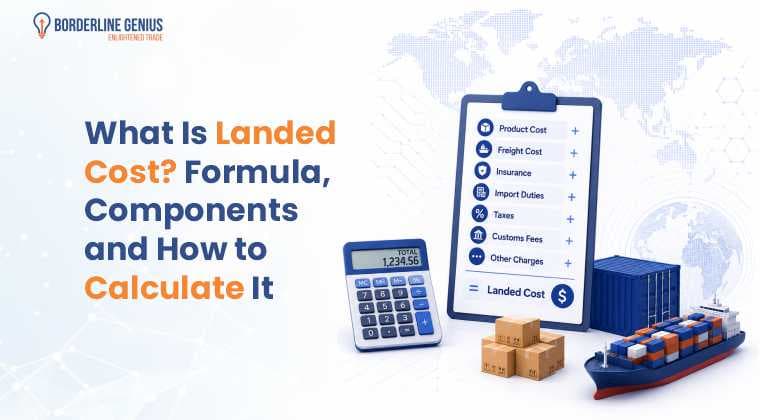 19 min read
What is Landed Cost? Formula, Components, and How to Calculate it
What is landed cost? Learn the landed cost formula, key components, calculation methods, examples, and how Landed Cost Genius helps simplify import cost analysis.
Read article 8 min read
What is Trade Compliance Software & Why Do Modern Businesses Need it in 2026?
Learn what trade compliance software is, how it works, its key features, benefits, and why businesses need AI-powered trade compliance solutions in 2026.
Read article