
USTR Announced New Section 301 Tariffs on Imports from 60 Countries and Economies
Learn about the USTR Section 301 tariff update affecting 60 countries, new 10% and 12.5% tariff rates, implementation dates, and importer implications.
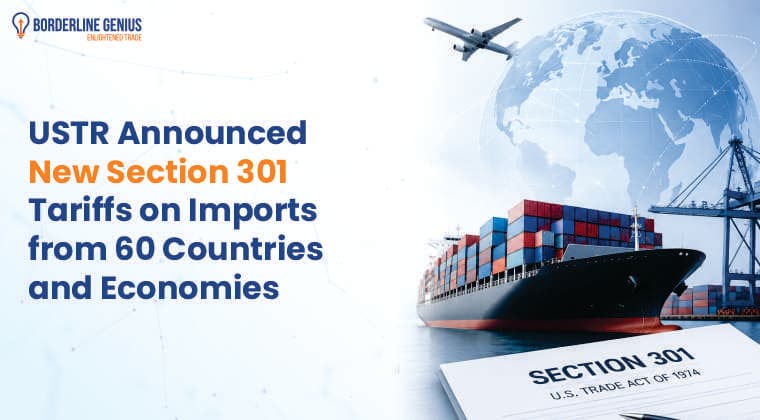
The Office of the United States Trade Representative (USTR) has published the results of its Section 301 investigations concerning the importation of products manufactured using forced labor. The action establishes new tariff rates for imports from 60 countries and economies on the basis of the findings of the investigations. The announcement outlines the criteria used to determine the applicable tariff rate for each economy. It provides details on the implementation of the new duties.
Why Did the USTR Introduce these New Tariffs?
Specifically, the USTR introduced the tariff action after completing Section 301 investigations involving sixty countries and economies. The investigations looked into whether each trading partner had measures in place to prohibit the imports of goods produced with forced labor.
In addition, these investigations considered existing commitments and partial systems related to such import restrictions. The findings formed the basis for the import tariff rates announced by the USTR.
What Tariff Rates Did the USTR Announce?
The USTR announced 2 tariff rates under the Section 301 action. A 10% tariff applies to economies that have a comprehensive prohibition on products made with forced labor, maintain a partial system covering certain goods, or have agreed through a trade agreement to implement such a restriction.
The 12.5% additional tariff is generally applicable to the remaining economies covered by the action.
However, for products from the European Union, Japan, South Korea, Switzerland, and Taiwan, the Section 301 duty is adjusted. Thus, the combined Column 1 (MFN or Most Favored Nation) duty rate and the additional Section 301 duty equals either 10% or 12.5%, as applicable, rather than imposing a blanket additional duty.
The USTR action is also inclusive of certain exclusions from the Section 301 tariffs. Importers should review the Federal Register notice to determine whether their imports qualify for an exclusion under the final determination.
Which Countries are Included under Each Tariff Rate?
Under the USTR’s final determination, the affected economies and countries are assigned one of two tariff rates. The 10 percent tariff applies to imports from Cambodia, Argentina, Ecuador, Canada, Bangladesh, El Salvador, Mexico, Honduras, Pakistan, Guatemala, Indonesia, India, the United Kingdom, Jordan, Trinidad and Tobago, Sri Lanka, and Malaysia.
The 12.5 percent tariff applies to the remaining economies covered in the action, namely Brazil, Australia, China, Japan, Switzerland, the European Union, Russia, South Korea, Saudi Arabia, and others identified in the USTR notice.
When Do the New Tariffs Take Effect?
From July 2026, the additional tariff rates are effective, since the publication of the Federal Register notice. The document contains the implementation procedures. Also, it identifies the countries and economies assigned to each tariff category.
How has Borderline Genius Responded to the Update?
Borderline Genius Inc. (BLG) identified the tariff update on the day the Federal Register notice was published and deployed the changes across its platform. The update comprises tariff increases ranging from 10% to 12.5%, affecting 60 trading partners and covering approximately 99% of U.S. imports. The new tariff rates are now reflected across the platform for users.
As a global trade compliance software company, Borderline Genius Inc. helps businesses manage classification, tariffs, customs, and regulatory requirements. Following the latest announcement, the organization's clients have access to the updated tariff data without requiring any manual changes.
Endnote
For importers, the published information will help identify the applicable tariff rate and implementation date for affected imports. It will enable them to align their processes with the new tariff requirements. This will contribute to greater clarity for trade compliance and day-to-day import operations.
Navigate Global Trade With Greater Confidence
Access expert guidance to help your organization address complex trade, classification, tariff, and compliance challenges.
Talk to a Trade ExpertRelated articles
Keep reading with more guidance on trade compliance and classification.
 11 min read
Harmonized System and HS Codes: An In-Depth Guide for Trade Professionals
Learn how the Harmonized System works, understand HS codes, product classification, tariff determination, customs procedures, and international trade compliance.
Read article 8 min read
What is Trade Compliance Software & Why Do Modern Businesses Need it in 2026?
Learn what trade compliance software is, how it works, its key features, benefits, and why businesses need AI-powered trade compliance solutions in 2026.
Read article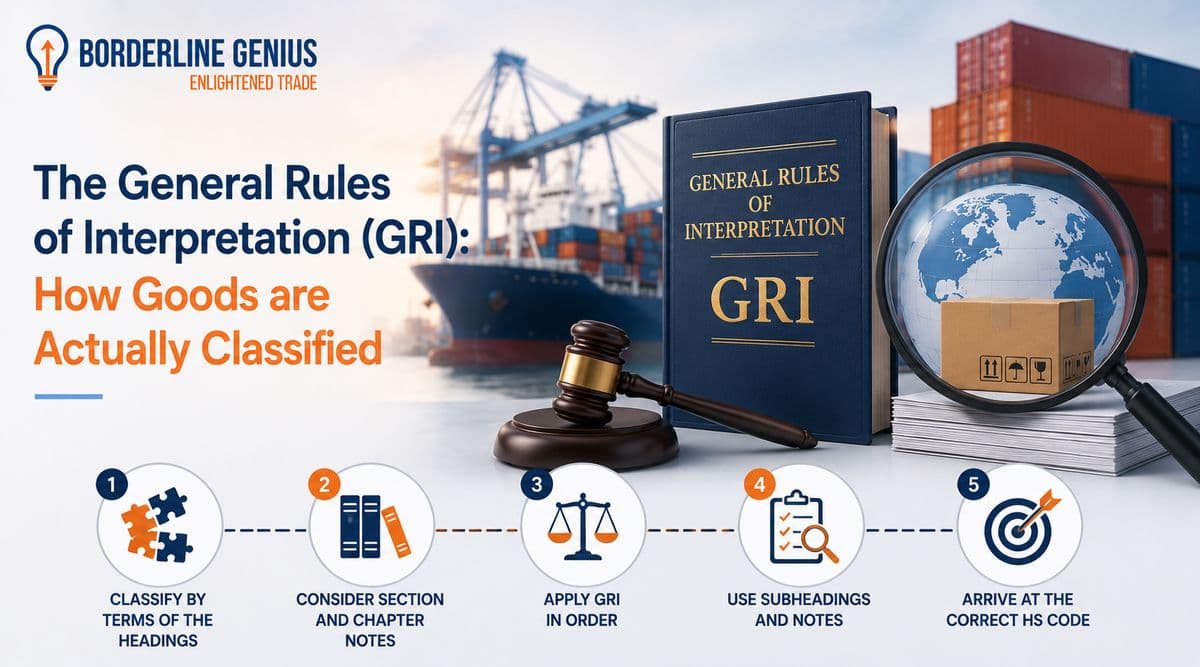 17 min read
The General Rules of Interpretation (GRIs): How Goods are Actually Classified
The six General Rules of Interpretation govern every HS classification decision. Get a full walk-through of GRI 1 to 6, with worked examples and the errors that cost importers money.
Read article