
Tariff Classification Software: Features for Faster, More Accurate Classification
Explore essential tariff classification software features that can help with higher accuracy and faster classification across products and markets.
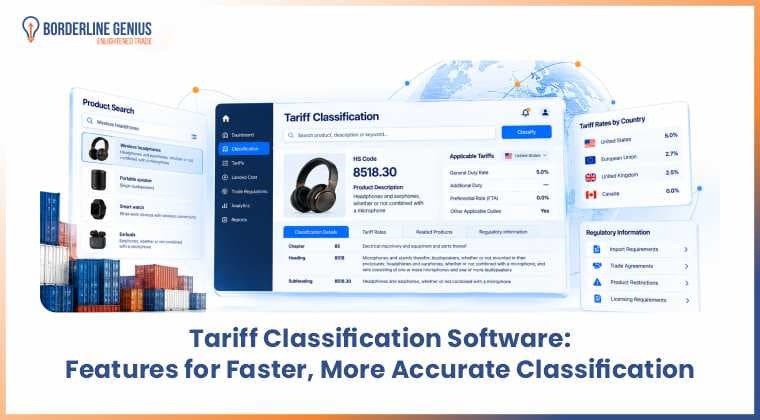
For businesses, Tariff classification software is a system that provides a fast and structured way to classify products for international trade. By using technology to process product information, classification rules, and relevant trade data, the system can support quicker classification while helping to maintain consistent results. This approach can be particularly useful when businesses manage large product catalogs or classify goods across multiple markets. Specific features further improve the process by reducing repetitive work and supporting more consistent classification decisions. Some capabilities focus on better speed, while others contribute to higher accuracy. By understanding these features, one can evaluate how the software fits into the classification workflows.
What is Tariff Classification Software?
Tariff classification software is a technological system that helps identify the appropriate tariff classification for products. It uses product information, classification rules, and trade data to support the respective decisions. The software can reduce manual research and assist in managing classification across larger product catalogs as well as multiple markets.
How Does Tariff Classification Software Classify Accurately?
By analyzing product information against relevant logic and trade data for classifying, Tariff classification software helps assign HS codes with more accuracy and speed. Instead of relying entirely on manual searches, users can work through a more structured process. Its features also enable it to maintain consistency when classifying large numbers of items.
Several capabilities of the system can contribute to a more consistent classification process:
-
The software can help identify relevant classifications from available product information and data.
-
Automated analysis can reduce repetitive research when teams process high volumes of articles.
-
Consistent classification logic can reduce differences caused by individual manual workflows.
-
Centralized trade information can make relevant classification data easier for users to access.
-
Classification workflows can enable identifying items that require additional review before finalizing a decision.
6 Tariff Classification Software Features to Classify Faster & More Accurately
Tariff classification software can combine automation, trade data, and classification logic to make workflows quicker and more consistent. Various features support different parts of the process. Thus, a business can reduce repetitive work while giving classification teams better information for reviewing products.
There are 6 key features of the software, particularly useful to classify with more speed and accuracy.
Use of Artificial Intelligence
AI customs tariff classification software can analyze product information quickly. Through artificial intelligence, it can detect potential tariff classifications using trained models and classification logic. This can reduce repetitive research and help teams process larger product catalogs more quickly. Human review can still be applied when items require closer examination.
Automated Product Analysis
Tariff classification software features like automated product analysis allow processing the available product information and finding relevant classification possibilities. This reduces the need to repeat the same initial research manually for every item. It can be particularly useful for companies handling high classification volumes.
Classification Logic
Importantly, classification logic is a software feature that is useful for applying defined rules consistently when evaluating articles. A structured approach can lower variations between manual workflows. It can support more consistent decisions to classify goods. Besides, it can give compliance teams a repeatable process for reviewing similar products across larger catalogs.
Customs Data
For supporting the respective workflows, customs tariff classification software can use relevant customs and tariff information. Structured trade data can make research more efficient and help users access information relevant to the applicable market at speed. Data coverage can vary between providers and should be evaluated before implementation.
Multi-Country Support
A notable feature of tariff classification software is multi-country support. It comes into use to accurately manage classification requirements across different markets within a broader technology workflow. This can benefit organizations that classify goods for several jurisdictions. Country coverage is important because tariff schedules and applicable classification requirements can differ between markets.
Bulk Classification
The need for classification and management in bulk is a capability of a tariff classification system that can assist a business in processing various products within a single workflow. This reduces the need to handle each product individually and can save time when large catalogs have to be classified. Such functionality is particularly relevant when managing frequent classification updates.
Businesses assessing broader tariff technology should also review what to look for in tariff management software before selecting a solution. This is inclusive of tariff data coverage, duty calculation capabilities, and regulatory monitoring.
Which is the Best Tariff Classification Software with High Accuracy and Speed?
A business looking for the best tariff classification software can consider Tariff Genius by Borderline Genius Inc. for speedy yet accurate tariff intelligence and import planning. It helps users research tariffs and duties, review regulatory requirements, as well as monitor trade policy changes across international markets.
Features of Tariff Genius to Classify with Efficiency
Tariff Genius is designed to provide trade and tariff intelligence that can support businesses in interpreting complex and changing regulations. One of its main features is facilitating landed-cost calculations. Through this, it can help evaluate upfront trade expenses related to international transactions.
4 other capabilities of the tariff classification software are:
-
Tariff Genius can support adherence to OGA-PGA restrictions as part of broader trade compliance workflows.
-
The software can interpret complex and changing trade regulations for organizations operating globally.
-
Its tariff intelligence features can help assess trade-related costs before transactions are completed.
-
The solution can complement classification technology by connecting tariff intelligence with wider global trade requirements.
Conclusion
Tariff classification software is useful for classifying products faster while supporting accuracy across classification workflows. AI, classification logic, customs data, and multi-country capabilities can reduce repetitive work. Businesses should select the software according to their products, markets, classification volumes, and compliance processes.
Frequently asked questions
Navigate Global Trade With Greater Confidence
Access expert guidance to help your organization address complex trade, classification, tariff, and compliance challenges.
Talk to a Trade ExpertRelated articles
Keep reading with more guidance on trade compliance and classification.
 Tariff GeniusTariffsTariff Management8 min read
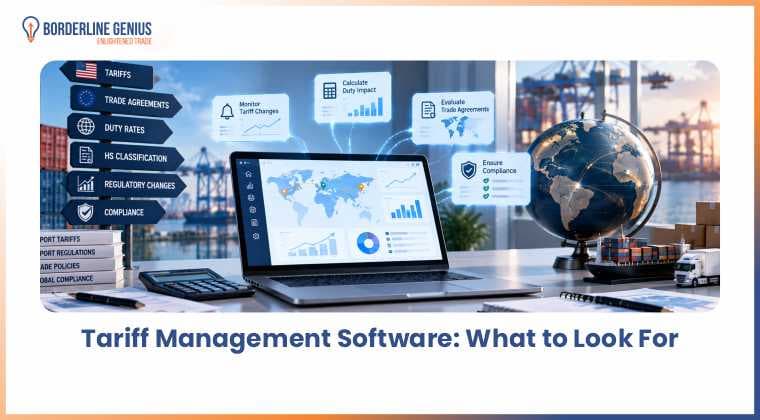
Tariff Management Software: What to Look For
In tariff management software, accurate tariff data, duty calculation, regulatory updates, and features supporting global trade compliance should be considered.
Read article 12 min read
Binding Tariff Rulings: US, UK, EU, India, Canada, Australia, & China
Learn how binding tariff rulings work across the US, UK, EU, Canada, China, India, and Australia, including procedures, validity, authorities, and databases.
Read article 3 min read
USTR Announced New Section 301 Tariffs on Imports from 60 Countries and Economies
Learn about the USTR Section 301 tariff update affecting 60 countries, new 10% and 12.5% tariff rates, implementation dates, and importer implications.
Read article