
Trade Compliance vs Customs Compliance: What is the Difference?
Learn the main differences between trade compliance and customs compliance, including their scope, requirements, responsibilities, and role in global trade.
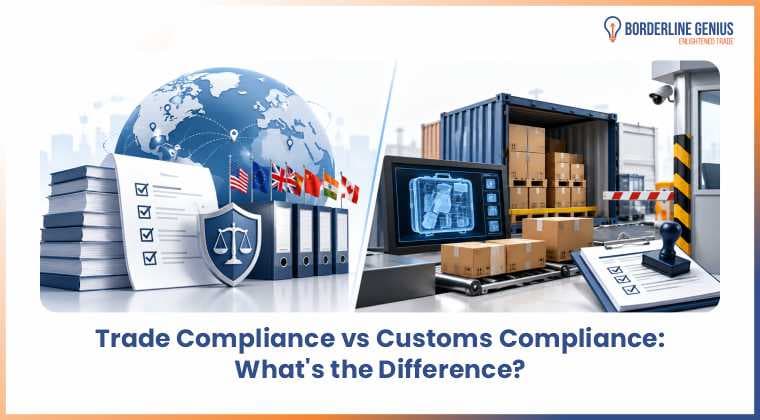
Customs compliance and trade compliance are related areas, but both are different in scope and purpose. The difference between trade compliance vs customs compliance exists because international trade involves several regulatory requirements, including customs procedures, import controls, export controls, licensing, classification, valuation, origin, and restrictions on certain goods or parties. Customs compliance mainly addresses requirements connected with customs authorities and the movement of goods across borders. Trade compliance covers a wider range of regulations that can apply to international transactions. Knowing the difference is important for importers, exporters, customs professionals, compliance teams, logistics managers, and businesses involved in cross-border trade. Thus, they can identify applicable requirements and assign compliance responsibilities correctly.
What is Customs Compliance?
Simply put, customs compliance is the process of ensuring that imported or exported goods meet the requirements established by customs authorities. It commonly covers tariff classification, customs valuation, origin, declarations, duties, documentation, recordkeeping, and customs procedures. Its objective is to ensure that goods are accurately declared and handled according to applicable customs laws.
What is Trade Compliance?
Trade compliance is the process of ensuring that international transactions follow applicable trade laws and regulations. It can cover customs requirements, import and export controls, licensing, sanctions, restricted parties, product restrictions, origin requirements, and documentation. Its broader scope helps businesses manage regulatory obligations across cross-border transactions.
Trade Compliance vs Customs Compliance: 8 Key Differences
The main basis for distinguishing trade compliance vs customs compliance is the scope of regulations, the authorities involved, the type of transaction controls required, and the stage at which compliance obligations arise.
Customs compliance focuses primarily on requirements associated with customs clearance and the movement of goods across borders. Trade compliance can be inclusive of customs requirements together with import controls, export controls, sanctions, licensing, restricted-party requirements, and other trade regulations.
|
Customs Compliance |
Trade Compliance |
|---|---|
|
The process of customs compliance focuses on complying with customs laws and procedures for goods entering, leaving, or moving through a customs territory. |
Trade compliance covers the bigger regulatory requirements that govern international trade transactions. |
|
It generally concentrates on customs-related obligations, such as classification, valuation, origin, declarations, and duties. |
It mainly focuses on customs-related obligations like classification, valuation, origin, declarations, and duties. |
|
This primarily involves the customs authority responsible for administering customs laws. |
The process can comprise customs authorities and other government agencies responsible for trade, export controls, sanctions, or regulated products. |
|
HS code classification is a central customs compliance activity because it can determine tariff treatment. |
Product classification can also support wider trade compliance decisions where regulations depend on the nature of the goods. |
|
Customs valuation determines the value used for applicable customs assessment. |
Valuation may be relevant to the overall transaction but is not the primary focus of broader trade controls. |
|
Country of origin can affect customs treatment, duty rates, marking, and applicable procedures. |
Origin can additionally affect preferential trade programs and other international trade requirements. |
|
It is focused on customs requirements associated with importing goods. |
This may include customs requirements together with product-specific permits, licenses, and other import regulations. |
|
This process can cover customs procedures associated with exporting goods. |
It can take into consideration export licenses, controlled goods, restricted destinations, end-use requirements, and other export controls. |
The table shows that customs compliance is generally one component of the wider trade compliance framework. Some activities can overlap. But their regulatory purpose and scope are not identical.
Which is More Important: Customs Compliance or Trade Compliance?
Both customs compliance and trade compliance require attention. This is because a business can satisfy one set of requirements while still failing to meet another applicable obligation.
-
Customs compliance supports:
-
Accurate declarations
-
Classification
-
Valuation
-
Duties
-
Border procedures
-
-
Trade compliance can address wider requirements such as:
-
Licensing
-
Export controls
-
Sanctions
-
Other trade regulations
-
Businesses involved in international transactions need processes that address both areas according to the requirements of each shipment and jurisdiction.
In Conclusion
Trade compliance vs customs compliance are different but closely connected areas of international trade. Customs compliance focuses on customs-specific obligations, while trade compliance covers a larger regulatory framework. Understanding the difference helps businesses identify applicable requirements, assign responsibilities, and manage cross-border transactions more consistently.
Frequently asked questions
Navigate Global Trade With Greater Confidence
Access expert guidance to help your organization address complex trade, classification, tariff, and compliance challenges.
Talk to a Trade ExpertRelated articles
Keep reading with more guidance on trade compliance and classification.
 Genius WorkspaceTrade Compliance TeamsTrade Compliance6 min read
Global Trade Compliance Software: Features That Matter
Find out which global trade compliance software features matter, including HS code classification, trade screening, and multi-jurisdiction compliance.
Read article Trade ComplianceTrade Compliance TeamsCustoms BrokersGenius Workspace7 min read
Customs Compliance Software: What to Look For?
Learn what to look for in customs compliance software, from HS code classification and regulatory updates to workflows, audit trails, and integrations.
Read article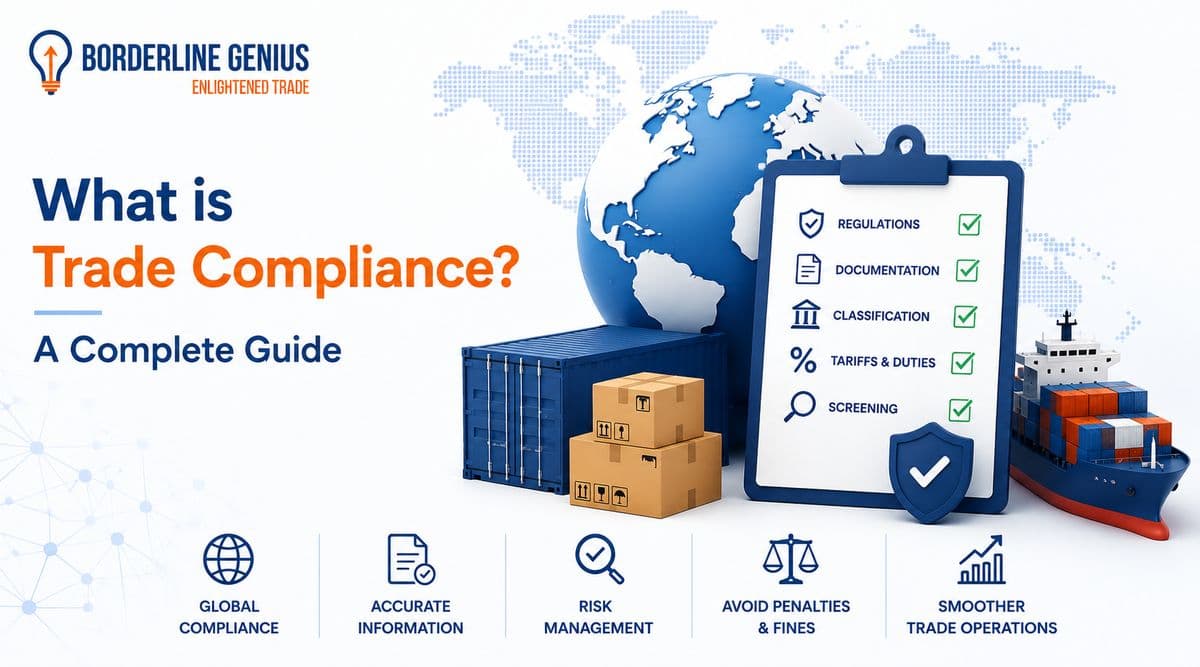 Trade ComplianceTrade Compliance TeamsGenius Workspace9 min read
What is Trade Compliance? A Complete Guide
Learn what trade compliance is, how it works, key compliance areas, risks of non-compliance, and how software can support global trade operations.
Read article