Global Trade Compliance Software: Features That Matter
Find out which global trade compliance software features matter, including HS code classification, trade screening, and multi-jurisdiction compliance.

The global trade landscape involves multiple countries, products, regulations, and customs requirements, making compliance more complex as businesses expand into new markets. Managing these requirements manually can make it difficult to maintain consistent information and processes across international operations. Global trade compliance software can help businesses organize trade-related data, monitor regulatory requirements, and manage compliance activities more systematically. However, not every platform provides the same capabilities. Understanding the features, coverage, and integration options available can assist businesses select software that aligns with their international trade requirements.
What is Global Trade Compliance Software?
Global trade compliance software is a digital system that helps businesses manage international trade requirements across countries, products, and transactions. It provides a centralized way to organize trade compliance information and support businesses in maintaining consistent compliance processes across global operations.
-
It can help a business manage trade-related information across multiple countries and jurisdictions.
-
Compliance teams can use centralized data to maintain consistency across international trade activities.
-
The software can support the organization of information required for global trade compliance.
-
Businesses can utilize it to maintain records associated with ongoing trade compliance activities.
How is it Different from Trade Compliance Software?
In specific, global trade compliance software focuses on managing international trade requirements across multiple countries and jurisdictions. However, trade compliance software can refer more broadly to tools supporting specific customs and regulatory activities or markets.
-
Global platforms are generally suited to organizations managing international operations.
-
They can support compliance requirements that vary between different jurisdictions.
-
Trade compliance software can be designed around narrower business or market requirements.
The features required can also differ between global trade compliance software and software designed for specific trade compliance needs.
What Features Matter in Global Trade Compliance Software?
Certain global trade compliance software features are essential for managing classification, tariffs, and regulatory requirements across markets. Features such as HS code classification and compliance across multiple jurisdictions can help businesses maintain consistent processes.
The following 8 features are worth considering when selecting such a software system:
Global HS Code Classification
HS code classification across international markets is an important feature in global trade compliance software. This is because products may require different tariff classifications across markets. The software should help in classifying products consistently and managing classification information for international trade activities.
Management of Global Trade
Global trade management is a vital feature for businesses handling international trade activities across multiple geographies. It can enable them to handle respective processes, product information, and shipment-related activities while providing greater visibility into their overall global trade operations.
Tariff and Duty Intelligence
Access to accurate tariff rates and duty information is among the top global trade compliance software features that can allow organizations to determine the costs associated with importing goods. Current tariff data also supports better assessment of applicable duties and taxes when managing products across different international markets.
Compliance Analytics
In a global trade compliance software system, compliance analytics is a valuable feature that can facilitate monitoring trade activities. It can identify recurring compliance issues. Besides, it can provide reporting and analysis that allows compliance teams to review performance, detect patterns, and make informed decisions about ongoing international trade activities.
Regulatory and Trade Content Updates
Keeping regulatory information current is one of the essential features of global trade compliance software that businesses can use to respond to changing trade requirements. Timely updates allow compliance teams to review applicable regulations and maintain relevant information for ongoing international trade activities.
Multi-Jurisdiction Compliance
Features like multi-jurisdiction compliance should be considered in global trade compliance software for a business operating in different countries. They can benefit organizations in managing varying customs requirements, regulatory frameworks, and trade rules while maintaining consistent compliance processes across jurisdictions.
Trade Agreement Management
For global trade compliance, software features such as trade agreement management should be looked at when businesses rely on preferential trade arrangements. These features can help teams manage eligibility requirements, preference qualification, and supporting documentation for applicable trade agreements.
Trade Screening Tools
An organization should consider global trade compliance software features like trade screening tools when choosing it. It helps screen customers, suppliers, and other parties against applicable sanctions and restricted-party lists. These tools can additionally support screening workflows and alerts for potential compliance concerns.
Borderline Genius Inc. for Global Trade Compliance Software
To assist businesses in managing trade-related activities across markets, Borderline Genius Inc. provides global trade compliance software. Its platform includes capabilities for classification, tariff intelligence, landed cost calculation, compliance workflows, as well as integration with current business systems.
Key Features Offered for Global Trade Compliance
One notable feature of the global trade compliance software by Borderline Genius Inc. is its ability to connect trade compliance information with business processes. This helps organizations manage trade data and requirements within their existing operational environment.
-
The software can manage product, supplier, and shipment information.
-
Analytics can help monitor trade data and compliance patterns.
-
The software supports requirements across multiple countries and jurisdictions.
-
Landed cost features can assess total import costs.
-
Workflows can manage compliance requests, reviews, and approvals.
-
APIs can connect trade data with existing business systems.
-
A centralized workspace can organize compliance data and requests.
Endnote
Choosing global trade compliance software requires businesses to consider their specific international trade requirements and operational processes. The right software should support classification, tariff intelligence, regulatory updates, screening, and compliance across jurisdictions. Evaluating these capabilities can help organizations select a system that supports consistent and manageable global trade compliance.
Frequently asked questions
Navigate Global Trade With Greater Confidence
Access expert guidance to help your organization address complex trade, classification, tariff, and compliance challenges.
Talk to a Trade ExpertRelated articles
Keep reading with more guidance on trade compliance and classification.
 Trade ComplianceTrade Compliance TeamsGenius Workspace9 min read
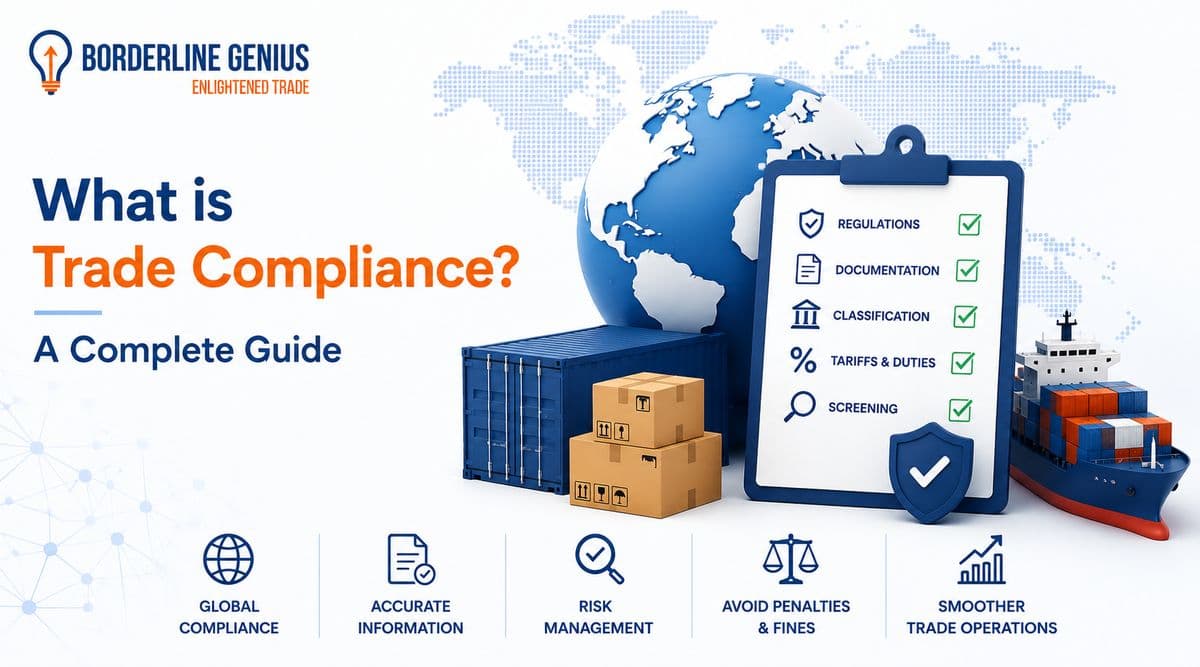
What is Trade Compliance? A Complete Guide
Learn what trade compliance is, how it works, key compliance areas, risks of non-compliance, and how software can support global trade operations.
Read article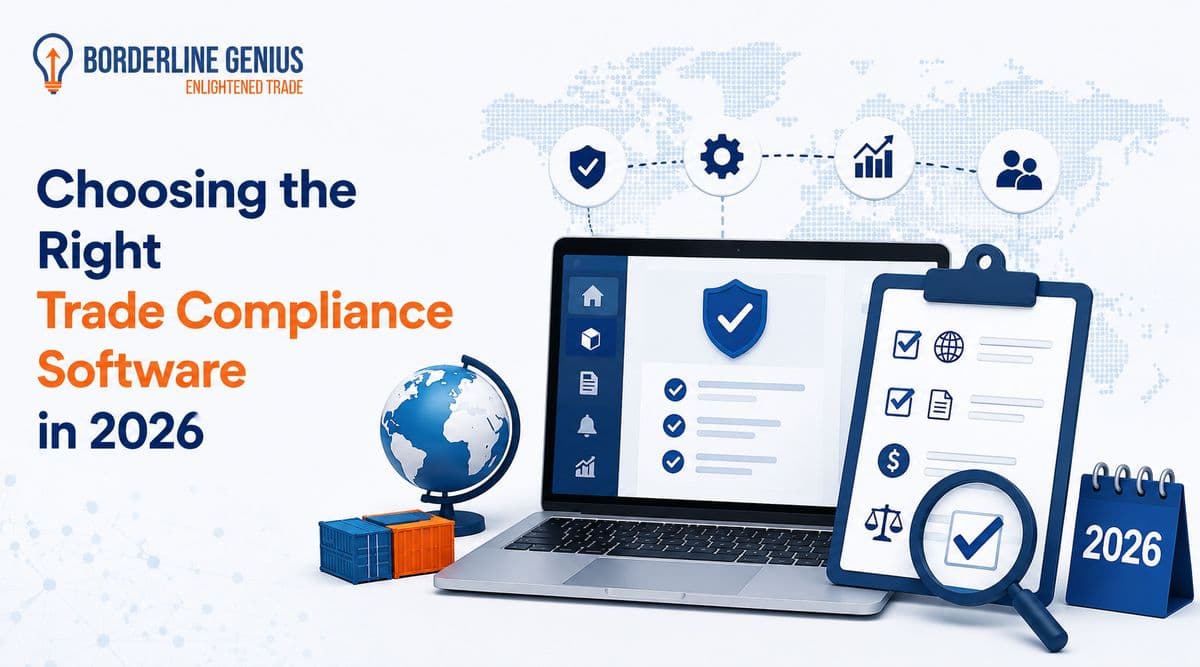 Genius WorkspaceTrade ComplianceAI12 min read
Choosing the Right Trade Compliance Software in 2026
Choose the right trade compliance software in 2026. Compare key features, integrations, evaluation criteria, and best practices to find the right fit.
Read article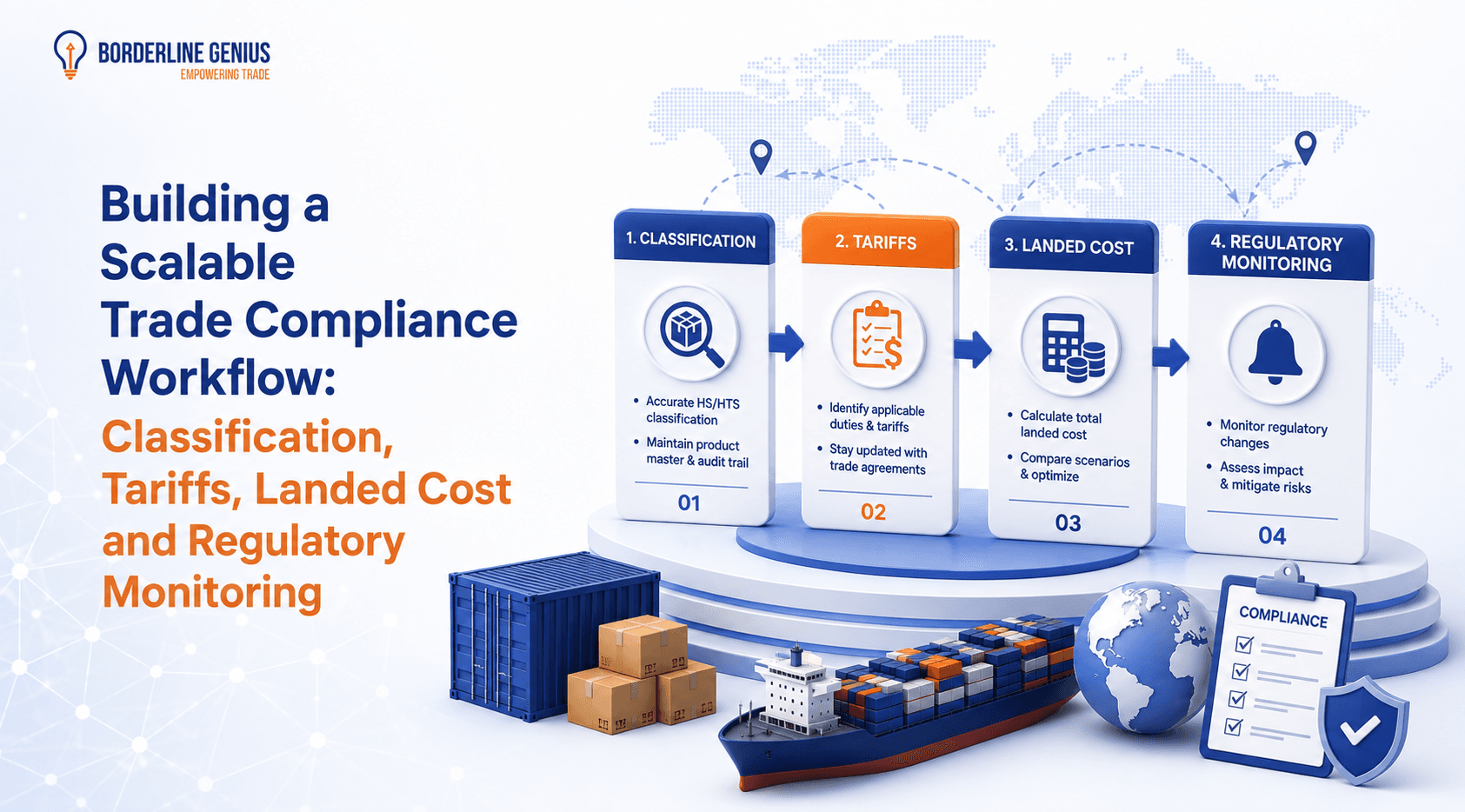 19 min read
Scalable Trade Compliance: Classification to Monitoring
Learn how to build a scalable trade compliance workflow connecting classification, tariffs, landed cost, and regulatory monitoring.
Read article