What is Trade Compliance? A Complete Guide
Learn what trade compliance is, how it works, key compliance areas, risks of non-compliance, and how software can support global trade operations.
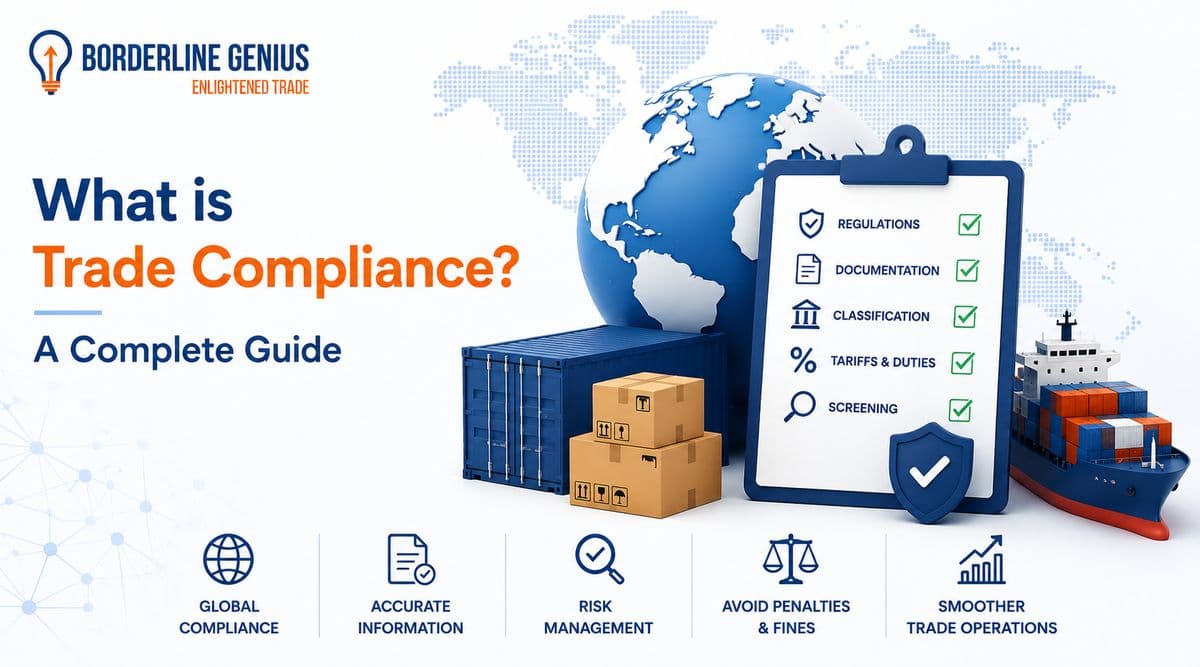
For businesses, trade compliance is a process that ensures transactions beyond borders follow the applicable laws, regulations, and government requirements. International transactions involve more than moving products between countries. The rules that apply can vary based on the article, destination, origin, trading parties, intended use, and other transaction-specific factors.
These requirements can extend across customs procedures, import and export controls, sanctions, licensing, classification, origin, documentation, and recordkeeping. Understanding how these areas connect can make regulatory obligations easier to identify and manage. Adhering to the applicable trade compliance process is important for avoiding non-compliance and its potential consequences. Hence, understanding the requirements and how they apply to cross-border transactions is essential.
This guide explains the key areas of trade compliance, how the process works, what determines the applicable requirements, and the consequences of not abiding by these.
What is Trade Compliance?
Trade compliance is the practice that a company uses to meet the laws, regulations, and government requirements governing its international trade activities and the movement of goods, technology, software, and other controlled items across borders.
It covers more than customs clearance. Depending on the transaction, this process can involve tariff classification, customs valuation, country of origin, and import and export requirements. Besides, it can comprise licensing, sanctions, restricted-party screening, export controls, documentation, and recordkeeping.
-
The requirements that apply are not identical for every transaction.
-
They can depend on factors such as the product, origin, destination, parties involved, intended end use, and applicable trade regulations.
-
For this reason, trade compliance is best understood as a framework for determining what rules apply to an international transaction and ensuring that the required controls are followed.
What are the Types of Trade Compliance?
The process of trade compliance covers several areas that govern international cross-border transactions. Import, export, and customs compliance are three closely related areas with different regulatory focuses.
Import Compliance
In simple terms, import compliance ensures that goods entering a country meet its applicable laws and requirements. It can cover classification, valuation, origin, duties, permits, product regulations, and import declarations. Businesses are required to provide accurate information and maintain the required records for imported goods.
Export Compliance
When goods, technology, software, or other controlled items are sent across borders, companies have to determine whether the transaction meets applicable export laws and regulatory requirements. This process is called export compliance. These checks can include export controls, licenses, sanctions, restricted-party screening, destination restrictions, and end-use requirements.
Customs Compliance
Meeting the legal and procedural requirements enforced by Customs authorities is known as customs compliance. It commonly covers tariff classification, customs valuation, country of origin, customs declarations, duties, documentation, and recordkeeping. These requirements can apply to both import and export transactions where customs procedures are involved.
What is a Trade Compliance Program?
A trade compliance program is a structured set of policies, procedures, controls, and responsibilities that a company uses to manage its international trade obligations. It establishes how applicable regulations are identified and assessed. Besides, it outlines how they are implemented, monitored, and documented across activities beyond borders.
Why Does Trade Compliance Matter?
Trade compliance matters as it helps organizations meet their legal obligations when conducting transactions across borders. Following the applicable requirements can reduce the risk of regulatory violations. Hence, it can prevent avoidable disruptions to international trade.
Adherence to global trade regulations is important for reasons beyond as well:
-
Non-compliance can result in fines, additional duties, or other regulatory action.
-
Incorrect declarations, missing documents, or required approvals can delay the movement of goods.
-
Trade compliance controls can enable identifying regulatory issues before they affect shipments or business operations.
-
Correct classification, valuation, as well as origin determinations can assist a business in calculating applicable duties accurately.
-
Certain violations can lead to restrictions that affect a company’s ability to trade in particular markets.
-
Complying consistently can reduce the risk of enforcement actions and reputational damage.
-
This process facilitates detecting the regulatory requirements that apply to products, destinations, and trading partners.
Risks of Non-Compliance
When an organization fails to meet applicable international trade regulations, the consequences can extend beyond individual transactions. Repeated violations may attract greater regulatory scrutiny and require extensive internal reviews, corrective measures, or remediation.
-
Other potential risks of non-compliance with these regulations can include:
-
Increased frequency of customs or regulatory audits.
-
Higher costs associated with investigations and corrective actions.
-
Contractual disputes arising from unmet regulatory obligations.
-
Greater management oversight of cross-border activities.
-
Increased resources required for remediation.
-
Difficulty demonstrating effective internal controls during regulatory reviews.
-
Loss of confidence among suppliers, customers, or business partners.
-
What are the Key Areas of Trade Compliance?
Tariff classification is one of the key areas of global trade compliance. It involves assigning the correct Harmonized System or HS code or applicable tariff classification to products. This can affect duties, import requirements, trade measures, and certain regulatory controls.
Additional key areas can comprise:
-
Customs valuation involves determining the value used for customs purposes.
-
Country of origin includes establishing where goods originate under applicable rules.
-
Import requirements account for declarations, duties, permits, and product-specific regulations.
-
Export controls govern certain goods, technology, software, destinations, and end uses.
-
Licensing and permits address transactions that require prior government authorization.
-
Sanctions and restricted-party screening identify parties or transactions subject to applicable restrictions.
-
Documentation and recordkeeping involve maintaining accurate information and evidence supporting trade decisions.
-
Trade agreements can affect preferential tariff treatment when their conditions are met.
How Does Trade Compliance Work?
Trade compliance works by assessing each cross-border transaction against the regulations that apply to the product, parties, destination, origin, end use, and transaction terms. Organizations then meet applicable requirements, obtain necessary approvals, submit accurate information, and retain supporting records.
-
Initially, the transaction and the parties involved are identified.
-
Then, the goods are classified under the appropriate tariff classification.
-
Next, the country of origin and customs value are determined.
-
The trade regulations and restrictions that apply are then identified.
-
All the parties involved are screened against applicable restrictions and sanctions.
-
Any required licenses, permits, or approvals are obtained.
-
The required customs and trade documentation is prepared and reviewed.
-
Accurate information is submitted to the relevant authorities.
-
Supporting records are retained for future reference and regulatory review.
-
The transaction is monitored for regulatory changes that may affect its treatment.
What is Trade Compliance Software?
Trade compliance software is a technology solution that helps a business manage the regulatory requirements associated with international trade. It can bring activities such as classification of products, regulatory screening, trade documentation, customs workflows, and tariff management into a more connected process.
-
Such a solution centralizes trade data and automates routine compliance activities.
-
It can reduce reliance on fragmented processes.
-
This software can improve consistency across global trade operations.
-
The right solution can also support regulatory updates, collaboration, audit trails, and integration with business systems as compliance needs evolve.
What Factors Determine Trade Compliance Requirements?
The product being traded is among the key factors that determine the trade compliance requirements for a transaction. Its classification, characteristics, intended use, and regulatory status can affect the rules, controls, licenses, and documentation that apply.
Besides this, there are _ factors that can facilitate the requirements for adhering to international trade regulations:
-
Country of origin
-
Destination country
-
Trading parties
-
End use
-
End user
-
Transaction value
-
Trade agreements
-
Applicable jurisdiction
Trade Compliance with Borderline Genius Inc.
Borderline Genius Inc. develops technology solutions for businesses navigating international trade requirements. The global trade compliance technology company has AI-powered solutions. Together with human expertise, they support processes such as product classification and tariff management.
We offer 4 core products, designed to assist at different stages of managing cross-border trade requirements.
Accurately Classifying Products with Classification Genius
Classification Genius is AI-powered HS code classification software that uses product data to classify them at scale. It supports 6-digit HS codes across 185+ countries, with country-specific extensions where applicable.
-
Its automated results include confidence scores, allowing uncertain or higher-risk cases to be referred for expert review.
-
The solution supports ECCN and export-control classification, PGA requirements, and regulatory assessment, with outputs that can connect to ERP, TMS, or customs systems.
Managing Tariff and Duty Information with Tariff Genius
Tariff Genius provides AI-powered tariff intelligence that gives companies access to current duty, VAT, and tariff information across changing trade environments. This software uses verified regulatory sources to reflect official updates.
-
Also, Tariff Genius can support access to special/retaliatory tariffs and applicable rates.
-
The solution facilitates regulatory assessment.
-
It is apt for risk identification, documentation, and landed-cost calculations.
-
With this, businesses can evaluate tariff exposure before goods cross borders.
Assessing Import Costs with Landed Cost Genius
Landed Cost Genius helps organizations assess the total cost of importing goods prior to shipping them. It offers product, origin, shipment, destination, duty, tariff, and tax details to estimate the expenses associated with an import transaction.
-
Equipped with landed cost API intelligence, the solution can provide a detailed breakdown of these expenses.
-
It helps businesses understand potential import costs and factor them into pricing, sourcing, and purchasing decisions.
Centralizing Trade Compliance Workflows with Genius Workspace
Genius Workspace provides a centralized customer portal for managing trade compliance information and requests. Using this, a business can submit product data in different formats and raise individual or bulk queries. It can access information such as HS/ECCN codes, tariffs, taxes, and country-specific requirements as well.
-
This platform also provides analytics, flexible data views, and support for multiple business units.
-
It can assist teams in managing cross-border trade activities through one connected workspace.
Wrapping Up,
International trade involves regulatory considerations that can influence how transactions are conducted. Understanding trade compliance is, therefore, important for organizations engaged in cross-border activities. A clear grasp of its principles allows relevant teams to recognize their obligations and make informed decisions when handling international trade transactions.
Frequently asked questions
Navigate Global Trade With Greater Confidence
Access expert guidance to help your organization address complex trade, classification, tariff, and compliance challenges.
Talk to a Trade ExpertRelated articles
Keep reading with more guidance on trade compliance and classification.
 Genius WorkspaceTrade ComplianceAI12 min read
Choosing the Right Trade Compliance Software in 2026
Choose the right trade compliance software in 2026. Compare key features, integrations, evaluation criteria, and best practices to find the right fit.
Read article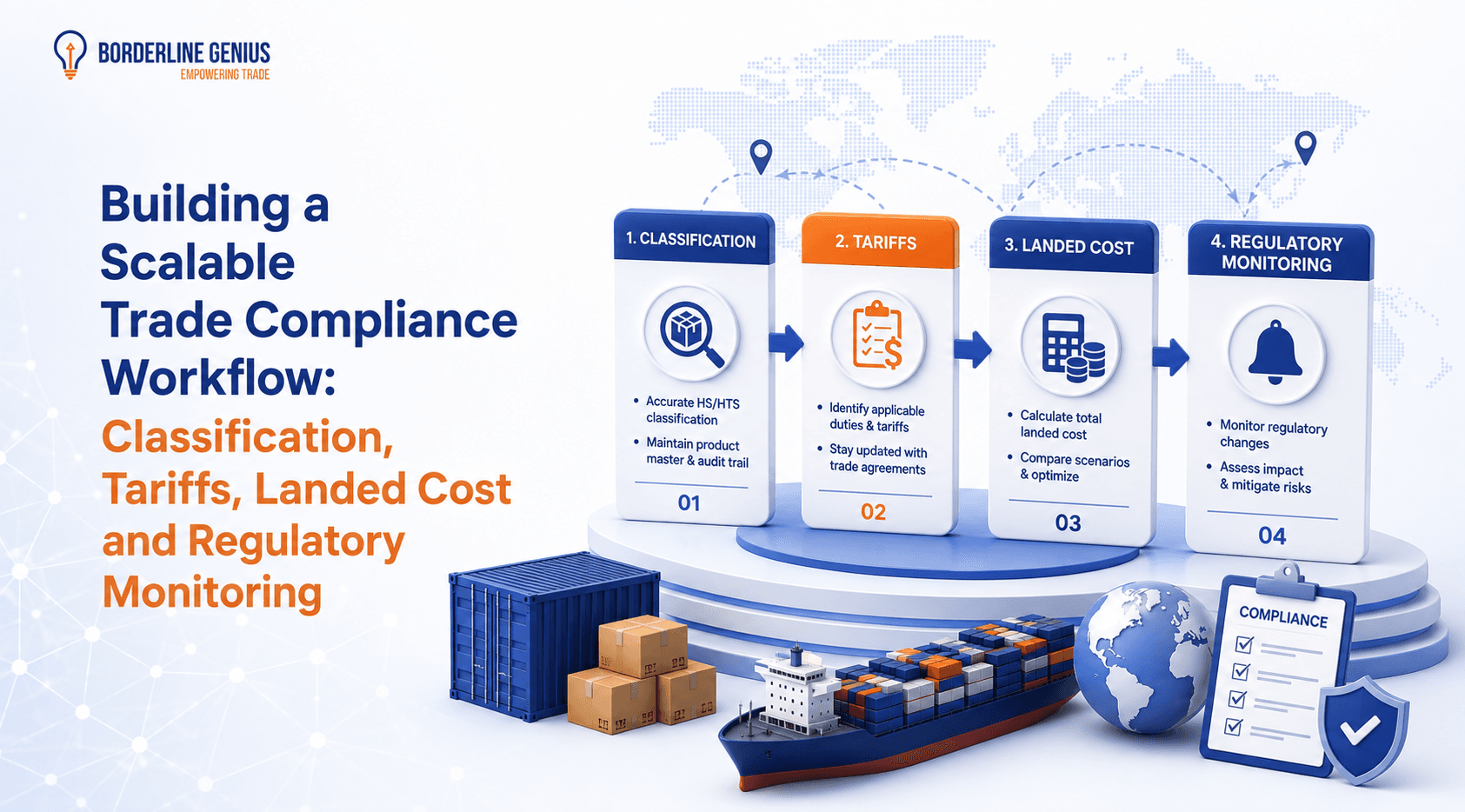 19 min read
Scalable Trade Compliance: Classification to Monitoring
Learn how to build a scalable trade compliance workflow connecting classification, tariffs, landed cost, and regulatory monitoring.
Read article 8 min read
What is Trade Compliance Software & Why Do Modern Businesses Need it in 2026?
Learn what trade compliance software is, how it works, its key features, benefits, and why businesses need AI-powered trade compliance solutions in 2026.
Read article