Choosing the Right Trade Compliance Software in 2026
Choose the right trade compliance software in 2026. Compare key features, integrations, evaluation criteria, and best practices to find the right fit.
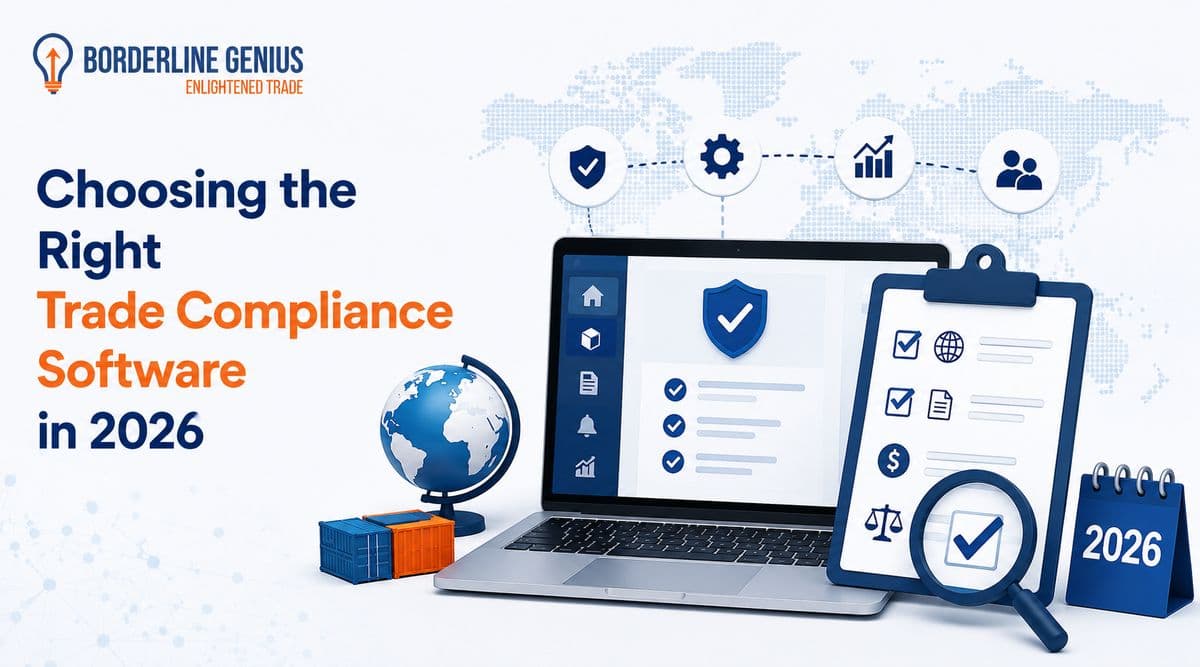
Choosing the right trade compliance software in 2026 requires evaluating how well a solution supports compliance requirements. It involves assessing its impact on operational workflows as well as long-term business objectives. As global trade regulations evolve and supply chains become more complex, selecting the right platform has become an important business decision rather than simply a technology investment. At the same time, it is vital to understand how to choose the best trade compliance software before comparing different solutions.
This article covers the key features, evaluation criteria, common mistakes, and other practical considerations that should influence one’s software selection.
Why Do Businesses Need Trade Compliance Software?
Trade compliance software helps businesses manage compliance activities more efficiently. It simplifies managing international shipment requirements, beyond preparing accurate paperwork. As shipment volumes, regulatory requirements, and supply chains become more complex, relying on such a system can make compliance easier to maintain.
In the past, many organizations relied on fragmented systems, combining domestic ERPs with standalone shipping modules and spreadsheets. This approach often created visibility gaps, duplicated work, and increased the likelihood of documentation errors. Implementing customs compliance software has helped centralize trade data and reduce these operational inefficiencies.
-
A well-designed solution like this connects product information, documentation, and regulatory workflows within a single platform.
-
Instead of relying on manual processes, businesses can generate trade documents more consistently.
-
They can improve operational efficiency and reduce the risk of shipment delays, penalties, and other compliance-related issues.
4 Key Features for Global Trade Management Systems Evaluation
Global trade management systems evaluation should go beyond comparing software features. The right solution should support the processes that matter the most to a business, including product classification, regulatory screening, trade documentation, customs workflows, and trade agreement management.
Evaluating these core capabilities helps determine whether a platform can support current compliance requirements while adapting to future operational needs.
-
Advanced Product Classification
Accurately classifying goods is the foundation of trade compliance. Every import or export decision depends on assigning the correct HS code and, for controlled goods, determining the appropriate Export Control Classification Number (ECCN). Incorrect classifications can lead to shipment delays, additional duty assessments, customs holds, or compliance investigations.
A good product classification software solution should support structured classification workflows, maintain a complete record of classification decisions, and allow multiple stakeholders to review or approve changes. For companies managing large product catalogues, AI-assisted recommendations can improve efficiency while ensuring that qualified personnel remain responsible for the final classification decision.
-
Comprehensive Screening and Security
International sanctions, export controls, and restricted party regulations continue to evolve, making automated screening an important part of trade compliance. Manually checking customers, suppliers, distributors, and end users against multiple government watchlists is time-consuming and difficult to maintain as regulatory lists change.
A reliable denied party screening software solution continuously screens transactions against applicable watchlists and alerts compliance teams when potential matches require review. This helps reduce compliance risk, minimizes unnecessary false positives, and supports legitimate shipments without introducing avoidable delays.
-
Streamlined Documentation and Customs Clearance
Trade documentation is often where compliance issues become shipment delays. Commercial invoices, packing lists, certificates of origin, and customs declarations all depend on accurate product and shipment information. Missing or inconsistent data can result in customs queries, shipment holds, or additional inspections.
A robust trade compliance solution should generate trade documents from centralized product data and integrate with customs authorities, customs brokers, and logistics providers where supported. This reduces manual data entry, improves document consistency, and helps accelerate customs clearance while lowering the risk of documentation errors.
-
Maximizing Savings and Verifying Trade Agreements
Trade compliance is not only about meeting regulatory requirements. It also helps businesses identify legitimate opportunities to reduce duty costs under free trade agreements. Qualifying for preferential tariff treatment depends on accurate origin data, supplier declarations, and bills of material.
A capable landed cost software solution should evaluate free trade agreement eligibility using available origin and product information. When goods qualify under agreements such as the USMCA, businesses may claim preferential duty treatment while maintaining the supporting documentation needed to substantiate those claims during customs reviews.
What are the Common Mistakes When Choosing Trade Compliance Software?
One of the most common mistakes when selecting trade compliance software is focusing only on features while overlooking how the solution fits existing business processes. A platform with an extensive feature set may still create inefficiencies if it cannot integrate with operational systems, support regulatory updates, or scale alongside the business.
Other mistakes to avoid include:
-
-
Failing to integrate the software with ERP, WMS, TMS, and customs broker systems can result in duplicate data entry and inconsistent information.
-
Using separate tools for classification, screening, documentation, and tariff management often creates disconnected workflows and reduces visibility.
-
Another mistake is not verifying how the vendor maintains regulatory updates, including sanctions, tariffs, and restricted party lists.
-
It is a challenge to select a solution based only on current business needs instead of choosing a trade compliance platform that can support future growth in products, shipments, and international operations.
-
Overlooking user adoption and causing employees to continue relying on spreadsheets or manual workarounds despite implementing new software is concerning too.
-
How Should Trade Compliance Software Integrate with Existing Systems?
A global trade compliance software solution should integrate seamlessly with existing business systems to eliminate duplicate data entry, improve data consistency, and support efficient compliance workflows. Before selecting a platform, evaluate how it connects with ERP, WMS, TMS, customs broker systems, and other operational applications that manage product, shipment, and customer information.
Integration is only one part of the evaluation. Businesses should also consider whether a cloud-based or on-premise deployment model aligns with their IT infrastructure, security policies, and operational requirements.
-
Cloud-based deployment generally offers faster implementation, automatic regulatory updates, and easier access for distributed teams, with software maintenance managed by the vendor.
-
On-premise deployment provides greater control over infrastructure and data, making it suitable for organizations with strict internal security or data residency requirements, although it typically requires more in-house IT resources.
The right deployment model depends on business needs rather than the software itself. Regardless of the approach, seamless integration should remain a key consideration when evaluating trade compliance software.
Which 2026 Trends should You Consider When Choosing Trade Compliance Software?
Several regulatory and technology trends should influence how a business evaluates trade compliance software in 2026. Choosing a solution that can adapt to changing compliance needs helps reduce future implementation challenges and supports long-term operational efficiency.
-
AI-Assisted Classification: Organizations are increasingly using AI to recommend HS codes and classify products more efficiently, while compliance professionals continue reviewing and approving final decisions.
-
More Dynamic Sanctions: Governments continue updating sanctions programs and restricted party lists, increasing the need for automated screening and real-time regulatory updates.
-
Greater Tariff Complexity: Frequent tariff changes and evolving trade policies require businesses to monitor duty exposure, sourcing decisions, and landed costs more effectively.
-
Connected Compliance Workflows: Businesses largely expect global trade management software to integrate with ERP, WMS, procurement, and logistics platforms rather than operating as a standalone application.
Selecting a system that can respond to these developments helps organizations build a more adaptable and resilient trade compliance programme.
How can You Get the Most Value from Trade Compliance Software?
Implementing trade compliance software is only the first step, businesses achieve the greatest value when it is supported by well-defined processes, trained users, and consistent governance. The following practices help maximize its effectiveness over the long term.
Maintain Complete Audit Trails
Configure the platform to securely record classification decisions, document submissions, approvals, and other compliance activities. Comprehensive records help demonstrate compliance during customs reviews and regulatory audits.
Invest in Ongoing Training
Ensure employees receive regular training on trade regulations and software workflows. Well-trained users are more likely to identify potential compliance issues and use the platform effectively.
Define Clear User Roles and Responsibilities
Establish approval workflows and user permissions so that only authorized personnel can override flagged transactions, modify classifications, or update Export Control Classification Numbers (ECCNs).
Review Compliance Data Regularly
Implementation should not be treated as a one-time project. Periodically review product classifications, supplier information, denied party screening rules, and internal workflows to ensure they continue reflecting current regulations and business operations. Regular reviews also help identify opportunities to improve efficiency and reduce compliance risks before they affect shipments.
Following these practices helps businesses improve operational consistency, strengthen compliance controls, and gain greater long-term value from their trade compliance solution.
Which is the Best Trade Compliance Software in 2026?
There is no single trade compliance software solution that is best for every business in 2026 or beyond. The right choice depends on factors such as product complexity, shipment volumes, regulatory requirements, integration needs, and the level of automation required. Rather than comparing feature counts alone, businesses should evaluate how well a platform supports their operational and compliance workflows.
Borderline Genius Inc. follows this approach by providing a centralized workspace for product classification, tariff intelligence, landed cost analysis, trade documentation, and compliance collaboration. Instead of relying on multiple disconnected tools and spreadsheets, organizations can manage trade compliance through a shared source of information while maintaining a complete audit trail for compliance activities.
When comparing vendors, assess each solution against your organization's requirements, including integration capabilities, regulatory content updates, workflow flexibility, reporting, scalability, and long-term support. The best platform is the one that aligns with both your current compliance needs and future business growth.
A Closer Look at Borderline Genius Inc.’s Product Suite
Borderline Genius Inc. provides specialized products designed to support different areas of trade compliance. Its product suite addresses classification, tariff intelligence, compliance workflows, and landed-cost analysis. This gives businesses options to select capabilities based on their operational requirements and trade compliance needs.
Classification Genius
For classifying goods at scale, Classification Genius is AI-powered HS code classification software.
-
It provides artificial intelligence-driven HS and ECCN classification using product information and models trained by experts, informed by BTIs, cross rulings, as well as WCO notes.
-
These are equipped with other official tariff references too.
-
Confidence scoring detects uncertain classifications reviewed by experts.
Genius Workspace
To manage trade compliance processes, along with workflows, Genius Workspace facilitates a centralized environment. This customer portal brings key information and processes together.
-
It gives teams a shared space to help them manage compliance tasks.
-
Additionally, it enables them to collaborate across functions.
-
This portal can support organizations seeking greater visibility and management across their international trade operations.
Tariff Genius
Borderline Genius Inc.’s trade tariff intelligence and management software, Tariff Genius, offers tariff and duty information for trade decisions.
-
With this, businesses can access essential tariff information.
-
It can be utilized to evaluate goods and import requirements.
-
By making this data accessible, the software system supports duty assessment.
-
Moreover, it facilitates trade decisions across global markets.
Landed Cost Genius
Businesses can rely on Landed Cost Genius to assess the total expenses associated with imported goods.
-
The intelligent landed cost API combines information such as taxes, duties, tariffs, and other applicable charges.
-
This data provides a broader view of import costs.
-
This visibility can support pricing, sourcing, purchasing, and financial planning decisions.
Trade Compliance Software Evaluation Checklist
Choosing trade compliance software requires more than comparing features and pricing. Asking the right questions helps determine whether a platform can support your operational workflows, regulatory obligations, and future business growth.
Use the following checklist when evaluating potential vendors.
-
Does the software integrate with our ERP, WMS, TMS, and customs broker systems?
-
How are regulatory updates, sanctions lists, and tariff data maintained?
-
Can multiple users collaborate on classification and approval workflows?
-
Does the platform maintain a complete audit trail for compliance activities?
-
What capabilities are available for denied party screening and export controls?
-
Can the software support landed cost analysis and free trade agreement qualification?
-
How long does implementation typically take?
-
How does the platform scale as shipment volumes and product catalogues grow?
-
What training, onboarding, and customer support are included?
A structured evaluation makes it easier to compare vendors objectively and identify the solution that best aligns with your compliance requirements, operational processes, and long-term business objectives.
Final Takeaways
No software is inherently the best for trade compliance; its value depends on how well it fits the realities of your business. The most effective choice is one that continues supporting compliance as products, regulations, and operations evolve, making it a long-term operational asset rather than simply another technology investment.
Frequently asked questions
Navigate Global Trade With Greater Confidence
Access expert guidance to help your organization address complex trade, classification, tariff, and compliance challenges.
Talk to a Trade ExpertRelated articles
Keep reading with more guidance on trade compliance and classification.
 13 min read
Manual vs. Automated HS Classification: Comparing Cost and Accuracy
Compare manual vs. automated HS classification on cost, accuracy, consistency, auditability, maintenance, and human review in trade compliance.
Read article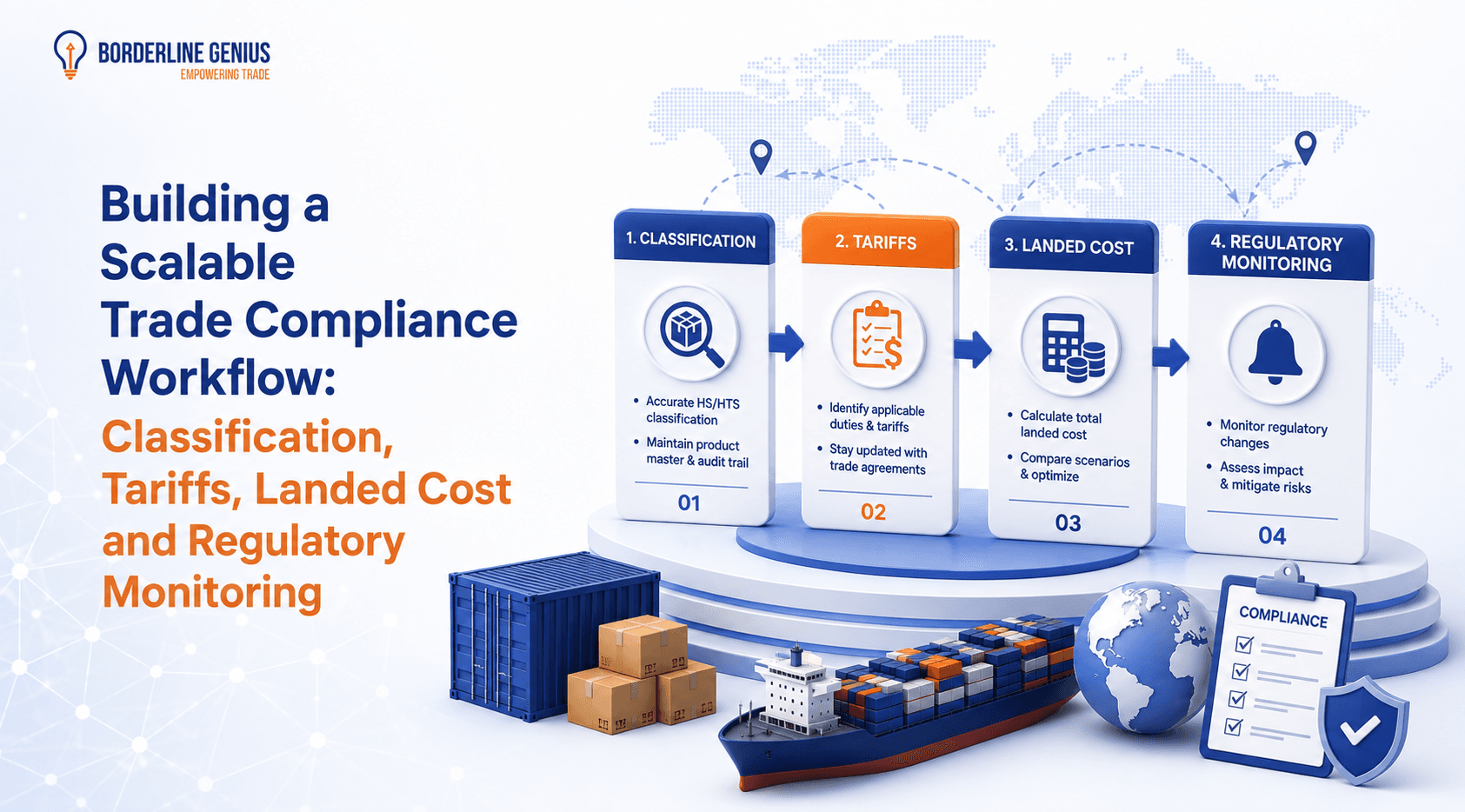 19 min read
Scalable Trade Compliance: Classification to Monitoring
Learn how to build a scalable trade compliance workflow connecting classification, tariffs, landed cost, and regulatory monitoring.
Read article 8 min read
What is Trade Compliance Software & Why Do Modern Businesses Need it in 2026?
Learn what trade compliance software is, how it works, its key features, benefits, and why businesses need AI-powered trade compliance solutions in 2026.
Read article