
What is a Tariff and How Does it Work in Global Trade?
Learn what a tariff is, how tariffs work in global trade, its different types, as well as how to calculate it accurately with real-world examples.
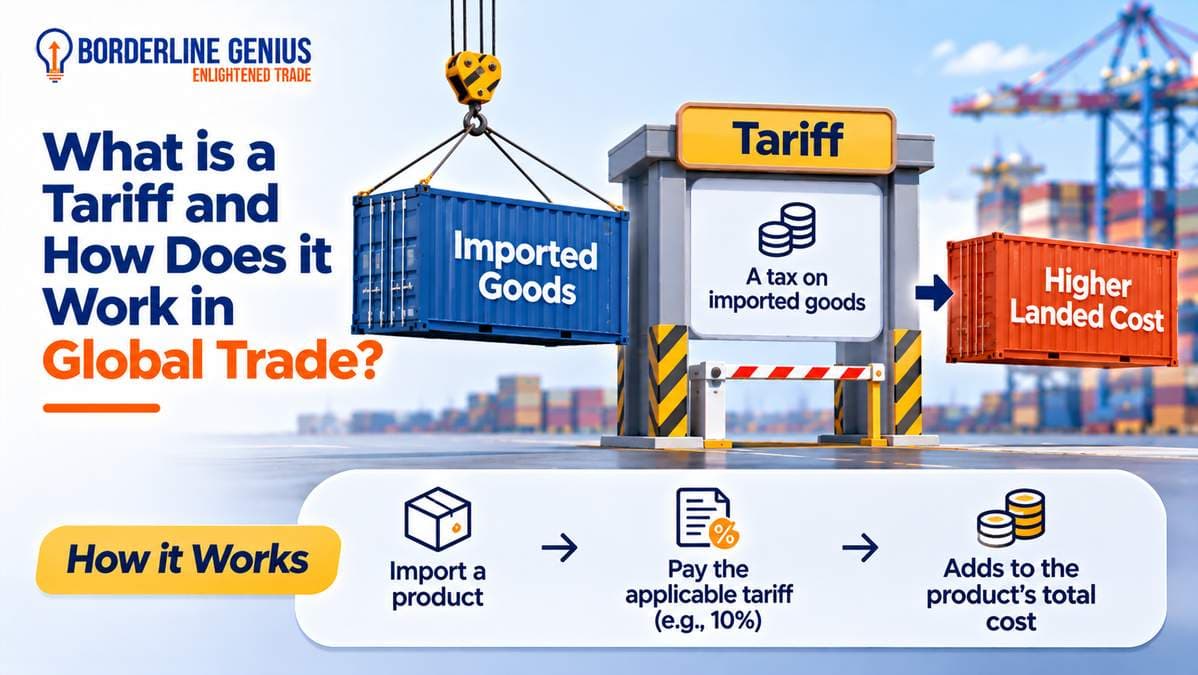
In global trade, a tariff is a tax imposed by a government on goods imported from another country. It affects how businesses price, source, and move products across international markets. Depending on the product and destination country, tariffs can take different forms, including ad valorem, specific, and compound tariffs. Understanding these charges also requires knowing how customs authorities determine applicable rates. These calculations depend on factors such as HS codes, customs value, and country of origin. Organizations can use tariff intelligence software to simplify this research and estimate import costs more accurately. While maintaining accuracy is important, importers, exporters, customs brokers, and trade compliance professionals should comprehend how these duties and taxes can affect their operations.
What is a Tariff?
A tariff is a tax applied by a government on the goods imported. It is collected by customs authorities when products enter a country. It is important to know that the applicable rate depends on the product and the importing country's trade regulations.
What are the Different Types of Tariffs?
Tariffs are of various types based on how governments calculate duties and apply them to international trade. Some are based on product value, while others depend on quantity or serve specific trade policy objectives.
The common types of tariffs include the following:
-
Ad valorem tariffs are charges calculated as a percentage of the customs value of imported goods; for example, a 10% tariff on goods worth $1,000 amounts to $100.
-
Specific tariffs are fixed charges imposed based on the quantity or weight of imported products. For instance, a country may charge $5 per kilogram.
-
Compound tariffs refer to duties determined by combining a percentage of the customs value with a fixed charge. Importers pay both components on applicable items.
-
Protective tariffs mean duties imposed to protect domestic industries from foreign competition. They increase the value of imported articles to make domestic products more competitive.
-
Retaliatory tariffs are duties imposed by a country in response to trade restrictions introduced by another nation. They are commonly used during international trade disputes.
How Do Tariffs Work in Global Trade?
In global trade, tariffs are applied when goods enter a country's customs territory. Importers must identify the applicable duty rate and pay the required amount to customs authorities. The rate depends on product classification and the country's trade regulations.
To understand further how tariffs work, let us go through the following steps:
-
When imported products arrive at the destination country's border, they enter the customs clearance process.
-
Customs authorities identify the products using HS codes to determine their tariff classification.
-
The nation where the items were manufactured or produced is established to identify the applicable trade rules and duty rates.
-
The value of imported articles is assessed under customs valuation rules to establish the basis for duty calculation.
-
Customs authorities use the product classification, country of origin, and customs value to determine the applicable duties.
-
The importer pays the required customs duties.
-
Once the necessary checks are completed, the goods can be cleared for entry into the country.
Why are Tariffs Important in Global Trade?
Global tariffs play an important role in protecting domestic industries. Governments can apply duties on imported goods to make foreign products more expensive. This can encourage consumers to choose locally manufactured alternatives. As a result, domestic businesses may gain a competitive advantage.
Other reasons why tariffs matter in international trade include:
-
Tariffs generate revenue through duties collected on imported products.
-
Governments use duties to influence the flow of goods across international borders.
-
Such charges can support industries that face strong international competition.
-
Tariff rates can influence negotiations and trade relationships between countries.
-
Changes in these can affect product pricing and business decisions.
How are Tariffs Calculated?
Tariffs are calculated depending on the duty structure applicable to a product. For ad valorem tariffs, customs authorities apply a percentage rate to the item’s customs value. Specific tariffs use a fixed charge based on quantity or weight. The final amount also relies on relevant trade measures and exemptions.
Key factors involved in tariff calculations are:
-
The product classification helps identify the applicable tariff heading and duty rate.
-
Importantly, the customs value provides the basis for calculating percentage-based duties.
-
The manufacturing or production origin of goods influences their tariff treatment.
-
Tariff rates depend on the HS classification and destination market but additional duties may also apply.
-
Preferential trade agreements can reduce or eliminate duties for eligible products. Importers must satisfy the relevant rules of origin.
Tariff Examples for Calculation
For understanding how tariffs are calculated, let us look at an example. Suppose an importer purchases goods worth $10,000. The applicable ad valorem tariff rate is 10%.
Tariff payable = Customs Value × Tariff Rate
$10,000 × 10% = $1,000
The importer must pay $1,000 in customs duty under this example. Other applicable taxes and charges are calculated separately.
How to Calculate Trade Tariffs More Accurately?
Trade tariffs can be calculated more accurately through access to the latest duty rates and regulations. However, researching multiple tariff schedules manually can be time-consuming. Borderline Genius Inc. helps simplify tariff research and access to these rates through Tariff Genius, its global trade tariff software.
Simplify Tariff Research and Calculation with Tariff Genius
Tariff Genius is tariff management software designed to help businesses research duties and charges. It includes import duties across international markets. Thus, this system brings tariff information and regulatory requirements together in one platform.
-
This software provides access to relevant customs duty rates and VAT information to assist businesses in finding import charges.
-
It offers product-specific regulatory information, including Participating Government Agency (PGA) requirements.
-
Companies can monitor changes in tariff schedules and trade regulations that may affect imported products.
-
It enables estimating import duties using the recent tariff information in order to support accurate cost planning.
-
API integration facilitates connecting tariff intelligence with existing ERP, procurement, logistics, and customs systems.
Note: This tariff software is available as a standalone application, through API integration, or within Genius Workspace.
All Things Considered
Tariffs are charges and duties that influence international trade by affecting import costs and market competitiveness. Understanding their types and calculation methods is vital to plan cross-border transactions. However, changing trade regulations make accurate tariff information essential. Businesses can use tariff intelligence software to simplify research and make informed decisions.
Frequently asked questions
Navigate Global Trade With Greater Confidence
Access expert guidance to help your organization address complex trade, classification, tariff, and compliance challenges.
Talk to a Trade ExpertRelated articles
Keep reading with more guidance on trade compliance and classification.
 Tariff GeniusTariff Management6 min read
What is Tariff Management in Global Trade?
Understand what tariff management in global trade is, along with its key components, how it works, as well as how to improve it effectively.
Read article Tariff GeniusTariffsTariff Management8 min read
Tariff Management Software: What to Look For
In tariff management software, accurate tariff data, duty calculation, regulatory updates, and features supporting global trade compliance should be considered.
Read article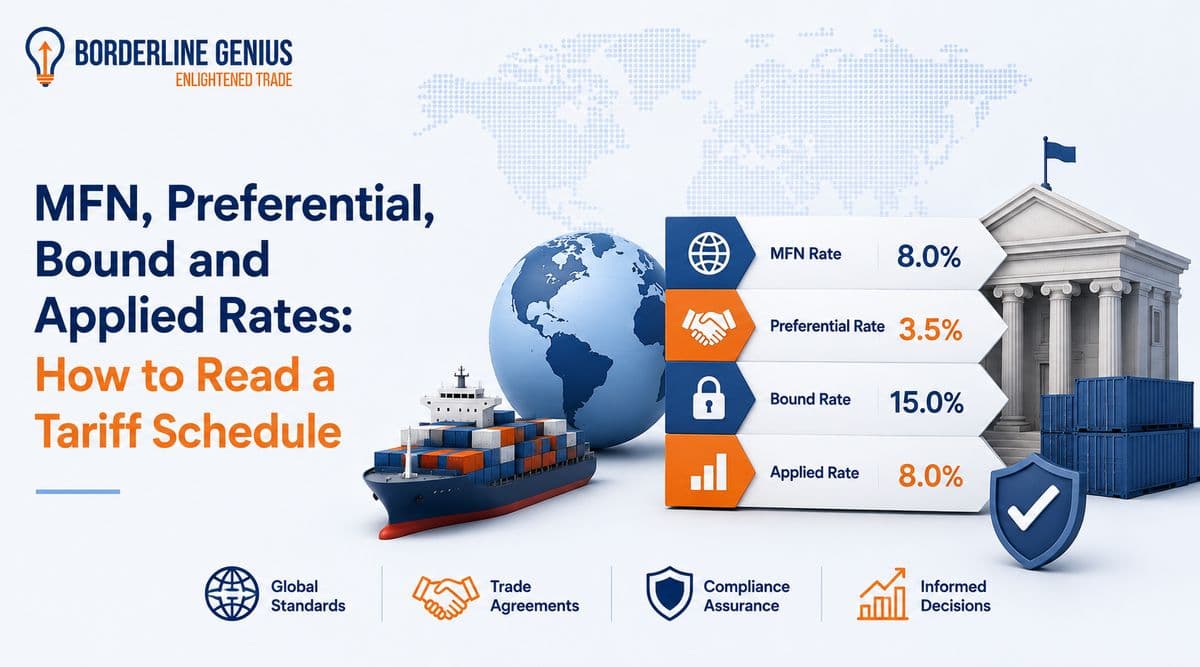 Tariff GeniusTariffsTariff Management17 min read
MFN, Preferential, Bound & Applied Rates: How to Read a Tariff Schedule
MFN, preferential, bound and applied rates explained. What each column of a tariff schedule means, how tariff-rate quotas work, and where to find them.
Read article