What is Tariff Management in Global Trade?
Understand what tariff management in global trade is, along with its key components, how it works, as well as how to improve it effectively.
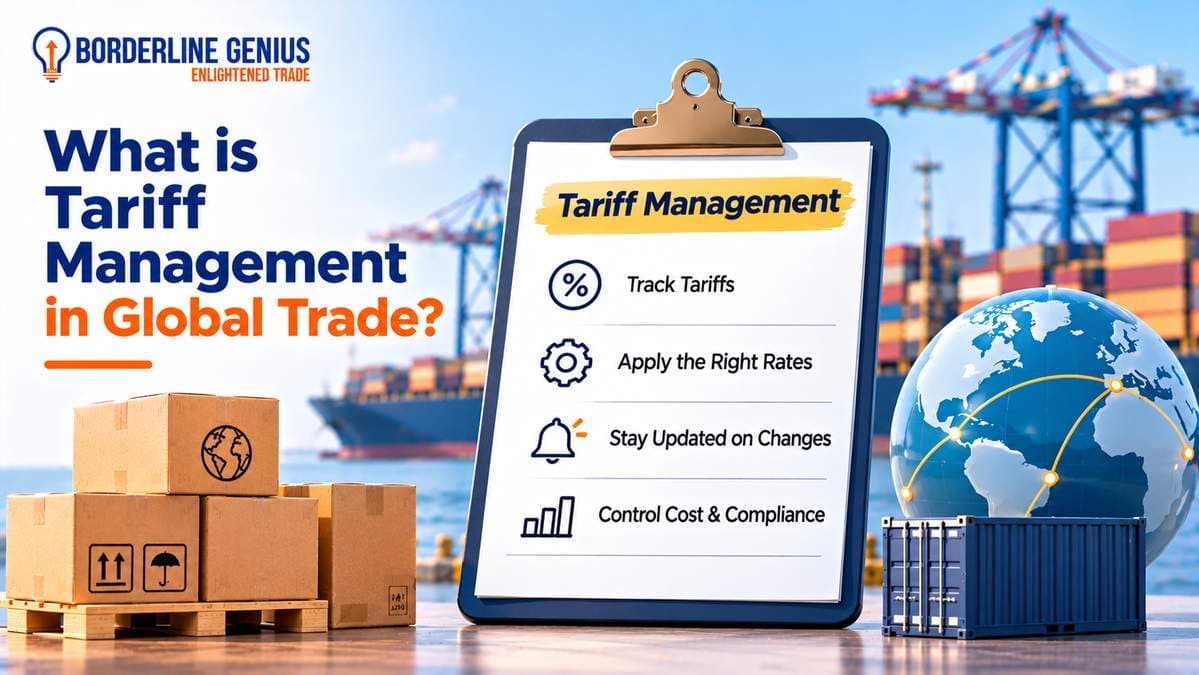
Tariff management is the process of identifying, calculating, and managing customs charges that apply to internationally traded goods. It enables businesses to understand their import and export costs while meeting applicable trade requirements. Effective management of tariffs is important for importers, exporters, manufacturers, and businesses operating across multiple markets. It involves accurate product classification and determining the applicable tariff rates. Businesses should also consider country-specific regulations and trade agreements. Understanding how this process works can support organizations in controlling trade expenses, maintaining compliance, and making informed decisions when sourcing or selling products internationally.
What is Tariff Management?
In global trade, tariff management refers to the process of identifying applicable customs duties and managing requirements related to charges in international trade. It involves determining the correct tariff classification and understanding the rates imposed by destination countries. Businesses use this process to estimate import costs and support customs compliance.
Why is Tariff Management Important in Global Trade?
The management of tariffs is important in global trade as customs duties directly affect the cost of importing and exporting goods. Accurate tariff information allows estimating a company’s expenses before moving products across borders. It enables making better decisions about pricing and international sourcing.
-
Also, this process helps reduce the risk of incorrect duty payments.
-
It supports compliance with country-specific customs regulations.
-
For importers to evaluate the impact of trade agreements on duty rates, it is vital.
-
It helps businesses prepare more accurate budgets for international shipments.
-
Lastly, it supports better planning when entering new markets or changing suppliers.
What are the Key Components of Tariff Management?
Tariff management involves several components that can determine the duties applicable to internationally traded goods. One of the key elements among these is HS code classification. Each product must be classified under the appropriate Harmonized System code to determine the tariff treatment that applies to it. Incorrect HS classification can result in inaccurate duty calculations and customs compliance issues.
Other main components of this process include the following:
-
Businesses need to identify the customs duty rate applicable to a product in the destination market.
-
The customs value provides the basis for calculating duties when the applicable tariff is value-based.
-
The origin of goods can influence the tariff rate and eligibility for preferential treatment under trade agreements.
-
One should check whether applicable free trade agreements give reduced or zero-duty rates.
-
Importers and exporters should follow relevant customs rules and maintain accurate supporting documentation.
How Does Tariff Management Work?
The process of managing tariffs works by identifying the correct product classification and determining the customs duties that apply to a shipment. Trade professionals then use this information to estimate tariff expenses and prepare the necessary customs documentation.
Generally, tariff management involves the following steps:
-
This process involves gathering accurate information about a product, including its material, function, and intended use.
-
The product is classified under the appropriate HS code using the relevant tariff nomenclature.
-
Then the destination country's tariff schedule is reviewed to identify the duty rate for the item.
-
Where the goods originate is established to determine whether preferential tariff treatment may apply.
-
The applicable tariff rate and customs value are used to estimate the duty payable.
-
This is followed by checking whether additional customs rules, restrictions, or documentation requirements apply.
-
Eventually, it is ensured that declarations and supporting records contain accurate product and tariff information.
How to Improve Tariff Management?
Trade professionals and businesses can improve tariff management by maintaining accurate product information and reviewing the associated requirements before shipping goods. Relying on outdated tariff data or incorrect product classifications can lead to inaccurate duty estimates. A consistent review process is vital to address these risks.
These practices can support the effective management of tariffs:
-
Businesses should verify HS code classifications before using them for customs declarations.
-
Importers need to check the latest tariff schedules for their destination markets.
-
Companies should maintain records of product specifications and classification decisions.
-
Trade teams can review applicable trade agreements to identify potential duty benefits.
-
Organizations should monitor regulatory updates that may affect tariff rates or import requirements.
-
A business operating across several countries should maintain clear records of country-specific tariff rules.
How can Borderline Genius Inc. Help Businesses Manage Tariffs?
Borderline Genius Inc. can assist businesses in using specialized trade compliance tools to simplify tariff research and manage duty-related information. The AI-powered trade compliance software company offers solutions that extend tariff intelligence and lookups. These tools can facilitate highly informed decisions when managing international requirements for cross-border exchange.
Tariff Genius for Tariff and Duty Management
Tariff Genius by Borderline Genius Inc. makes structured trade compliance intelligence accessible on the basis of HS codes. It provides information about applicable duties and taxes. Businesses can use this software to understand tariff requirements across markets.
The core capabilities of this tariff management software include:
-
Through tariff and duty intelligence, it helps businesses to assess trade costs.
-
This solution offers information on taxes, restrictions, and regulatory requirements.
-
It uses government-sourced content to support tariff research.
-
This software’s flexible APIs can connect tariff intelligence with existing business systems.
InGenius for HS Code and Tariff Lookup
Through InGenius, one can look up HS codes and the tariff information relevant to one’s products. By using item details to search for applicable codes and tariffs, businesses can research the requirements associated with international trade.
Businesses can use the intelligent tariff lookup tool to:
-
Look for HS codes using product descriptions.
-
Research tariff information relevant to product classification.
-
Check applicable tariffs when assessing import or export requirements.
-
Manage tariff research more efficiently instead of relying entirely on manual searches.
Conclusion
Tariff management helps businesses understand customs duties and meet international trade requirements. Accurate classification and regular tariff reviews can improve cost planning and compliance. Using specialized tools can further simplify tariff research and help businesses manage changing requirements across global markets.
Frequently asked questions
Navigate Global Trade With Greater Confidence
Access expert guidance to help your organization address complex trade, classification, tariff, and compliance challenges.
Talk to a Trade ExpertRelated articles
Keep reading with more guidance on trade compliance and classification.
 Tariff GeniusTariffsTariff Management6 min read
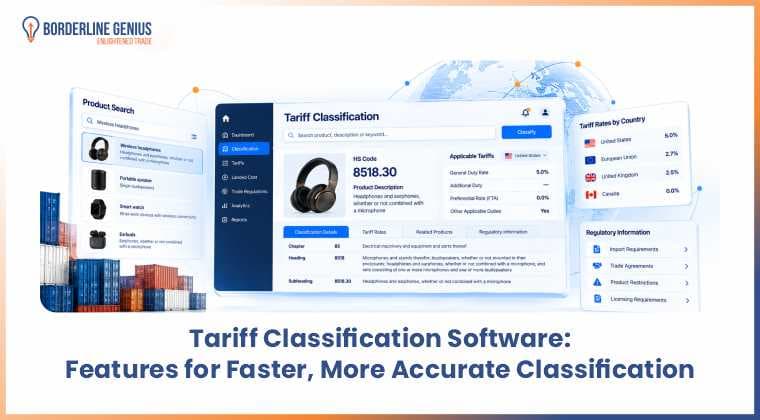
Tariff Classification Software: Features for Faster, More Accurate Classification
Explore essential tariff classification software features that can help with higher accuracy and faster classification across products and markets.
Read article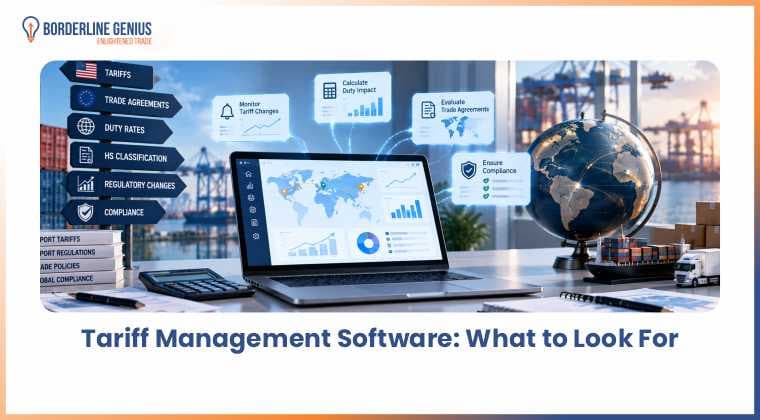 Tariff GeniusTariffsTariff Management8 min read
Tariff Management Software: What to Look For
In tariff management software, accurate tariff data, duty calculation, regulatory updates, and features supporting global trade compliance should be considered.
Read article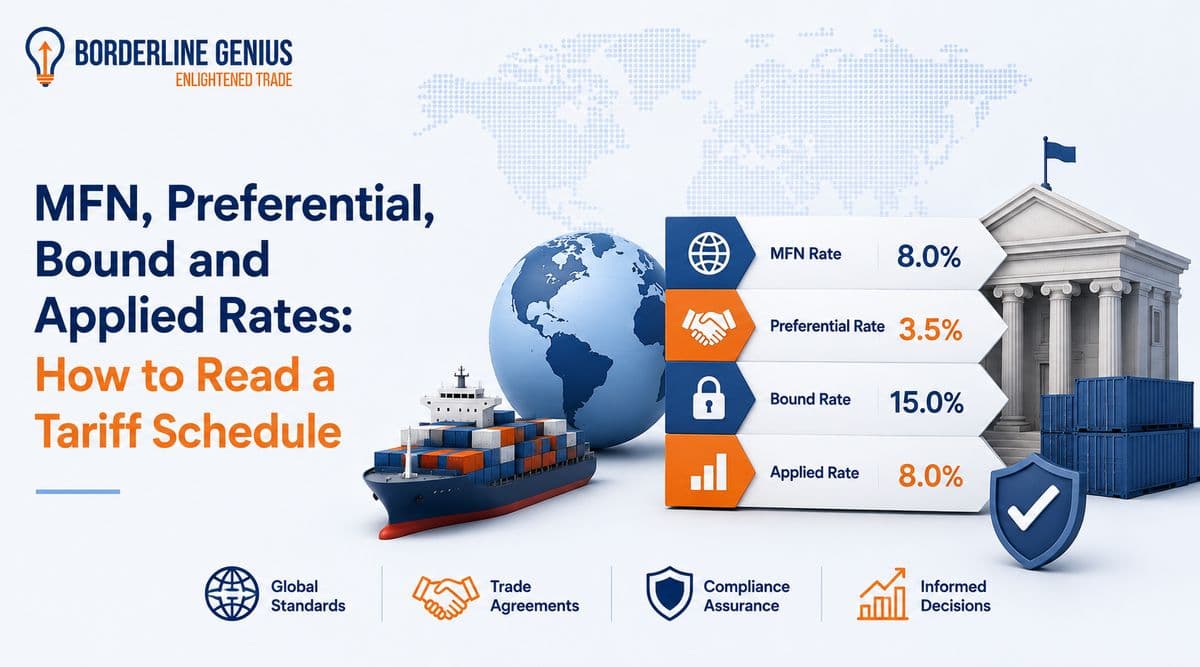 Tariff GeniusTariffsTariff Management17 min read
MFN, Preferential, Bound & Applied Rates: How to Read a Tariff Schedule
MFN, preferential, bound and applied rates explained. What each column of a tariff schedule means, how tariff-rate quotas work, and where to find them.
Read article