
What is HS Code Classification?
Understand HS code classification, how it works, the role of GRIs, Section Notes, Chapter Notes, and Explanatory Notes, as well as common mistakes.
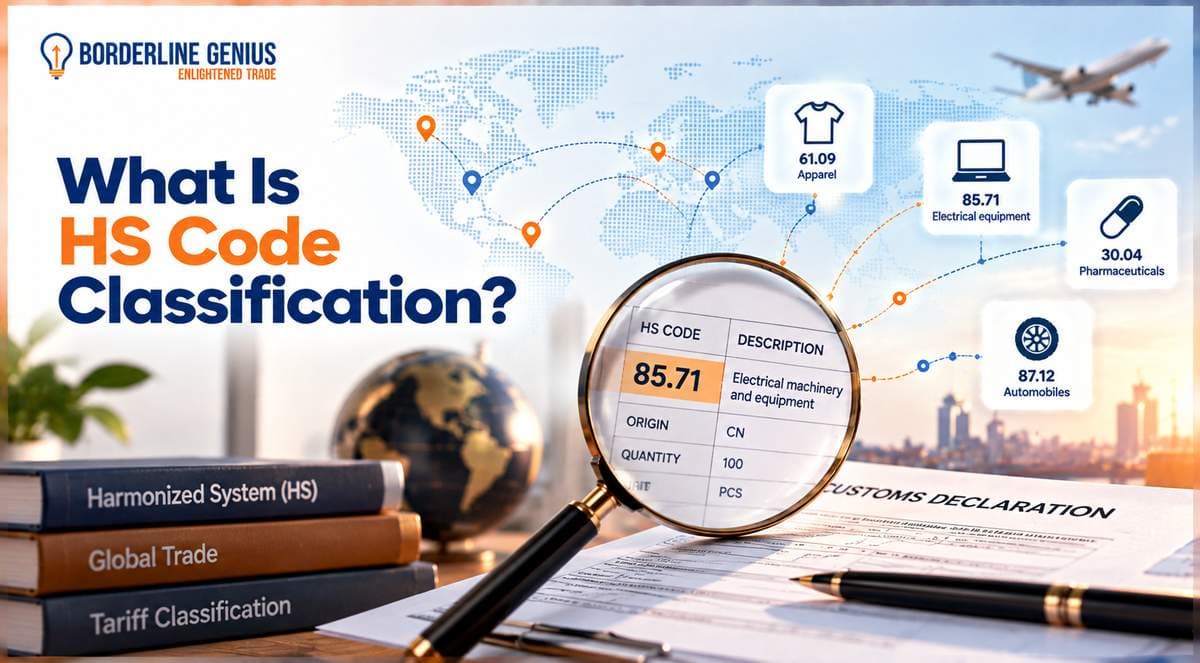
Every product that crosses an international border needs to be identified for customs use. HS code classification provides a standardized method for categorizing traded products under the Harmonized System. Accurate classification helps determine applicable customs duties, taxes, trade measures, and regulatory requirements. For importers, exporters, and customs brokers, it is essential for maintaining compliance and managing international trade operations efficiently.
What is an HS Code & Who Maintains it?
A Harmonized System or HS code is a set of standardized numerical digits used to classify internationally traded products. The HS is developed as well as maintained by the WCO or World Customs Organization and lays a common foundation for customs classification worldwide.
At the international level, these codes consist of six digits:
-
The initial two digits denote the HS chapter.
-
Then the next 2 digits represent the heading in the chapter.
-
The last two digits specify the subheading within that heading.
Country-wise Extension of HS Codes
The six-digit HS code provides the international foundation for product classification. However, individual countries can extend this structure to address their tariff and regulatory requirements. These additional digits allow customs authorities to identify products more precisely and apply country-specific duties, taxes, trade measures, and reporting requirements.
-
Countries can add digits to create detailed national tariff classifications.
-
The same product can have different extended tariff codes across countries.
-
Additional digits can identify country-specific duties and trade measures.
-
The global HS structure remains harmonized at the six-digit level.
Why is HS Code Classification Important?
HS code classification does more than identify a product within the Harmonized System. It influences the financial, regulatory, and operational requirements associated with international shipments.
For businesses involved in global trade, accurate HS codes help find out applicable customs duties, identify regulatory obligations, calculate import costs, and reduce the risk of compliance-related issues.
Determines Customs Duties and Tariffs
The HS code assigned to a product helps determine which tariff provisions apply when it is imported. Different classifications may attract varied duty rates or trade measures. This makes accurate classification essential for calculating customs costs and avoiding unexpected financial exposure.
-
HS codes help determine applicable customs duty rates.
-
Preferential tariffs may depend on classification and origin.
-
Certain products may attract additional tariffs.
-
Specific goods may face anti-dumping or countervailing duties.
Supports Customs Compliance
HS classification helps businesses and customs authorities identify regulatory requirements associated with internationally traded products. Depending on the product, destination, and applicable regulations, its classification can indicate additional obligations that must be addressed before goods can be imported or exported.
-
Certain classifications may require specific import licenses.
-
Product classification can help identify applicable trade restrictions.
-
Some goods may require additional government approvals.
-
Specific products may require certificates or permits.
-
Classification can help identify applicable quotas and trade measures.
Improves Landed Cost Accuracy
Accurate HS code classification is important when calculating the total cost of importing goods. Since customs duties and certain taxes can depend on classification, a wrong HS code can affect landed-cost calculations. This can lead to inaccurate pricing decisions, unexpected import expenses, and financial discrepancies across large product portfolios.
How Does HS Code Classification Work?
HS code classification works through a systematic methodology rather than simply matching a product name to a keyword in a tariff database. The process involves examining an item’s characteristics, identifying potentially relevant tariff headings, and applying the appropriate classification rules.
The process to classify generally involves the following steps:
-
Collect product descriptions, material composition, technical specifications, and intended use.
-
Review the tariff schedule to identify headings that may cover the product.
-
Examine Section Notes and Chapter Notes to determine applicable inclusions and exclusions.
-
Use the General Rules of Interpretation (GRIs) to establish the appropriate heading and subheading.
-
Extend the international six-digit HS classification using the relevant national tariff schedule.
-
Maintain supporting information and the reasoning behind the selected code.
Note that HS code classification software can support this process by organizing product information, researching potential classifications, and managing review workflows. This can help maintain greater consistency when classifying large product portfolios.
How Do the General Rules of Interpretation Determine an HS Code?
The General Rules of Interpretation (GRIs) outline the legal framework required for arriving at the appropriate product codes under the HS. These six rules guide the classification of goods under the Harmonized System and must be applied in their prescribed sequence. They are particularly important when goods have complex characteristics or appear to fit various tariff headings.
How Do Section Notes, Chapter Notes, and Explanatory Notes Affect HS Code Classification?
Section Notes, Chapter Notes, and Explanatory Notes provide important guidance when determining the appropriate HS code. They help clarify the scope of tariff classifications and explain how particular products should be treated. Understanding these references is especially important when a product appears to qualify for multiple headings or requires additional interpretation.
Common HS Code Classification Mistakes
While classifying products, certain errors can lead to wrong Harmonized System codes. Common HS code classification mistakes that can cause customs problems include relying on incomplete product descriptions and overlooking relevant legal notes. These occurrences can result in incorrect duty calculations. Besides these, customs delays and compliance risks can arise.
Conclusion
HS code classification is essential for determining customs duties, identifying regulatory requirements, and maintaining international trade compliance. Accurate classification requires reliable product information along with proper application of interpretation rules and regular reviews. Through a structured process, classification consistency can be improved and potential risks can be altered.
Frequently asked questions
Navigate Global Trade With Greater Confidence
Access expert guidance to help your organization address complex trade, classification, tariff, and compliance challenges.
Talk to a Trade ExpertRelated articles
Keep reading with more guidance on trade compliance and classification.
 14 min read
HS Code vs HTS Code vs Schedule B: What’s the Difference?
Learn the difference between HS codes, HTS codes, and Schedule B codes. Understand the 6-digit HS system, U.S. import classifications, and export codes.
Read article 11 min read
Harmonized System and HS Codes: An In-Depth Guide for Trade Professionals
Learn how the Harmonized System works, understand HS codes, product classification, tariff determination, customs procedures, and international trade compliance.
Read article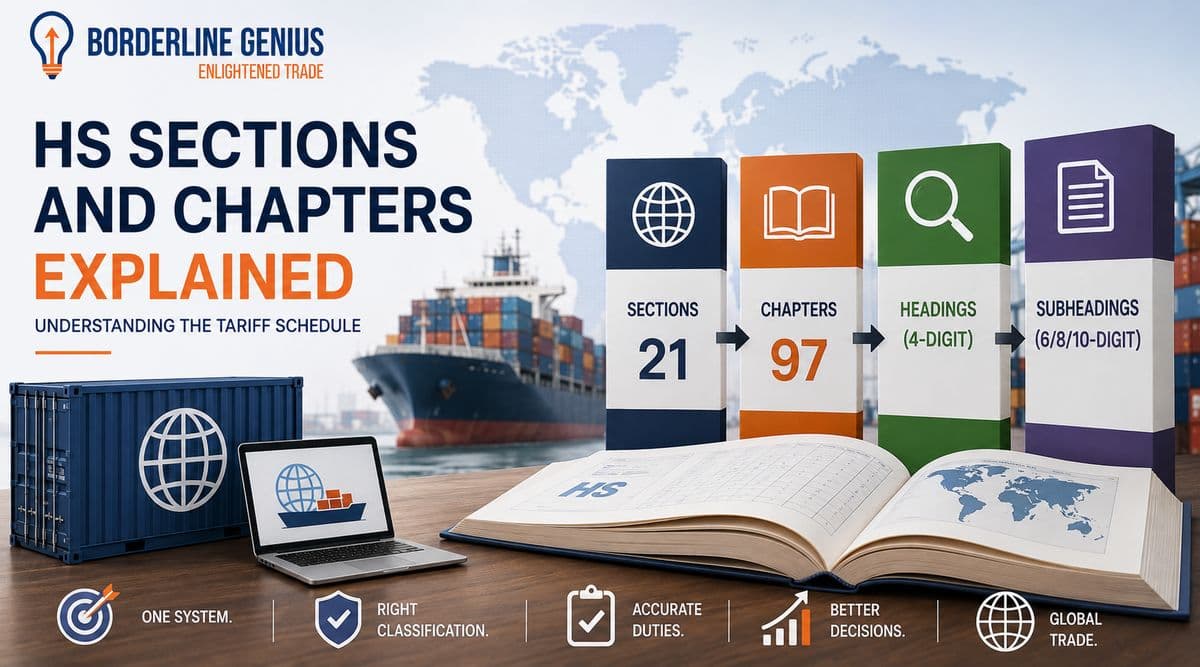 12 min read
HS Sections and Chapters Explained: Understanding the Tariff Schedule
Learn how the Harmonized System is structured with a complete guide to its 21 Sections, 97 Chapters, and the classification principles that organize the tariff schedule.
Read article