
HS Code Classification Software: What to Look For
Find out how to choose HS code classification software by assessing key features that can improve classification accuracy, research, and review.

For businesses, HS code classification software is important for classifying imported or exported goods accurately as well as consistently. Since classification decisions can affect applicable duties and regulatory requirements, the system should be selected with careful consideration. Knowing which software features matter is vital for this purpose. Some of the main considerations include the accuracy of assigning HS codes and access to relevant classification information. Selecting the best software on the basis of these features can enable organizations and trade professionals to invest less time in manual research. It can also improve consistency and make classification workflows easier to manage across products and teams.
What is HS Code Classification Software?
HS code classification software is a specialized digital system for determining the appropriate HS code for goods. It supports the research process and can organize the information used to reach classification decisions.
Depending on the system, it can facilitate:
-
Product information analysis for classification research
-
Access to relevant data for tariffs and classifying items
-
Classification workflows and review processes
-
Records of classification decisions and supporting information.
Quick Overview: Understanding the Harmonized System
The Harmonized System (HS) is the internationally standardized nomenclature used to classify traded goods. Knowing how it is structured serves as the foundation for understanding how HS classification software supports the process of finding codes for articles.
How to Choose HS Code Classification Software?
One should choose HS code classification software according to the features required for the classification process. Making a selection on the basis of features can simplify comparing systems. In addition, it can be easier to identify whether a specific solution can support existing workflows without resulting in unnecessary manual work.
What Features should You Consider in HS Classification Software?
Accuracy should be one of the first considerations when looking at HS classification software features. It should help users reach consistent decisions to classify goods. It does so by making relevant product and tariff information easier to review.
Other features should also be assessed based on how they support research, review, documentation, and ongoing classification management.
Product Information Analysis
While selecting HS code classification software, the analysis of product information should be considered when working with the technical details needed to classify goods. A suitable system can organize goods' attributes and make relevant information hassle-free to evaluate during the process of classifying them.
Classification Research
Through classification research, users can assess the information relevant to assigning an HS code, making it an integral feature of HS classification software. The right software should make relevant classification data easier to access and review. It can help users make decisions based on documented information rather than relying solely on manual searches.
Classification Review and Approval
Review and approval workflows enable a business to maintain oversight of classification decisions. As part of HS code classification software features, this aspect can allow teams to assign reviews and document decisions. Along with these, they can establish approval steps before the codes are finalized.
Audit History and Records
Audit trails provide a record of classification activity and supporting decisions. A suitable HS code classification software system should facilitate maintaining historical information. Thus, classification teams can review how and when a decision was made.
Synchronization with Business Systems
Integration enables the software for HS code classification to work with systems that already contain product and trade information. Connecting the related workflows with existing business applications can reduce duplicate data entry. Moreover, the information for classifying articles can move more efficiently across operations.
Evaluating these features together can help a business identify software that fits its classification requirements rather than selecting a system based on individual capabilities alone.
Which is the Best HS Code Classification Software?
The best HS code classification software depends on the business's products, classification requirements, workflows, and technology environment. Borderline Genius Inc. offers AI-powered trade compliance technology for product classification through Classification Genius. Its platform is designed to manage research and related compliance workflows.
Key Features of HS Classification Software by Borderline Genius Inc.
Borderline Genius Inc. provides HS classification software with features designed to facilitate product classification and in-depth research related to it. Through Classification Genius, the software uses AI to analyze goods' information and identify potential HS classifications. It also enables further research and review when a specific classification requires additional consideration.
The other features of this system include:
-
It comes with AI-powered classification to identify HS classifications from goods' information.
-
The software can spot classifications that may require additional review for trade compliance.
-
API and integration capabilities can connect classification information with the business systems in use.
-
Historical records, along with audit capabilities, support traceability of classification activities.
Conclusive Remarks
Selecting HS code classification software as per relevant features can help businesses ensure consistent classifications. They can manage research more effectively. In addition, with the right system preferred, accurate decisions can be made when assigning HS codes to products.
Frequently asked questions
Navigate Global Trade With Greater Confidence
Access expert guidance to help your organization address complex trade, classification, tariff, and compliance challenges.
Talk to a Trade ExpertRelated articles
Keep reading with more guidance on trade compliance and classification.
 Classification GeniusHS ClassificationTrade News11 min read
HS 2028: What is Changing, When, and How to Prepare?
As HS 2028 will take effect on 1 January 2028, learn about the key changes, implementation timeline, business impact, and steps to prepare classifications.
Read article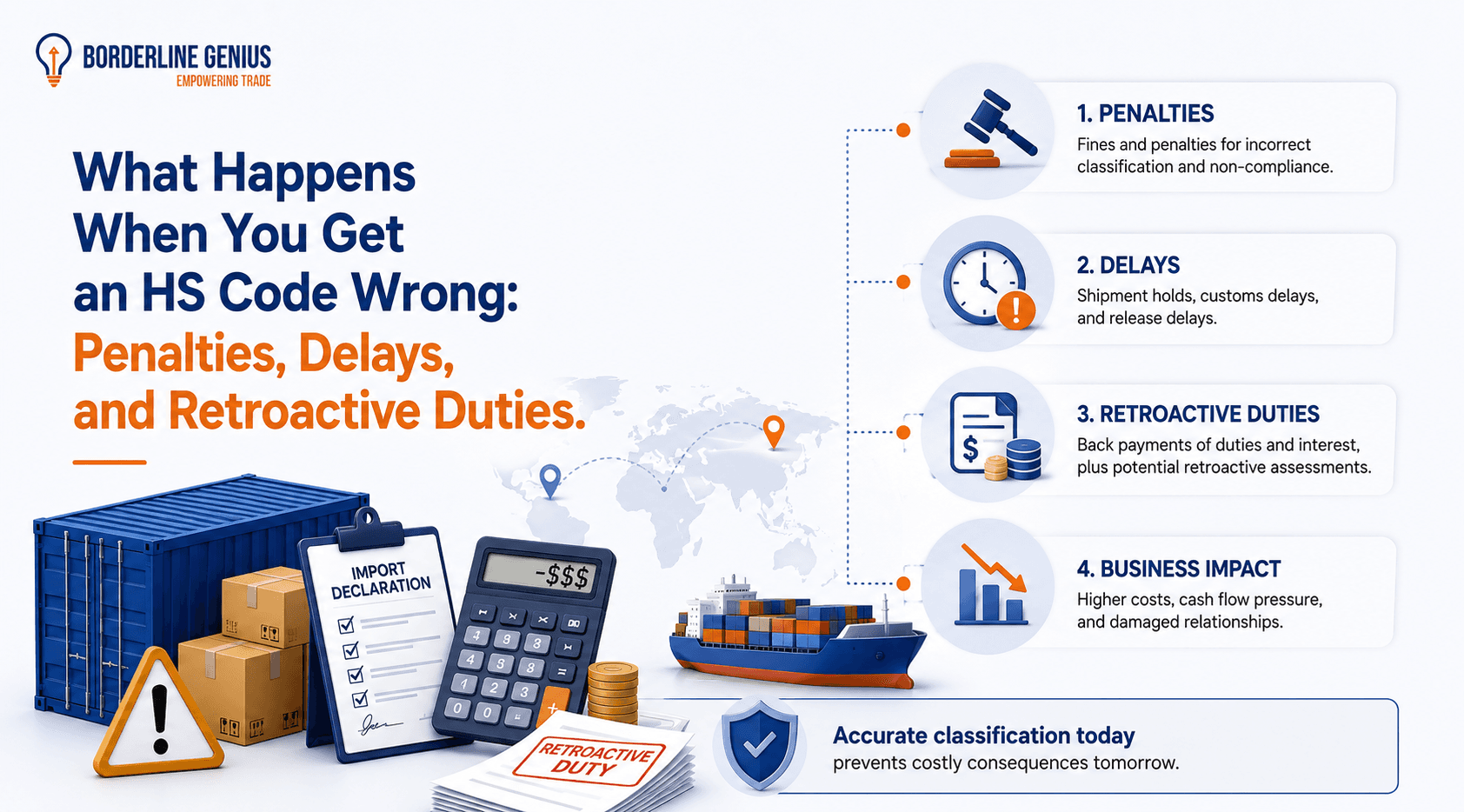 10 min read
What Happens When You Get an HS Code Wrong: Penalties, Delays, and Retroactive Duties
Learn the risks of incorrect HS codes, from delayed shipments and additional duties to licensing issues, failed origin claims, and customs penalties.
Read article 14 min read
Common HS Code Classification Mistakes that Cause Customs Problems
Learn the most common HS code classification mistakes, why they happen, and how businesses can reduce product misclassification, customs delays, and unexpected costs.
Read article