What is Export Compliance Software?
Learn what export compliance software is, how it works, its core components, use cases, advantages, and benefits for global trade operations.

In global trade, export compliance refers to the process of ensuring that international shipments follow applicable laws, regulations, and licensing requirements. Export compliance software is, therefore, important. It assists a business in managing these requirements while reducing manual work and compliance risks. It provides a structured system for handling trade information, regulatory checks, licensing, and workflows. The software can screen parties, review product classifications, assess licensing requirements, and maintain compliance records. Its main components can include elements for denied-party screening, trade content databases, and more. Businesses can use these capabilities to support regulatory compliance, financial operations, and shipment processing.
What is Export Compliance Software?
Export compliance software is a digital platform or system that helps businesses manage the regulatory requirements associated with exporting goods, technology, and services to international markets. It supports organizations in maintaining export compliance by managing relevant trade information, regulatory requirements, and compliance processes.
How Does Export Compliance Software Work?
In general, export compliance software connects with business systems like logistics platforms and ERP to assist organizations in monitoring export transactions and performing compliance checks. It can review shipment information against applicable regulations, restricted-party lists, sanctions requirements, and export licensing rules before the shipment of products.
To learn more about how export compliance software works, take a look at the steps below:
-
The software screens customers, suppliers, and other relevant parties against restricted-party lists and applicable sanctions databases to identify potential compliance concerns.
-
Product information is reviewed to assign relevant export control classifications, such as ECCN or HS codes, based on the applicable requirements.
-
The system can determine whether an export license is required based on the product, destination, end user, and applicable export controls.
-
Export compliance software can help prepare and manage shipping and customs documentation required for compliant export transactions.
-
The system can maintain records of compliance checks, decisions, and transaction activity to support reporting and regulatory audits.
What are the Core Components of Export Compliance Software?
There are several components of export compliance software that support regulatory checks, trade data management, licensing, internal workflows, and connections with business systems. They help organizations manage export requirements while keeping relevant information accessible across legal, finance, operational, as well as compliance functions.
The main components of such software systems typically include:
-
ERP integrations are elements that can link the software with existing enterprise systems, allowing relevant financial, product, customer, and operational information to move between connected platforms.
-
A denied-party screening component can check business partners and transaction parties against applicable restricted-party and sanctions lists to identify potential compliance risks.
-
License management capabilities can help teams track required export licenses, monitor their validity, and identify upcoming expiration dates that may require action.
-
A trade content database can maintain relevant regulatory requirements, tariff information, and other trade rules that teams may need when reviewing export transactions.
-
Workflow automation can structure internal review processes, assign compliance tasks, and support approval steps for export transactions that require additional oversight.
What is the Role of Export Compliance Software in Financial Operations?
Export compliance software can support financial operations by helping businesses maintain compliant and predictable trade transactions. By connecting export compliance processes with financial activities, it can contribute to accurate reporting, timely invoicing, revenue planning, and cash flow management.
-
Fewer compliance-related shipment delays can help businesses maintain more predictable shipment schedules and improve the reliability of cash flow projections.
-
Better visibility into compliant export transactions can support the accuracy and transparency of financial reporting.
-
Timely and properly managed export transactions can help businesses recognize revenue in accordance with applicable accrual accounting practices.
-
Compliant shipment validation can support timely invoicing by helping ensure that required export conditions are addressed before invoices are processed.
-
By reducing the likelihood of compliance-related shipment holds, businesses can maintain more predictable revenue cycles and support greater continuity in their operations.
How Does Export Compliance Software Support Regulatory Compliance?
Export compliance and management software can help organizations handle regulatory obligations and internal compliance requirements across international operations.
This system can support processes related to several established compliance areas, including the following:
-
AML or Anti-Money Laundering Compliance
-
FCPA or Foreign Corrupt Practices Act Compliance
-
Compliance Oversight (Global Ops)
-
KYC or Know Your Customer Compliance
-
ABC or Anti-Bribery and Corruption Compliance
The software can also give compliance leaders, such as the CCO (Chief Compliance Officer), access to dashboards as well as alerts that provide visibility into ongoing compliance activities and potential issues.
How can Businesses Use Export Compliance Software?
Across sectors such as manufacturing, technology, pharmaceuticals, and defense, export compliance software can be applied to manage export-related requirements. Businesses can use it for several operational activities.
-
Export teams can manage licensing requirements for technologies subject to export controls.
-
Businesses can monitor regulatory requirements while entering new international markets.
-
Compliance teams can help minimize cross-border shipment delays and support a more predictable order-to-cash process.
-
Organizations can review international sales orders for compliance before processing or fulfilling them.
For instance, a technology company shipping products that use encryption can use the software to assess applicable licensing requirements before export. This can help prevent avoidable shipment delays and support timely billing and more predictable revenue planning.
What are the Advantages of Export Compliance Software?
As one of its advantages, export compliance software can improve operational efficiency and financial control by helping organizations manage export requirements with greater consistency. It can reduce manual effort, strengthen oversight, and provide better visibility into compliance-related activities.
There are 5 other benefits of export compliance software for businesses.
-
Standardized compliance workflows can strengthen governance across export-related processes.
-
Real-time visibility into compliance activities can support faster and more informed business decisions.
-
Automated processes can speed up shipment approvals and reduce the need for manual intervention.
-
Structured records can improve audit trail management when organizations prepare for regulatory reviews or inspections.
-
Fewer compliance-related disruptions can help reduce revenue losses and support more predictable financial performance.
These advantages can help organizations manage international operations more consistently while reducing disruptions that may affect financial and operational performance.
Note: The specific benefits can differ depending on the software and its features.
Benefits of Export Compliance Software by Borderline Genius Inc.
Borderline Genius Inc. provides export compliance software that benefits businesses in several ways. It can support product classification and provide access to tariff and regulatory intelligence. The software can also help manage compliance workflows and monitor relevant regulatory changes. Integration capabilities can connect trade compliance activities with existing business systems.
Classification Support
A business can benefit from Classification Genius while handling product classification activities. It provides AI-powered classification capabilities and supports related workflows. It can help export teams manage classification information more systematically while maintaining relevant product data and recommendations for compliance review.
Regulatory Intelligence
For export compliance, Tariff Genius gives information related to duties, taxes, restrictions, and regulatory requirements associated with product classifications. Its main advantage is the use of government-sourced trade content through which it can help export teams review applicable requirements when evaluating products for international transactions.
Centralized Compliance and Regulatory Change Visibility
Genius Workspace provides a centralized environment for managing classification and compliance information, requests, and regulatory alerts. This can benefit teams as they maintain relevant export compliance information in an organized manner and improve visibility across ongoing compliance activities.
Also, this is a centralized workspace that is advantageous for getting alerts related to changes in tariffs, regulations, classifications, and other trade requirements. This visibility can help export compliance teams identify relevant regulatory updates and review whether those changes may affect existing products or transactions.
System Integration
Borderline Genius Inc. provides API capabilities that can connect trade intelligence with existing applications and business workflows. This can allow organizations to incorporate classification and regulatory information into systems used for export operations without managing every activity separately.
Scalable Compliance Workflows
Organizations can use individual Borderline Genius Inc. products for specific trade compliance activities or use Genius Workspace for broader compliance management. This approach can allow teams to apply the capabilities that align with their existing export processes and operational requirements.
In Summary
The digital system, export compliance software, is useful for managing international trade requirements through screening, classification, licensing, documentation, and compliance workflows. It can reduce manual effort and improve visibility across export activities. By organizing critical compliance processes within a structured system, it can reduce regulatory risks, shipment disruptions, and inconsistencies in global trade operations.
Frequently asked questions
Navigate Global Trade With Greater Confidence
Access expert guidance to help your organization address complex trade, classification, tariff, and compliance challenges.
Talk to a Trade ExpertRelated articles
Keep reading with more guidance on trade compliance and classification.
 Trade ComplianceTrade Compliance TeamsCustoms BrokersGenius Workspace7 min read
Customs Compliance Software: What to Look For?
Learn what to look for in customs compliance software, from HS code classification and regulatory updates to workflows, audit trails, and integrations.
Read article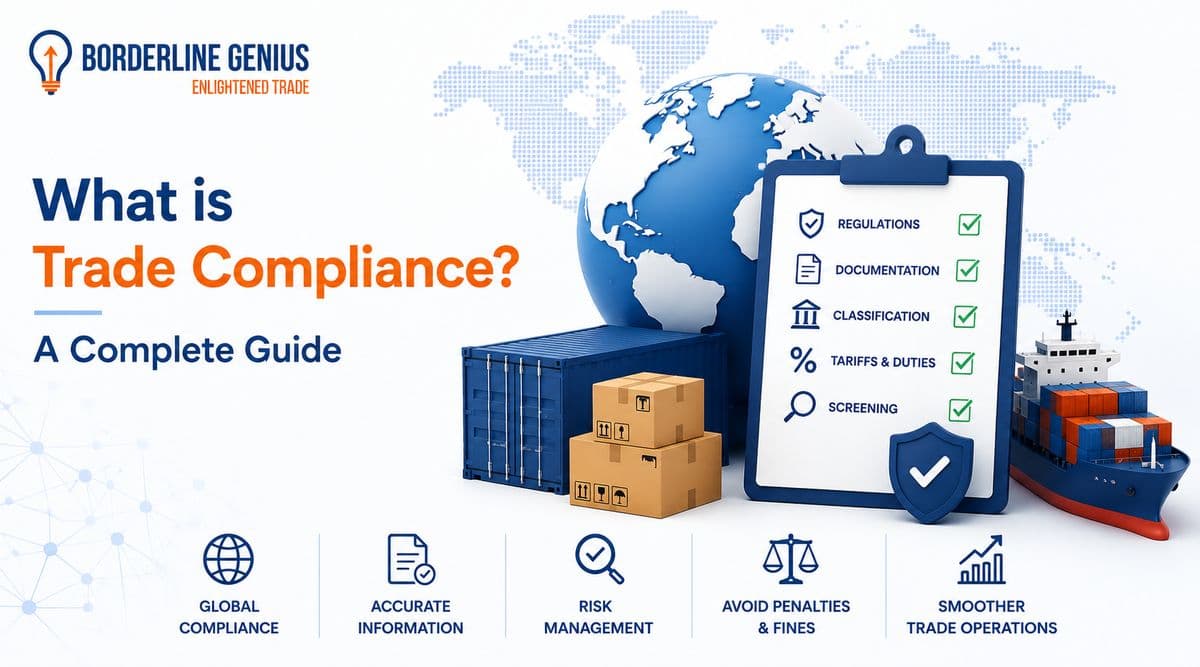 Trade ComplianceTrade Compliance TeamsGenius Workspace9 min read
What is Trade Compliance? A Complete Guide
Learn what trade compliance is, how it works, key compliance areas, risks of non-compliance, and how software can support global trade operations.
Read article Genius WorkspaceTrade ComplianceAI12 min read
Choosing the Right Trade Compliance Software in 2026
Choose the right trade compliance software in 2026. Compare key features, integrations, evaluation criteria, and best practices to find the right fit.
Read article