
Customs Brokerage Automation: Which Processes can be Automated?
Find out what customs brokerage automation is and which processes can be automated, including HS classification, duty calculations, and customs declarations.
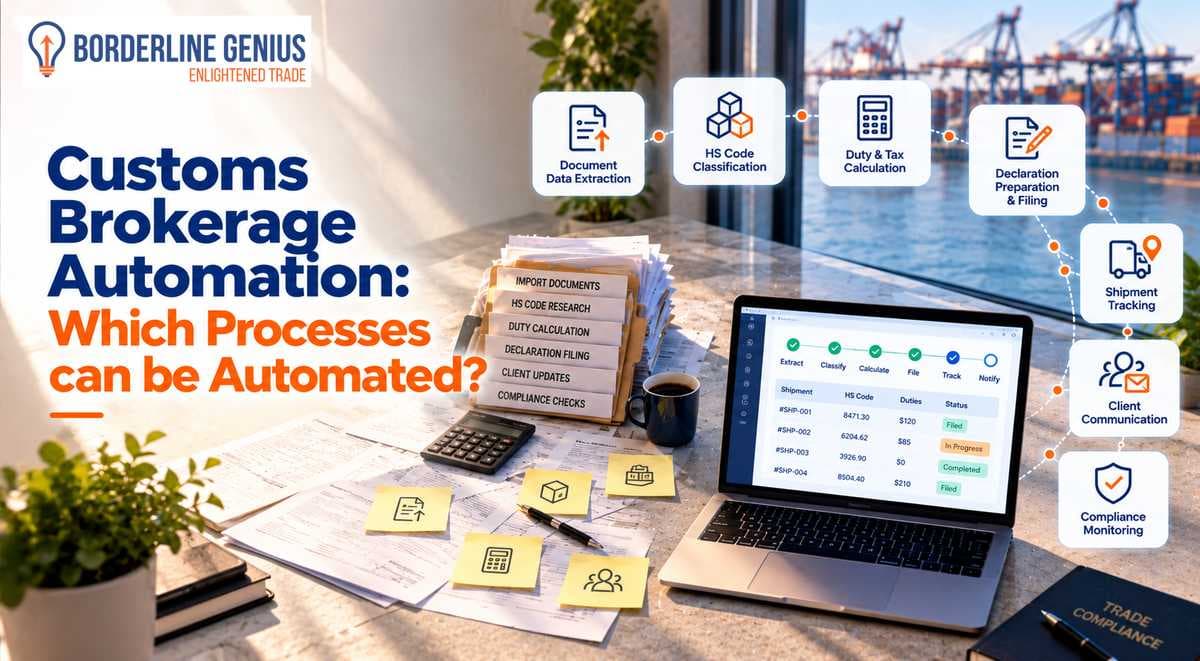
Customs brokerage automation can automate document processing, HS code classification support, party screening, and other such processes. These often involve repetitive data handling and verification, which can increase processing time when performed manually. It is the use of technology that functions through specific software to manage such tasks with less manual intervention. It helps customs brokers process shipment information, validate records, as well as coordinate clearance workflows more efficiently. By reducing repetitive administrative work, it allows brokerage teams to focus on exceptions, regulatory requirements, and complex cases.
For brokers, understanding which processes can be automated is an important step toward identifying suitable software and improving operational efficiency without compromising compliance.
What is Customs Brokerage Automation?
In simple words, customs brokerage automation is the use of software to perform or support repetitive tasks involved in customs clearance. It can extract data from trade documents and assist with product classification. Even to calculate duties, prepare declarations, screen parties, and monitor shipment status, it comes into use.
Note: While automating these, human review remains necessary for exceptions and regulatory decisions.
What is the Role of Automation in Customs Brokerage?
Automation or AI for customs brokerage helps brokers manage repetitive processing tasks more consistently while reducing dependence on manual data entry. It can connect information across documents, brokerage platforms, and customs systems to support faster workflows. Its role is to improve operational efficiency while keeping brokers responsible for reviewing critical information.
Automation can support customs brokerage operations in several ways:
-
This process can reduce repeated data entry by transferring extracted shipment information into connected systems.
-
It enables identifying missing fields and inconsistencies before declarations are submitted.
-
By screening parties and validating relevant shipment information, it supports compliance checks.
-
It improves visibility by tracking clearance updates and flagging holds or inspection alerts.
Which Customs Brokerage Processes can be Automated?
Customs brokerage automation can support several stages of the clearance workflow, from receiving shipment documents to tracking customs decisions. The level of automation depends on the software, available integrations, data quality, and the customs authority's electronic systems.
Document Ingestion and Data Extraction
By introducing automation in customs brokerage, Optical Character Recognition (OCR) and Intelligent Document Processing (IDP) can extract information from packing lists, commercial invoices, as well as certificates of origin. They identify details such as shipper, consignee, commodity, and value.
-
The extracted data can then populate brokerage systems, reducing manual entry.
-
Brokers should review unclear text, missing fields, and conflicting information before using the data.
HS Code Classification
AI-enabled software for customs brokers can analyse product descriptions and suggest Harmonized System (HS) codes. Some systems provide confidence scores to assist brokers in identifying suggestions that require closer review.
-
HS code classification accuracy depends on the completeness of product information and the applicable classification rules.
-
Brokers must verify suggested codes against the relevant tariff schedule and legal notes before declaring goods.
Party and Sanctions Screening
Automated screening tools can check importers, exporters, and other transaction parties against relevant denied-party lists, sanctions lists, and watchlists. Some systems for customs brokers can perform these checks as shipment information enters the workflow.
-
While using customs broker AI systems, potential matches can be flagged for further investigation.
-
Brokers should resolve alerts carefully because similar names or incomplete identification details can produce false matches.
Duty and Tax Calculations
For brokers, software that automates can calculate estimated duties, tariffs, VAT, and applicable fees using shipment information and relevant trade rules. Calculations may consider HS code, customs value, country of origin, and applicable trade agreements.
Reliable results depend on accurate inputs and current tariff data. Brokers should verify the applicable valuation rules, rates, exemptions, and other requirements before confirming amounts for a shipment.
Customs Declaration and Filing Pre-population
Importantly, customs brokerage automation can transfer extracted and validated shipment data into customs declaration forms. Integrations may also transmit information to compatible brokerage platforms or government systems, depending on the jurisdiction and available interfaces.
Pre-population reduces repetitive entry and helps maintain consistency between supporting documents and declarations. Brokers should review the completed declaration and ensure that all required information is accurate before submission.
Status Monitoring and Tracking
Automated systems for brokers can retrieve available customs clearance updates and electronic notifications from connected platforms. They can flag shipment holds, inspection requests, and other status changes without requiring brokers to refresh systems manually.
How to Automate Processes with Customs Brokerage Software?
Customs brokerage software can automate workflows by collecting shipment data, validating records, and connecting document processing with declaration preparation and clearance monitoring. Brokers should begin with repetitive and high-volume tasks, test the software against real shipment records, and expand automation after checking accuracy and compliance.
When evaluating the software for customs brokers, consider the following capabilities:
-
The software should support OCR and document extraction for the trade documents commonly handled by the brokerage team.
-
Classification tools should provide relevant product information and allow brokers to verify suggested HS codes.
-
Integration options in the customs broker software should fit existing brokerage platforms and the electronic filing systems used in the relevant jurisdictions.
-
Screening functionality should support applicable sanctions and denied-party lists, with a process for reviewing potential matches.
-
Duty calculation features should use relevant tariff information and support verification of customs value, origin, and applicable rates.
-
Audit trails and access controls should help teams trace changes, review approvals, and protect commercial shipment data.
Are there Any Limitations of Customs Brokerage Automation?
One of the limitations of customs brokerage automation is that it depends on accurate source data and reliable software rules. Incomplete documents, incorrect classification suggestions, or outdated tariff information can produce errors that affect declarations and compliance. Human verification is essential, particularly when processing unusual goods or complex transactions.
Other limitations of the software include:
-
Integrating the system with existing brokerage systems may require technical work.
-
OCR tools can misread handwritten entries at times.
-
When product descriptions lack sufficient details, wrong HS codes may be generated.
To Conclude
The use of automation or AI for customs brokers can reduce repetitive work across documentation, classification support, and other such processes. These professionals should assess their most time-consuming processes, select suitable software, and test its accuracy before expanding automation. Maintaining human oversight and current regulatory data holds importance for reliable customs clearance.
Frequently asked questions
Navigate Global Trade With Greater Confidence
Access expert guidance to help your organization address complex trade, classification, tariff, and compliance challenges.
Talk to a Trade ExpertRelated articles
Keep reading with more guidance on trade compliance and classification.
 Customs BrokersAITrade Compliance7 min read
How is AI Transforming Customs Brokerage in 2026?
Learn how AI for customs brokers is bringing change in 2026, from HS code classification to customs compliance, and how customs brokerage can adopt its use.
Read article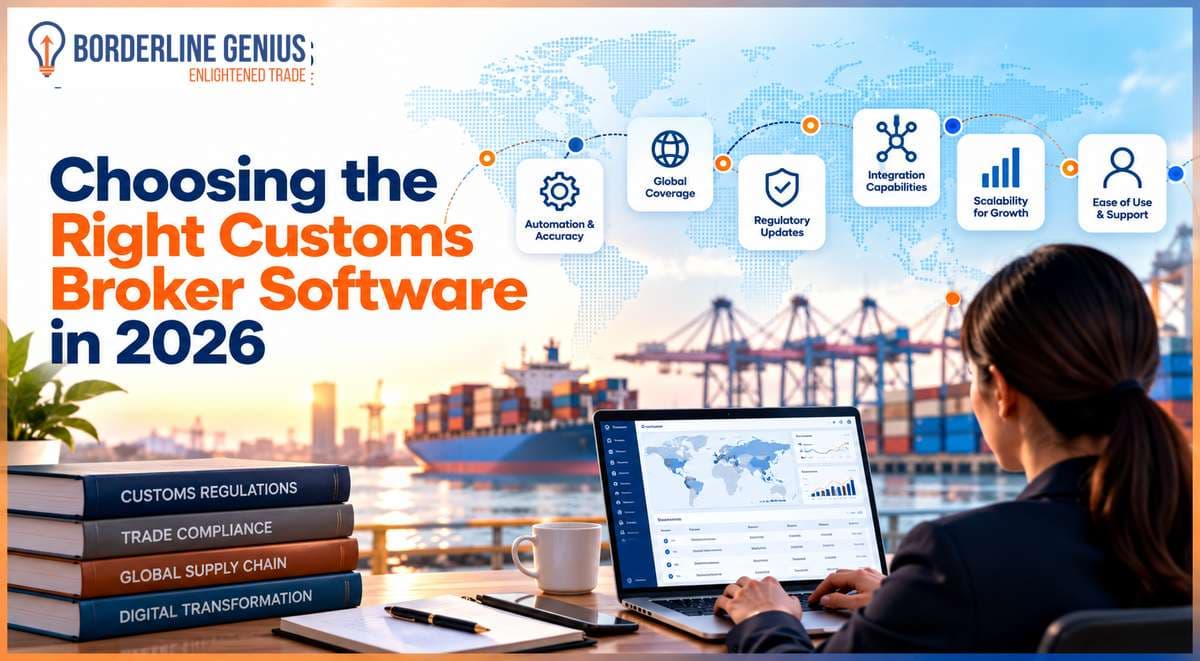 Genius WorkspaceCustoms BrokersTrade Compliance5 min read
Choosing the Right Customs Broker Software in 2026
Find out how to choose the right customs broker software in 2026 by assessing essential features such as integrations, scalability, and reporting.
Read article Customs BrokersTrade ComplianceGenius Workspace7 min read
What is Customs Broker Software?
Learn about customs broker software, its features, benefits, and role in managing customs transactions, documentation, duties, and shipment information.
Read article