
Hidden Costs that Increase Your Landed Cost
Learn about hidden costs in landed cost, including shipping, customs, and handling charges and discover how importers can identify these before importing goods.
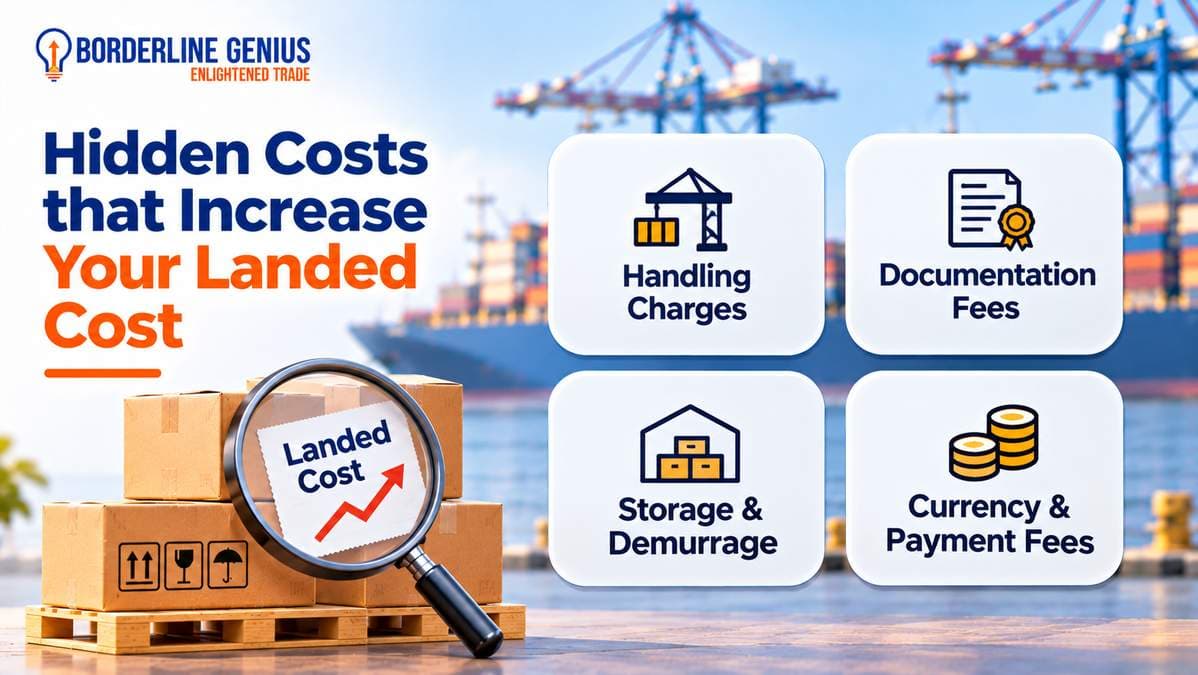
Landed cost represents the total expense of acquiring goods and bringing them to their final destination. However, the actual expense of an imported product may exceed the amount initially estimated. Hidden costs in landed cost can arise at different stages of the import process. They may not appear in a supplier’s quotation or an initial shipping estimate. As a result, businesses may underestimate their total import expenditure and make pricing decisions based on incomplete information. Understanding where these additional costs originate and how they increase the overall value can help importers prepare more accurate estimates. It additionally allows them to evaluate suppliers and manage their budgets with greater clarity.
What are Hidden Costs in Landed Cost Calculation?
Hidden costs in landed cost calculation are additional expenses that businesses may overlook when estimating the total expenditure of importing goods. They can arise when the import process involves multiple parties and activities beyond purchasing as well as shipping products.
-
An initial estimate may rely on limited information about the shipment.
-
But actual expenses can change as goods move through transportation, customs clearance, and delivery.
-
Some charges may also depend on the shipment route, destination requirements, or delays.
-
By identifying these potential expenses early, one can avoid unexpected increases in their total landed cost.
Types of Hidden Costs in Landed Cost
In landed costs, hidden charges can come up at different points between a supplier’s location and the final delivery destination. Their nature depends on the shipment, transportation arrangements, and applicable import requirements. Some expenses may be known in advance but excluded from an initial estimate. Others may occur because of delays or changes during the shipping process.
Let us take a closer look at 7 types of hidden charges in landed cost.
Port Handling and Terminal Service Charges
Terminals and ports charge fees for handling cargo during its arrival, movement, and release. They may add to landed cost when containers are unloaded, transferred, or processed within a port facility. The charges can differ by terminal, shipment type, and service requirements. Importers should review carrier and terminal tariffs to account for these expenses in advance.
Customs Brokerage and Clearance Expenses
At times, customs clearance involves professional services to prepare declarations and coordinate the release of imported goods. Customs brokers can charge fees for processing documents and managing clearance procedures. These expenses in landed costs may not be included in the supplier’s quotation or freight estimate. Importers should confirm brokerage fees and understand which clearance services are covered.
Storage, Demurrage, and Detention Fees
In landed cost, storage charges may be included when cargo remains at a port, terminal, or warehouse beyond the permitted period. Demurrage generally relates to containers staying at a terminal beyond the allowed free time. Detention may apply when containers remain outside the terminal after the permitted return period.
Inspection and Import Documentation Expenses
Some shipments require inspections or additional documents to meet customs and regulatory requirements. These procedures may involve service fees, document preparation costs, or charges for obtaining certificates. These hidden costs in landed cost depend on the product and destination country. Importers should identify applicable documentation and inspection requirements before shipping to avoid unexpected charges during clearance.
Inland Freight and Final Delivery Charges
International freight may cover transportation between countries without including delivery to the final destination. Importers may need to arrange additional transportation from the port or airport to a warehouse or business location. Such an expense in landed cost can be based on the distance, delivery method, and cargo requirements. Confirming the full transportation route can help estimate the complete delivery cost.
Currency Exchange and Banking Fees
In landed cost, hidden expenses like international payments may involve currency conversion charges or fees imposed by banks and payment providers. Exchange rates can additionally change between the time a purchase is agreed upon and when payment is made. These differences may increase the amount paid by the importer. Businesses should account for payment-related expenses when estimating the total value of acquiring goods.
Additional Duties, Taxes, and Regulatory Charges
Import duties and taxes in eCommerce landed cost may differ from initial estimates when shipment details or customs requirements change. Additional regulatory charges can be applicable as per the product and destination country. Classification, origin, and customs valuation can affect the applicable amount. Importers should verify the relevant requirements before shipping and update their calculations when new information becomes available.
Why Do Hidden Costs in Landed Cost Matter for Importers?
Hidden costs in landed costs matter for importers because they can increase the actual expense of importing goods beyond the amount used for budgeting and pricing. When they overlook these expenditures, their expected profit margins may not reflect the final amount spent. This can affect product pricing and purchasing decisions.
Other reasons to account for hidden costs are as follows:
-
Such expenses allow businesses to prepare realistic import budgets.
-
They can support accurate comparisons between suppliers and shipping options.
-
These expenditures can reduce the risk of unexpected expenses affecting cash flow.
-
Besides, they can help in assessing product profitability more reliably.
How to Identify Hidden Costs in Landed Costs Before Importing Goods?
To identify hidden costs in landed costs prior to importing goods, landed cost calculation software can help. It can detect them by organizing shipment expenses and estimating the total import expenditure. Landed Cost Genius by Borderline Genius Inc. is a reliable software solution for this purpose.
-
This system can assess shipment and expense details to understand how different cost components affect the final cost of imported goods.
-
With it, importers can simplify calculations and estimate the total sum before it is finalized.
-
It can facilitate informed pricing and purchasing decisions to account for import-related expenses.
Endnote
Hidden costs in landed cost calculation can increase the expenditure when importers overlook these beyond the product price and initial shipping estimate. Reviewing potential charges prior to shipment can enable them to prepare highly accurate estimates. By identifying these expenses early and keeping calculations updated, businesses can make sound pricing decisions to better manage the overall cost of international trade.
Frequently asked questions
Navigate Global Trade With Greater Confidence
Access expert guidance to help your organization address complex trade, classification, tariff, and compliance challenges.
Talk to a Trade ExpertRelated articles
Keep reading with more guidance on trade compliance and classification.
 Landed Cost GeniusLanded Cost8 min read
Landed Cost Formula Explained with Examples
Learn the landed cost formula with step-by-step examples and understand how to calculate the overall import expense and expenditure per unit for imported goods.
Read article 20 min read
How to Calculate Landed Cost for Cross-Border eCommerce?
Learn how to calculate landed cost for cross-border ecommerce, including product costs, shipping, duties, taxes and checkout considerations.
Read article 19 min read
What is Landed Cost? Formula, Components, and How to Calculate it
What is landed cost? Learn the landed cost formula, key components, calculation methods, examples, and how Landed Cost Genius helps simplify import cost analysis.
Read article