
Import Compliance Software: Features that Matter for Importers
Explore essential features of import compliance software that help importers manage regulations, classification, tariffs, and compliance workflows.
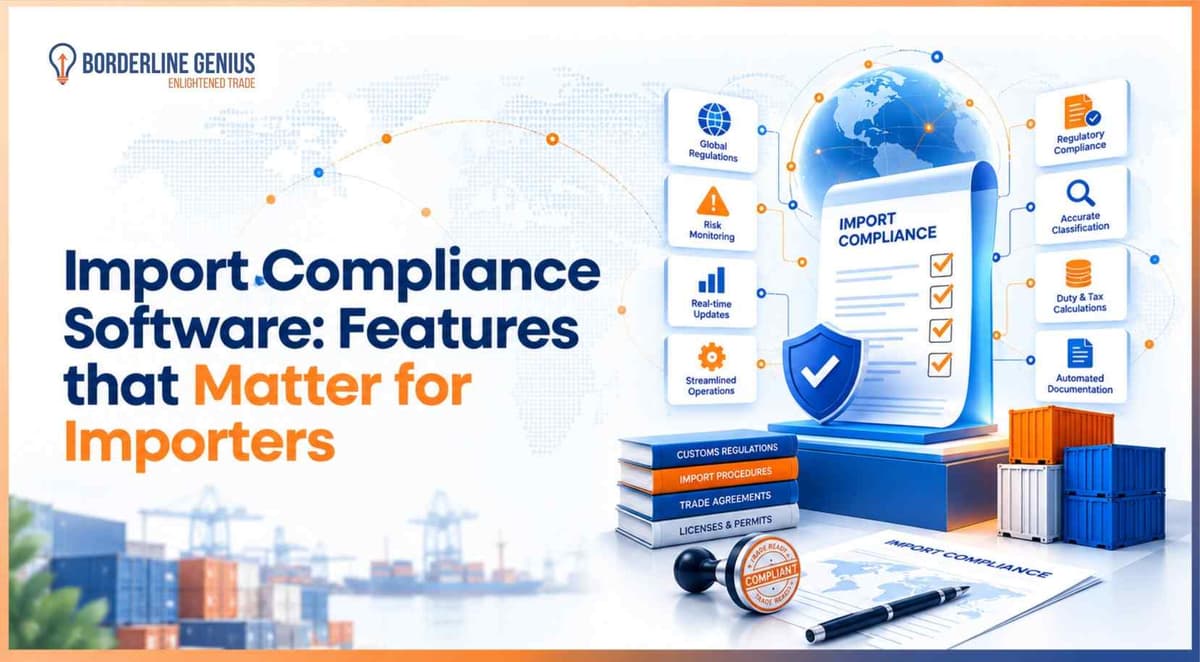
Import compliance software is important for importers to consistently manage classification, tariff intelligence, regulatory requirements, and compliance workflows. As these decisions can affect customs processes and import costs, the software should be selected carefully. Knowing which features matter is, therefore, vital when looking for such a system for importers. Some of the key considerations include accurate product classification and access to current trade information. Choosing software based on relevant features can enable importers to reduce manual research, improve consistency, and connect compliance decisions with existing business processes.
What is Import Compliance Software?
Used to manage customs and trade requirements, import compliance software is a digital tool or technology that helps importers organize compliance information, decisions, as well as workflows in one system. Depending on the system, it can support core processes like:
-
HS classification
-
Tariff and duty research
-
Regulatory information
-
Compliance reviews
-
Approvals
-
Audit records
-
Integration with existing business systems
How to Choose Import Compliance Software?
Importers should choose import compliance software based on the features that address their actual regulatory adherence requirements. A feature-based evaluation can enable comparing systems objectively. Besides, this can allow for detecting any operational gaps and whether the software can support existing workflows rather than adding another disconnected process.
What Features to Look for in Import Compliance Software?
The most important import compliance software features that matter for importers are those that assist in making accurate decisions, maintaining current trade information, and managing compliance work consistently. Product classification is one of the first areas to assess. Others can include tariff/duty intelligence, compliance workflows, audit trails, etc.
Before selecting a system, importers should evaluate such features in depth.
Accurate Product Classification
Accuracy in classifying products is a core feature of import compliance software for an importer. The HS code assigned to an item can determine which tariff and regulatory requirements apply. The preferred system should, therefore, support classification research. Moreover, it should help identify goods requiring review and assist teams in maintaining consistent classification decisions.
Current Tariff and Duty Intelligence
For importers, access to current tariff and duty information is essential to understand the financial and compliance requirements associated with an imported product. A suitable import compliance system should enable gaining accessing relevant tariff data. Besides, it should allow teams to understand how applicable duties and trade measures can affect import decisions.
Regulatory and Compliance Intelligence
Importers should look for compliance software that offers regulatory intelligence to identify requirements that extend beyond basic tariff rates. It should support this process by connecting product classifications with applicable restrictions, regulatory requirements, and other trade information relevant to the transaction.
Compliance Workflows and Approvals
Structured workflows, as part of import compliance management software features, support compliance teams in managing research, decisions, reviews, and approvals with consistency. The software should make it possible to organize compliance work. Also, when it comes to recording decisions and establishing appropriate review steps, it should come into use.
Audit Trails and Historical Records
In an import compliance system, audit trails help importers demonstrate how compliance decisions were made and what information supported them. Ideally, it should maintain historical records of relevant changes and decisions. Other than these, the records should have approvals and supporting information so teams can review compliance activity when required.
Integration with Existing Systems
The ability to integrate allows compliance software for importers to work alongside the ERP, product-data, logistics, and other systems already used by the business. APIs and other integration options can reduce duplicate data entry while allowing trade intelligence to become part of existing operational workflows.
Take into account that looking beyond individual features is important because the value of compliance technology depends on how those capabilities work together.
Which is the Best Import Compliance Software?
The best import compliance software is the one that fits an importer’s products, compliance requirements, workflows, and technology environment. Borderline Genius Inc. provides AI-powered trade compliance technology. It covers product classification, tariff intelligence, regulatory compliance, landed cost, and connected compliance workflows.
Key Features of Import Compliance Software by Borderline Genius Inc.
Borderline Genius Inc. provides import compliance software through a connected ecosystem that links classification, tariff intelligence, compliance workflows, and landed-cost information. Its products are designed to work with existing operations through workspace-based workflows, APIs, and integrations.
One key capability of this software is AI-powered product classification through Classification Genius. The product supports related research and workflow management while identifying classifications that may require additional review. This can help importers connect product information with the trade intelligence needed for subsequent compliance decisions.
Other features of the system include:
-
It offers AI-powered classification to identify HS classifications from goods' information.
-
Tariff Genius provides government-sourced tariff, duty, restriction, and regulatory intelligence.
-
Compliance data, workflows, roles, approvals, and audit activity are centralized through Genius Workspace.
-
API and integration capabilities connect trade intelligence with existing business systems.
-
To support calculations involving duties, taxes, and other applicable cross-border costs, Landed Cost Genius works as a reliable system.
-
Historical versioning and timestamped audit trails help maintain traceability of regulatory content and compliance activity.
In Closing
Selecting import compliance software based on relevant features is important for importers to improve classification. The right selection can also facilitate trade information management and compliance workflow organization. A suitable compliance system should support current requirements while fitting the importer’s existing technology, processes, and operational needs.
Frequently asked questions
Navigate Global Trade With Greater Confidence
Access expert guidance to help your organization address complex trade, classification, tariff, and compliance challenges.
Talk to a Trade ExpertRelated articles
Keep reading with more guidance on trade compliance and classification.
 Genius WorkspaceTrade ComplianceClassification GeniusLanded Cost Genius8 min read
What is Export Compliance Software?
Learn what export compliance software is, how it works, its core components, use cases, advantages, and benefits for global trade operations.
Read article 17 min read
How are Import Duties Calculated?
Learn how import duties are calculated using product classification, origin, customs value, and quantity. Understand import duty calculations, duty rates, customs valuation, and additional trade measures with practical examples.
Read article 13 min read
Import Compliance: Duties, Taxes & OGA/PGA Rules
Understand import compliance requirements beyond tariffs, including duties, taxes, restrictions, licenses and OGA/PGA requirements.
Read article