
Product Classification Software: What to Look For
Before choosing product classification software for global trade, understand which features matter and how they can help in finding accurate HS codes.
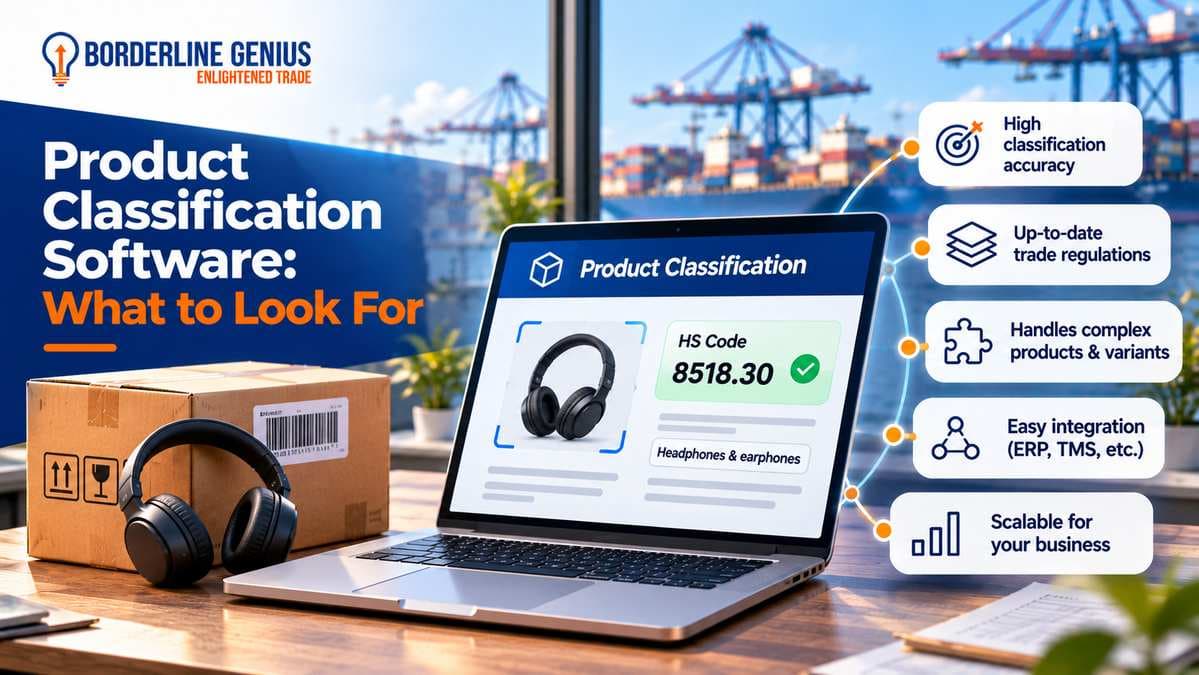
For certain businesses, product classification software is an essential part of international trade. Businesses must assign the correct codes to classify their products and determine applicable duties, meet customs requirements, and prepare accurate import or export documentation. However, this process can become more complex when goods contain multiple materials or are traded across different markets. Knowing what to look for in the software can help select a system that organizes product information and access classification-related data more efficiently. The right choice can support consistent practices, improve visibility into trade requirements, and reduce the risk of errors. Understanding which features matter most can assist a business in choosing a solution that fits its products, markets, and compliance needs.
What is Product Classification Software?
Product classification software is a digital system that helps assign classification codes to goods that are traded internationally. It supports the process of recognizing products under systems such as the Harmonized System (HS) and relevant national tariff schedules.
Why is Product Classification Software Important for International Trade?
For international trade, software for product classification is important for managing the process to classify items more consistently. Accurate codes support customs declarations and determine the duties as well as requirements that may apply to imported or exported goods.
This system can additionally help a business:
-
Reduce the risk of classification errors that may lead to customs delays or unexpected costs.
-
Review product-related tariff information when planning shipments.
-
Maintain highly consistent classification records across teams.
-
Support customs documentation and internal compliance processes.
-
Respond more efficiently when product details or trade requirements change.
What to Look for in Product Classification Software?
Product classification software can vary in its data coverage, features, and workflow capabilities. Businesses should consider how a solution supports classification accuracy, market-specific requirements, product information, and day-to-day trade operations. The right features to look for depend on the goods being traded and the markets involved.
Accuracy in Classifying Products
When choosing product classification software, one should see to it that it supports accurate and consistent classification decisions. It should provide relevant product information and references to assist users in assessing potential codes. Organizations should still review goods' specifications and applicable legal notes, since software results may not automatically establish a legally correct classification.
Support for Multiple Countries and Tariff Systems
Businesses trading across markets need software that supports the tariff systems relevant to their operations. Classification codes and requirements can vary by country. HS code software with multi-country coverage can enable them to review applicable codes and trade information for different import and export destinations.
Access to Recent Trade Regulations
Trade regulations and tariff schedules can change over time. Software for classifying products should provide access to current trade information and help users identify updates relevant to their products and markets. Important classification and compliance requirements should be verified through official customs sources.
Management of Product Data
The classification of articles depends on accurate and complete product information. Product classification software should support organizing details such as items' descriptions, materials, composition, and intended use. Maintaining consistent data can make classification reviews easier and limit repeated research when handling similar goods.
Integration with Existing Business Systems
Product classification solutions that integrate with existing business systems can reduce manual data entry and support consistent information across workflows. Connections with ERP, product management, or customs systems may facilitate accessing product details and classification data where they already manage trade operations.
Automation and Workflow Management
In product classification software, automation can allow managing repetitive classification tasks and ensure more efficient workflows. Depending on its capabilities, the system may have functionalities for reviewing product data, organizing classification records, or routing cases for further review. It is vital to assess which tasks can be automated and where expert judgment remains necessary.
How Does Product Classification Software Help Find HS Codes?
To find an HS code for a product, classification software can help with extensive research and review of trade requirements. For example, HS code lookup through InGenius lets users enter an HS code, select a country, and choose an import or export direction. The lookup provides information on duties and VAT, restrictions, other charges, and anti-dumping or countervailing duty exposure.
Using this software by Borderline Genius Inc., a business can review trade implications for a specific code and destination. It can support classification research. But users should confirm the appropriate HS code based on product details as well as applicable official guidance.
In a Nutshell
Product classification software is a useful system for businesses and professionals to organize classification information. Through this, they can review trade requirements across markets. When choosing the system, they should consider its accuracy, country coverage, data management, and workflow features. The right software can result in informed classification decisions.
Frequently asked questions
Navigate Global Trade With Greater Confidence
Access expert guidance to help your organization address complex trade, classification, tariff, and compliance challenges.
Talk to a Trade ExpertRelated articles
Keep reading with more guidance on trade compliance and classification.
 Customs BrokersTrade ComplianceGenius Workspace8 min read
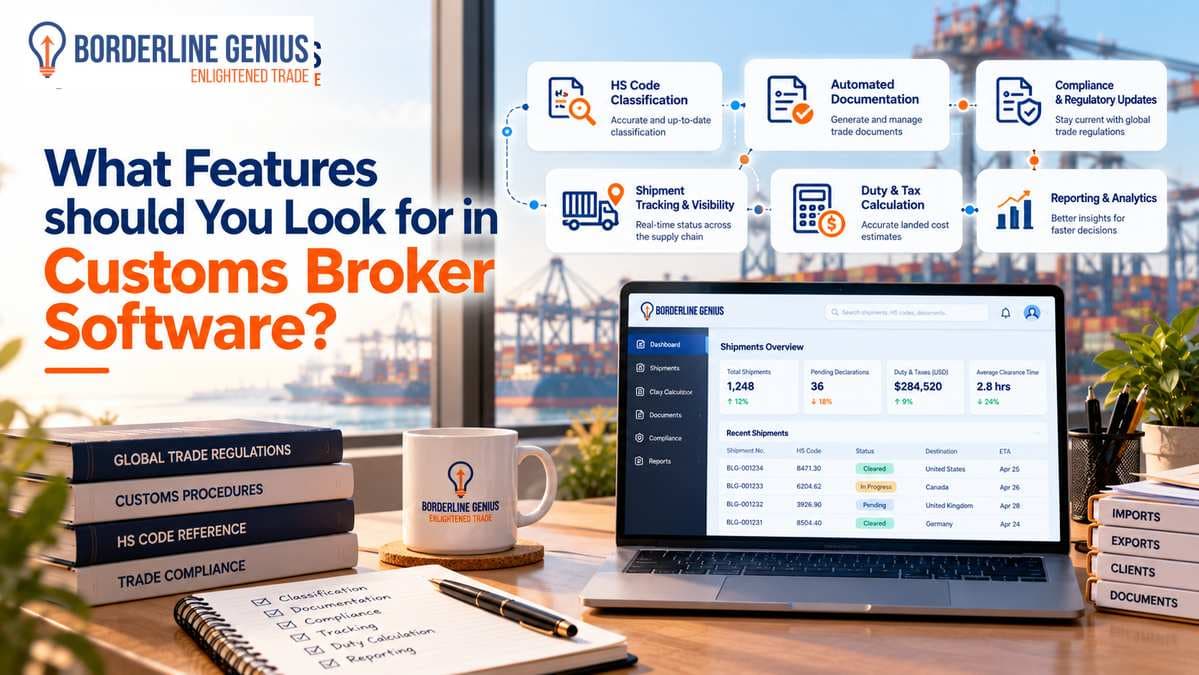
What Features should You Look for in Customs Broker Software?
Get to know the top 6 customs broker software features, from automated document processing to HS code classification, to simplify your brokerage operations.
Read article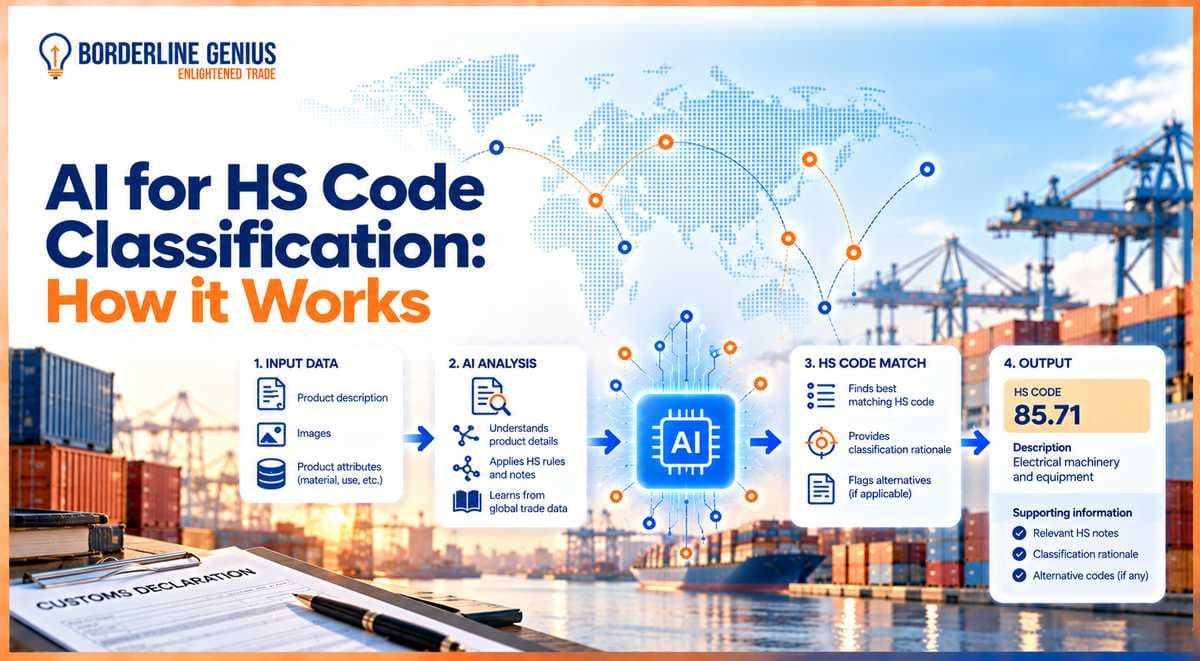 Classification GeniusHS ClassificationAI5 min read
AI for HS Code Classification: How it Works
Learn how AI HS code classification works, from analyzing product information to identifying potential HS codes and validating classification results.
Read article Classification GeniusHS ClassificationTrade Compliance5 min read
HS Code Classification Software: What to Look For
Find out how to choose HS code classification software by assessing key features that can improve classification accuracy, research, and review.
Read article