
How are Customs Brokers Using AI to Process Entries Faster without a Higher Headcount?
Find out how AI for customs brokers helps process entries faster without increasing headcount through document automation, data validation, and more.
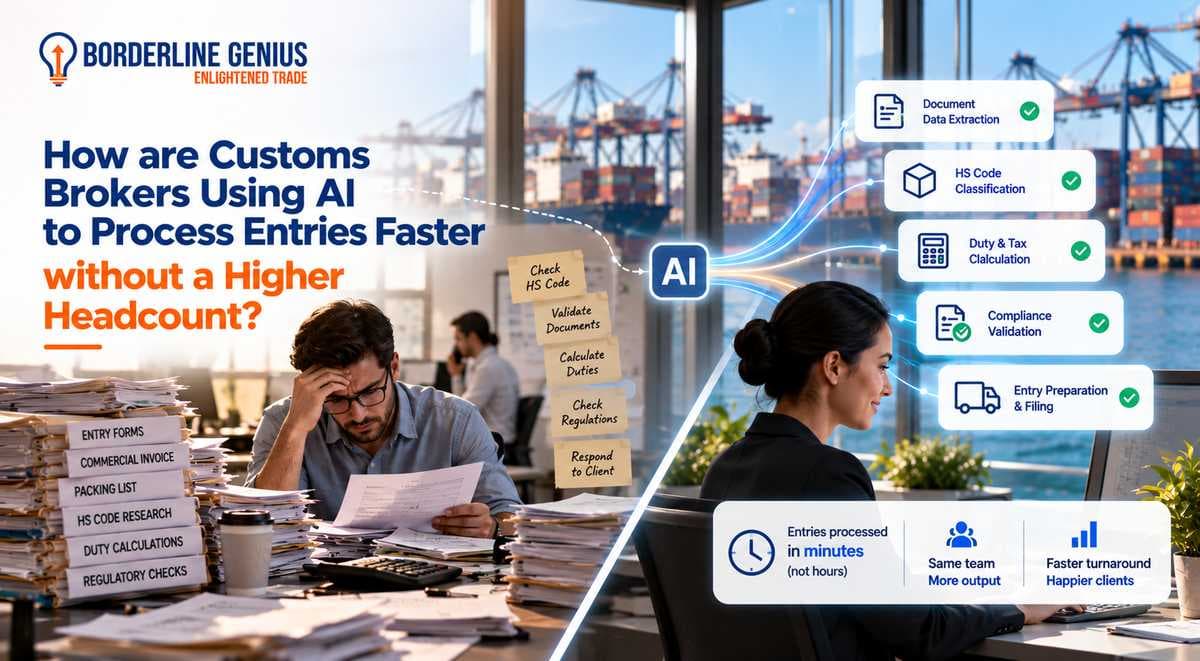
At times, customs brokers have to process more entries without increasing staffing costs. Manual document handling can consume significant time, especially when teams manage multiple clients with different shipment requirements. AI for customs brokers offers a way to reduce this workload by automating repetitive steps in entry preparation. It can extract shipment data, compare documents, and identify information that needs correction. These capabilities allow existing teams to handle routine work more efficiently. By focusing on tasks that consume the most time, customs brokers can increase processing capacity while retaining control over classification decisions and compliance requirements.
Can Customs Brokers Process More Entries with the Same Team?
Customs brokers can process more entries with the same team by automating repetitive preparation tasks. This decreases the scope for manual work and allows employees to focus on exceptions. Processing capacity can increase without requiring a proportional rise in headcount.
How is AI Changing Customs Entry Processing?
AI is changing customs brokerage in 2026, especially for customs entry processing through automation. This helps extract shipment information from trade documents and organize it for entry preparation.
Also, customs brokerage automation can identify discrepancies that require attention. As a result, brokers spend less time on repetitive data handling while retaining oversight of important compliance decisions.
How are Customs Brokers Using AI to Process Entries Faster?
Customs brokers use AI to boost entry processing by reducing manual work. Automation can handle routine data processing and help teams detect problems earlier. Its value lies in decreasing the time spent on repetitive tasks while allowing brokers to focus on decisions that require human judgment.
Go through the following 8 applications of AI for customs brokerage to understand how it increases the processing capacity without expanding teams.
Automating Data Extraction from Trade Documents
AI-powered document processing extracts shipment details from commercial invoices, packing lists, and bills of lading. It converts these details into structured data that customs brokers can review. This limits manual typing and enables teams to prepare entries faster.
Matching Shipment Data Across Multiple Documents
AI for customs brokers allows comparing shipment details across related documents to detect inconsistencies. It may flag differences in quantities, declared values, product descriptions, or weights. These discrepancies can be investigated before they cause delays or require additional processing.
Supporting HS Code Classification and Duty Calculations
Artificial intelligence-assisted HS classification tools can analyze product information for brokers. They can suggest potential HS codes for review. Connected tariff tools can additionally support duty calculations. Brokers should verify product classifications and applicable tariff provisions before relying on the results for customs declarations.
Preparing Customs Entries Automatically
Once shipment data has been extracted and validated, a compatible AI customs broker technology can populate relevant customs entry fields. Brokers can review the prepared information before submission. This lowers the chance of repetitive data entry and helps standardize routine preparation tasks.
Automating Compliance Checks before Filing
In customs brokerage, automated compliance checks can spot missing information and flag potential regulatory issues before filing. These checks allow brokers to prioritize entries that need attention. They further reduce the need to inspect every routine shipment manually.
Managing Multiple Clients through Standardized Workflows
Customs brokers often handle different documentation requirements for each client. Automation can apply consistent processing rules while retaining client-specific information. Thus, teams can manage larger shipment volumes without repeating routine administrative work for every customer.
Routing Exceptions to Human Review
For customs brokers, AI can flag incomplete documents, conflicting information, and uncertain classification suggestions for further review. They can focus their attention on these exceptions instead of checking every routine entry from scratch. This preserves professional oversight while reducing unnecessary manual work.
Integrating with Customs Filing and Business Systems
Integration allows compatible customs brokerage technology to exchange shipment information with ERP systems, logistics applications, and customs filing platforms. This reduces duplicate data entry and repeated status checks. It also helps brokers maintain continuity between entry preparation and electronic submission.
Are there Any Limitations of AI in Customs Entry Processing?
For customs entry processing, one of the limitations of AI is that it depends on the quality and completeness of the information it receives. Unclear documents or vague product descriptions may require additional review. Brokers can manage these situations through validation rules and exception handling rather than relying on automation without oversight.
Other disadvantages of the digital customs broker technology include:
-
Different document formats may require occasional corrections when extracted information is incomplete.
-
Classification suggestions need verification when product details are insufficient or tariff rules require interpretation.
-
Integration with existing filing systems may demand technical configuration and testing.
Which is the Best Customs Broker Software for Faster Entry Processing?
Borderline Genius Inc. offers Genius Workspace, an AI trade compliance platform that enables customs brokers to process entries faster without a higher headcount.
The key capabilities of the customs broker software, Genius Workspace, can support the research and coordination involved in preparing entries. It helps teams manage product information and compliance requests in one workspace instead of relying on disconnected spreadsheets and email threads that require more headcount.
Final Words
Indeed, AI for customs brokers can speed up entry processing by automating repetitive tasks and minimizing manual data entry. This allows existing teams to handle higher shipment volumes without necessarily increasing the headcount. Appropriate human oversight, however, is essential for brokerages to improve efficiency while maintaining accuracy and compliance.
Frequently asked questions
Navigate Global Trade With Greater Confidence
Access expert guidance to help your organization address complex trade, classification, tariff, and compliance challenges.
Talk to a Trade ExpertRelated articles
Keep reading with more guidance on trade compliance and classification.
 Customs BrokersTrade ComplianceGenius Workspace8 min read
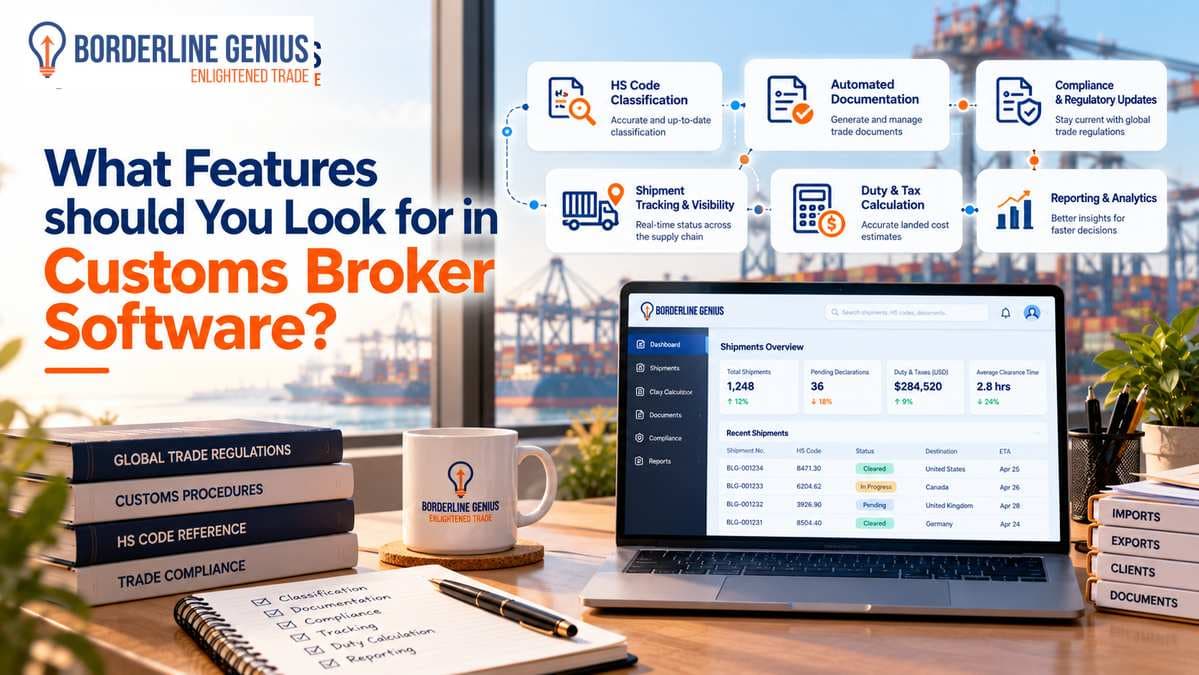
What Features should You Look for in Customs Broker Software?
Get to know the top 6 customs broker software features, from automated document processing to HS code classification, to simplify your brokerage operations.
Read article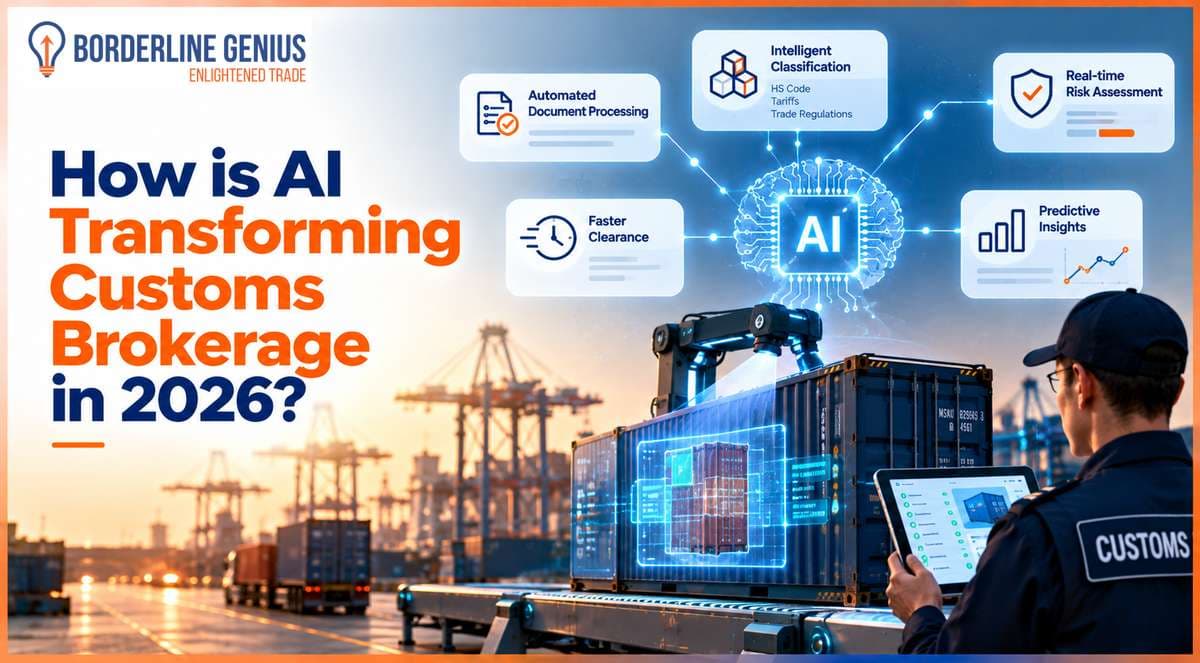 Customs BrokersAITrade Compliance7 min read
How is AI Transforming Customs Brokerage in 2026?
Learn how AI for customs brokers is bringing change in 2026, from HS code classification to customs compliance, and how customs brokerage can adopt its use.
Read article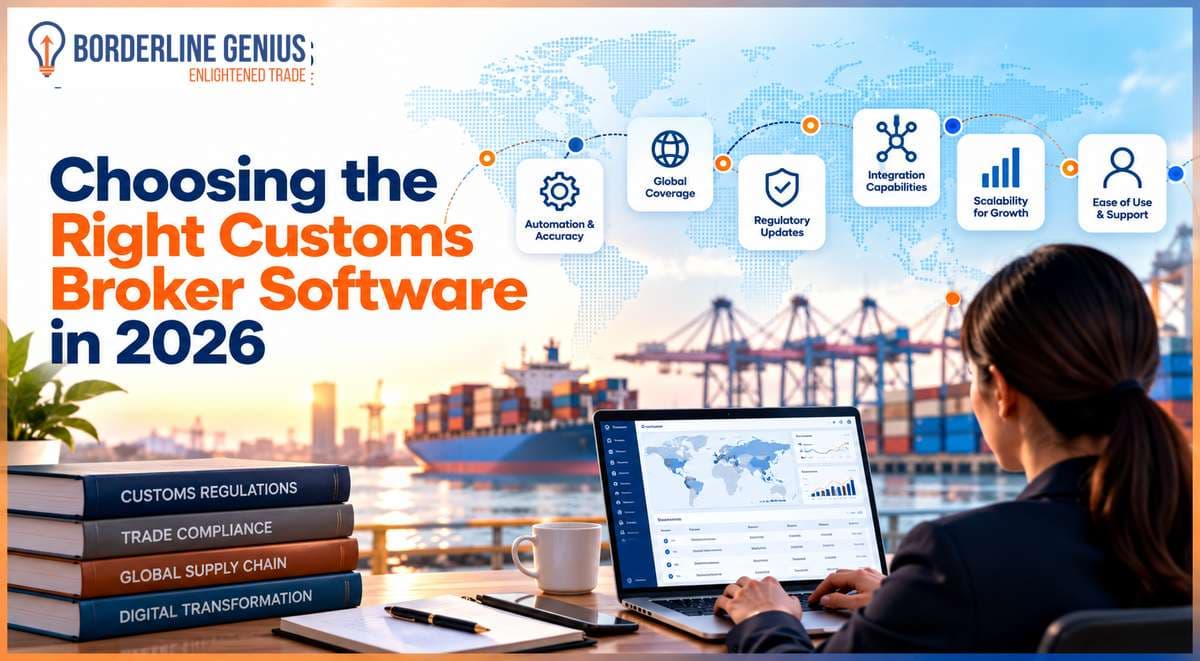 Genius WorkspaceCustoms BrokersTrade Compliance5 min read
Choosing the Right Customs Broker Software in 2026
Find out how to choose the right customs broker software in 2026 by assessing essential features such as integrations, scalability, and reporting.
Read article