
Landed Cost Calculator: How to Calculate Landed Cost Accurately?
Learn how a landed cost calculator works, the landed cost formula, the calculation steps, and how businesses can improve calculation accuracy.
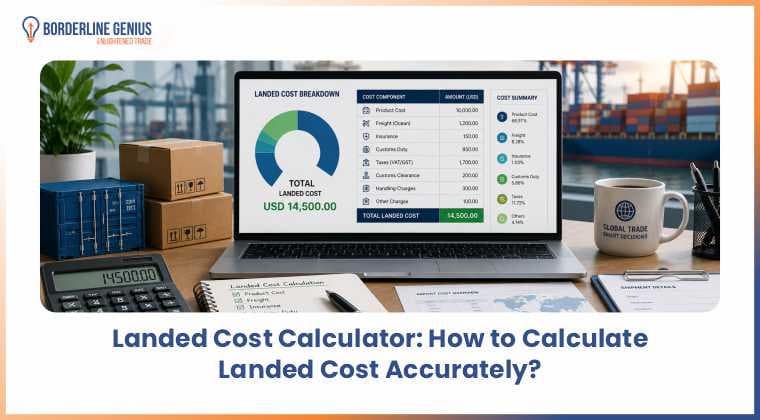
A landed cost calculator can accurately determine the total cost of imported goods when all relevant inputs are entered correctly. It is a tool that is useful for determining the final cost of goods after including applicable import expenses. This is an essential tool for businesses or professionals contributing to global trade, as it provides a clearer basis for pricing, profitability, and purchasing decisions. The calculation follows a landed cost formula that brings important cost components into one final figure. Understanding how it works and applies the formula can help identify the necessary information to use it correctly.
This blog explains in detail what a landed cost calculator is and the process of assessing landed costs step by step.
What is a Landed Cost Calculator?
A landed cost calculator is a tool that estimates the total cost of bringing goods to their destination. It combines the purchase price with applicable freight, insurance, duties, taxes, customs charges, and other import-related expenses to determine the actual cost of imported products.
An Overview of Landed Cost
Landed cost is the total amount a business pays to receive imported goods at their final destination. It includes the purchase price and additional expenses. These can include freight, insurance, customs duties, taxes, and other import charges as applicable.
How Does a Landed Cost Calculator Work?
In brief, a landed cost calculator works by combining the charges involved in importing products. It uses the relevant shipment details to estimate the final cost. The calculation also supports trade compliance by helping businesses account for relevant duties, taxes, and customs-related expenses before the goods reach their destination.
-
The business enters the product purchase price.
-
Shipment details are added to estimate transportation costs.
-
The duties and taxes that apply are calculated.
-
Insurance and customs charges are included where applicable.
-
The calculator totals the charges to accurately determine landed cost.
Why Do You Need to Calculate Landed Cost?
Businesses need to calculate landed costs to determine the actual total cost of imported articles before setting prices or evaluating profitability. This is important to find out how additional import expenses affect the final cost.
A detailed landed cost breakdown matters for 4 other reasons as well:
-
It can help a business set prices based on actual costs.
-
By calculating these, importers can identify unexpected charges before purchasing.
-
Accurate calculations can support profit margin analysis.
-
Besides, cost comparisons can become easier across suppliers and routes.
What is the Landed Cost Formula?
The landed cost formula is the calculation used to determine the total cost of imported goods at their destination. It adds the product cost to the expenses incurred during transportation, customs clearance, and delivery. The formula can be expressed as:
Landed Cost = Product Cost + Freight + Insurance + Customs Duties + Taxes + Other Applicable Charges
How to Calculate Landed Cost Accurately?
Businesses can accurately calculate landed costs by identifying each expense involved in importing goods. The landed cost calculator can organize these inputs and determine the final amount. The process starts with product cost and continues through transportation, customs, taxes, and destination charges.
Go through the complete process below, with each step covering the expenses that need to be identified and included for an accurate calculation.
Step 1: Find out the Product Cost
The first step to calculate the landed cost using the calculator is to establish the total purchase cost of the imported goods. This amount should match the agreed supplier price and commercial invoice. Any differences in quantity, unit price, or currency should be checked before continuing with the calculation.
-
Verify the supplier invoice and agreed purchase price.
-
Confirm the quantity and unit cost.
-
Importantly, check the transaction currency.
Step 2: Calculate Freight and Transportation Costs
Once the product cost is established, the next step in calculating landed cost is to determine the transportation expenses for moving the goods to their destination. The relevant amount depends on the shipping method, route, cargo, and agreed freight terms.
-
Include applicable ocean, air, road, or rail freight charges.
-
Check whether handling costs are included in the freight quotation.
Step 3: Account for Insurance and Shipment Expenses
After transportation expenses are identified, the calculation of landed costs via the calculator should account for insurance and other applicable shipment expenses. Reviewing the commercial terms and shipping documents can help identify charges that contribute to the total cost of receiving the imported products.
-
While using the landed cost tool, include cargo insurance as it applies.
-
Along with this, add relevant packaging or handling expenses.
Step 4: Determine Customs Duties and Taxes
The next landed cost calculation stage involves finding out the customs duties and taxes that apply to the imported articles. The amount may depend on the HS code, customs value, tariff rate, and applicable tax rules for the destination country.
-
Ensure to verify the applicable Harmonized System or HS code.
-
Afterward, check the relevant duty and tax rates.
Step 5: Add Customs Clearance and Destination Charges
Once duties and taxes are established, the assessment of the landed cost should comprise charges incurred during customs clearance and delivery. Reviewing shipment documents and service invoices can enable identifying destination expenses that form part of the final landed cost.
-
Include applicable customs clearance charges in the landed cost calculator.
-
Add destination handling or delivery fees where relevant.
Step 6: Calculate the Final Landed Cost
After all the important expenses have been identified, the final calculation using the calculator combines the individual costs to determine the total landed cost. The tool can organize these figures and reduce the risk of overlooking applicable charges.
How to Ensure Accuracy When Using a Landed Cost Calculator?
To ensure accurate calculations when using a landed cost calculator, companies should verify every cost input before calculating the final amount. Each expense should match the relevant commercial or shipment document. This can prevent missing charges, incorrect rates, and duplicate costs.
-
Importantly, verify product prices against the commercial invoice.
-
Use the correct freight and insurance charges.
-
It is vital to confirm the applicable customs duties and taxes.
-
Check destination charges before finalizing the calculation.
Note that the accuracy of landed cost calculation also depends on how the software handles and processes the entered information. Different tools may use various calculation methods, data inputs, and cost rules. This can make the choice of calculator important when correctness is a priority.
How Can Landed Cost Genius Help Calculate Landed Costs Accurately?
Landed Cost Genius can help businesses accurately calculate landed costs by combining shipment details with current trade regulations and relevant price-related data. The API of the software calculates the complete cost of cross-border shipments while accounting for duties, taxes, tariffs, geography, goods volume, and charges.
Using Shipment-Specific Inputs
The landed cost intelligence API by Borderline Genius Inc. uses key shipment inputs to calculate the charges or expenses associated with moving products across borders. The calculation can account for the country of import and export, origin, goods volume, and product prices to produce shipment-specific estimates.
-
The API applies duties based on import, export, and origin countries.
-
It assesses costs according to goods volume and prices.
-
The calculation accounts for applicable trade regulations and geographies.
Managing Changing Trade Regulations
Landed Cost Genius can assist companies in handling changing tariff regulations across diverse geographies. It can apply updated VAT, duties, and taxes based on relevant government trade data, helping keep shipment calculations aligned with changing trade requirements.
-
The API can identify applicable taxes and duties for different regions.
-
It can evaluate shipments against region-specific duties and taxes.
-
The landed cost calculator software can detect documentation requirements for tariff compliance.
Automate Landed Cost Calculations
The intelligent landed cost API, Landed Cost Genius, can automate calculations through its API, reducing the manual effort involved in repeatedly reviewing shipment costs. The system combines shipment details with trade regulations and key inputs to calculate the complete cross-border shipping cost.
-
The landed cost calculation software processes estimates across multiple shipments.
-
It reduces manual effort in recurring cost assessments.
-
The system maintains consistent landed cost estimates across shipments.
On a Final Note
A landed cost calculator can improve the accuracy of import cost calculations when it uses complete and reliable inputs. Businesses should verify the data entered and understand how the calculator processes each cost. Choosing a calculator with appropriate cost rules can help produce more dependable figures for pricing and planning.
Frequently asked questions
Navigate Global Trade With Greater Confidence
Access expert guidance to help your organization address complex trade, classification, tariff, and compliance challenges.
Talk to a Trade ExpertRelated articles
Keep reading with more guidance on trade compliance and classification.
 20 min read
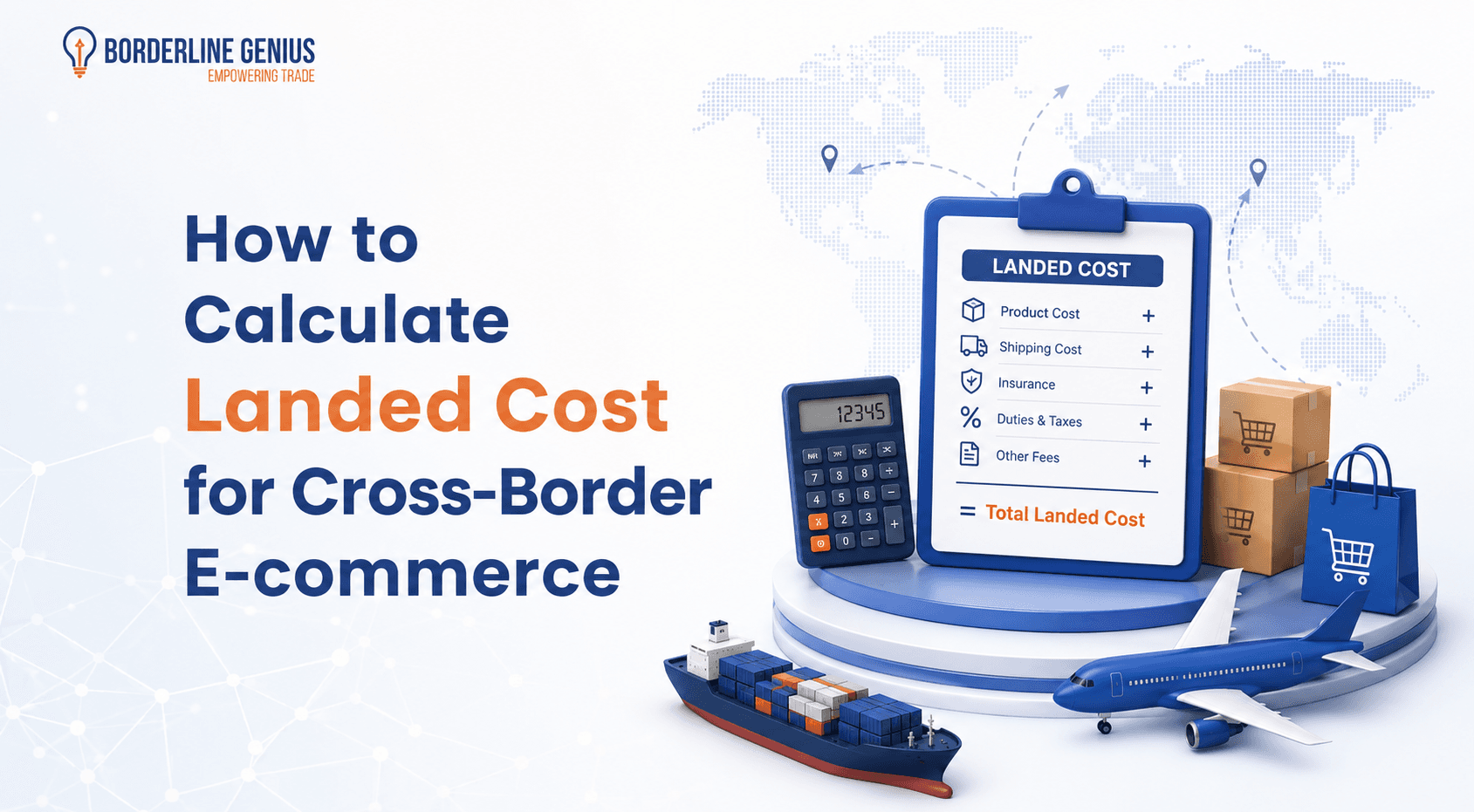
How to Calculate Landed Cost for Cross-Border eCcommerce?
Learn how to calculate landed cost for cross-border ecommerce, including product costs, shipping, duties, taxes and checkout considerations.
Read article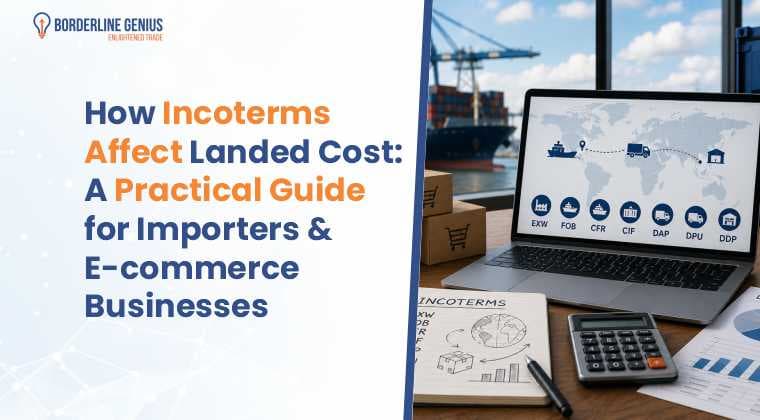 19 min read
How Incoterms Affect Landed Cost: Guide for Importers and E-commerce
Learn how Incoterms affect landed cost, import duties, taxes, freight and customs costs. Compare EXW, FOB, CIF, DAP and DDP for better sourcing decisions.
Read article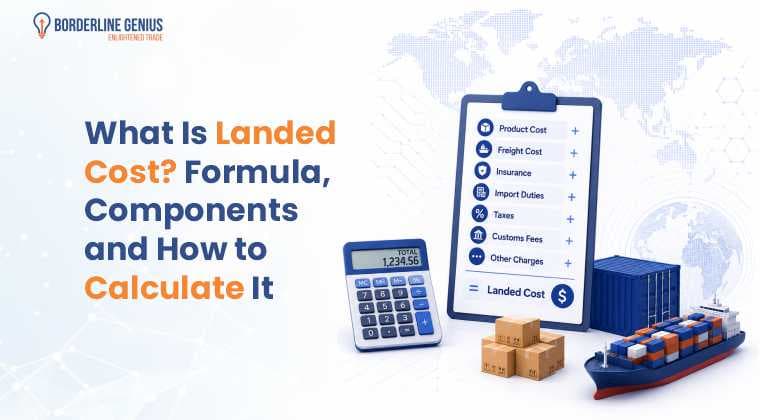 19 min read
What is Landed Cost? Formula, Components, and How to Calculate it
What is landed cost? Learn the landed cost formula, key components, calculation methods, examples, and how Landed Cost Genius helps simplify import cost analysis.
Read article