
Trade Compliance Best Practices for Importers
Discover trade compliance best practices for importers, learn how they can support compliant imports, and simplify the process of managing customs requirements.

Trade compliance best practices for importers are procedures that enable them to meet customs and import requirements consistently. Their key examples include verifying HS code classification and maintaining import documentation with accuracy. Determining customs value is another important practice. Following these measures matters because import transactions must meet applicable regulatory requirements before goods are cleared. Consistent compliance can reduce errors and prevent avoidable shipment delays. It can also support accurate customs declarations and better recordkeeping. For importers, a well-defined approach makes compliance responsibilities easier to manage across different transactions, helping them to identify potential issues before they affect the import process.
What are Trade Compliance Practices for Importers?
For importers, trade compliance practices are structured procedures that help them meet applicable customs and trade requirements. They guide how import transactions are reviewed, documented, and managed. Consistent practices can reduce compliance errors and enable accurate customs declarations.
5 Trade Compliance Best Practices for Importers
There are certain trade compliance best practices that importers should follow to manage import requirements more consistently. They range from verifying HS classification to monitoring regulatory changes. They are important for maintaining accurate customs information as well as reducing avoidable compliance issues.
These are the 5 best practices for trade compliance that importers should be aware of:
Verify HS Code Classification
One of the key trade compliance practices for importers is verifying the correct HS code before submitting customs declarations. Classification determines how goods are identified under the tariff schedule and can affect applicable duties and regulatory requirements. Product specifications should support the classification decision rather than relying only on general descriptions.
-
A documented classification process can make future reviews easier.
-
When an item changes or tariff requirements are updated, the existing classification should be reassessed.
Maintain Accurate Import Documentation
Included among the most important import compliance best practices for importers, accurate documentation helps customs authorities verify the details of an import transaction. Importers should ensure that the information provided across commercial and customs documents is complete and consistent under this practice for import compliance requirements.
-
A pre-shipment document review can enable them to identify discrepancies before they cause clearance problems.
-
Supporting records should also be retained according to applicable requirements so that the importer can substantiate information when needed.
Determine Customs Value Correctly
Importers should follow the practice of determining customs value according to the valuation rules applicable in the destination country. The declared value can affect the duties and taxes assessed on imported goods, making accurate valuation an important part of compliance.
Verify Country of Origin
Essentially, importers should establish the correct country of origin before making customs declarations or claiming preferential treatment, while carrying out trade compliance best practices. Origin rules can differ depending on the goods and the applicable trade agreement or national requirements.
-
Supporting evidence should be retained for origin decisions.
-
When goods involve processing or production in more than one country, the applicable origin rules should be reviewed carefully.
Monitor Import Regulations
An importer should frequently monitor regulatory changes that may affect their products or transactions. Customs requirements can change over time. Besides, an established procedure may become outdated if the underlying rules change.
-
Compliance teams should review relevant updates.
-
They should determine whether internal procedures need to change.
-
Regulatory monitoring should cover requirements such as import controls and licensing.
-
Moreover, product-specific measures should be implemented where applicable.
In Summary
Following trade compliance best practices helps importers manage customs requirements more consistently. Accurate classification, reliable documentation, and other measures can support compliant import transactions. A systematic approach can further help detect potential issues early and maintain accurate records throughout the import process.
Frequently asked questions
Navigate Global Trade With Greater Confidence
Access expert guidance to help your organization address complex trade, classification, tariff, and compliance challenges.
Talk to a Trade ExpertRelated articles
Keep reading with more guidance on trade compliance and classification.
 Trade Compliance5 min read
Common Trade Compliance Challenges and How to Resolve them
Find out 4 common trade compliance challenges and practical solutions that a business can use to reduce these, avoid risks, and improve compliance.
Read article Importers & ExportersImport DutyTrade Compliance6 min read
Import Compliance Software: Features that Matter for Importers
Explore essential features of import compliance software that help importers manage regulations, classification, tariffs, and compliance workflows.
Read article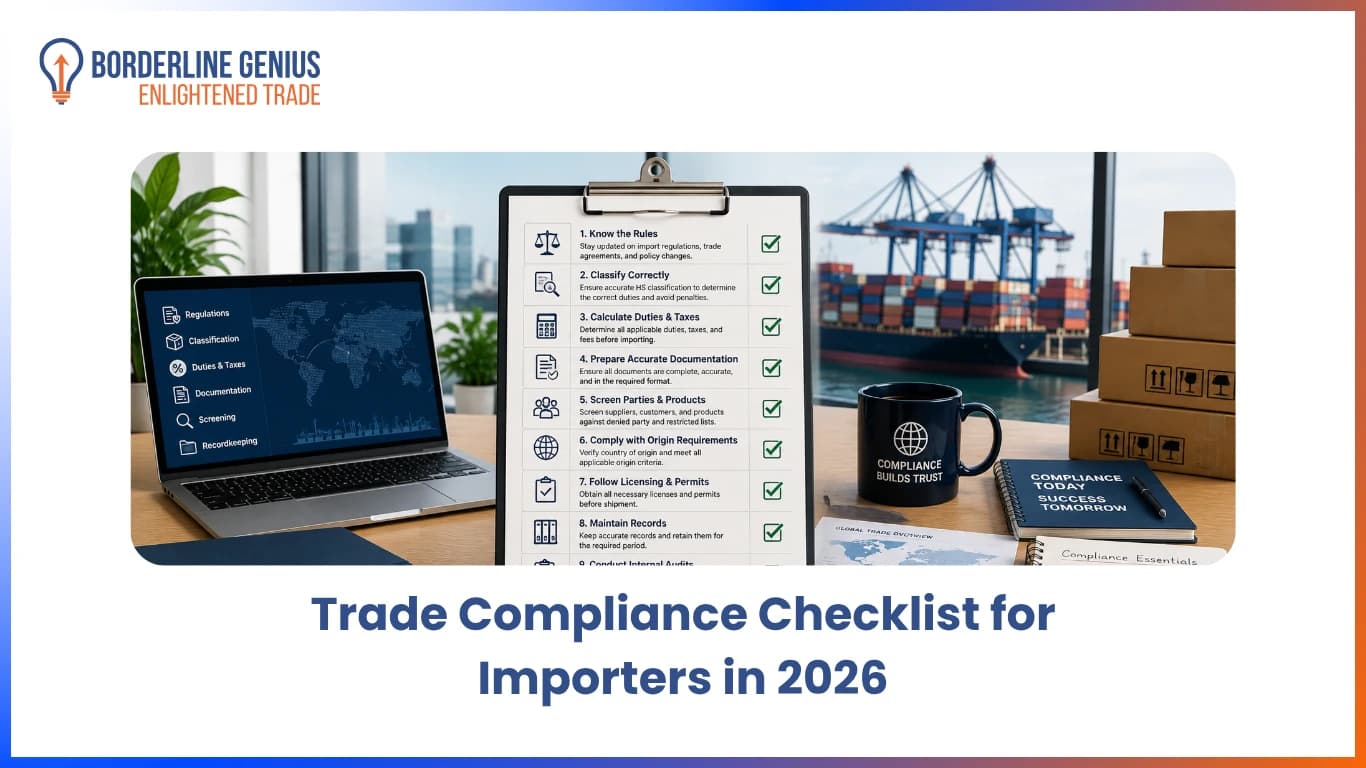 Trade ComplianceTrade Compliance TeamsGenius Workspace7 min read
Trade Compliance Checklist for Importers in 2026
Find an essential trade compliance checklist in 2026 to ensure accurate declarations, consistent compliance checks, and timely identification of requirements.
Read article