
Common Trade Compliance Challenges and How to Resolve them
Find out 4 common trade compliance challenges and practical solutions that a business can use to reduce these, avoid risks, and improve compliance.
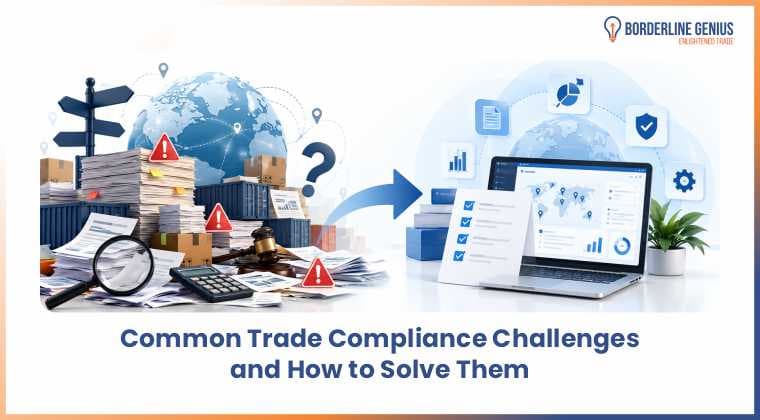
Trade compliance challenges arise when businesses have difficulty meeting customs, import, export, documentation, classification, valuation, origin, or regulatory requirements. Common examples of the same include incorrect HS code classification and incomplete customs documentation. These issues can often occur as regulations differ between countries and product requirements can change over time. Manual processes and inconsistent internal checks can also increase the risk of errors. Resolving these challenges is important because they may trigger shipment delays, incorrect duty payments, penalties, or customs disputes. Businesses can reduce these risks by establishing standardized compliance procedures and other such measures.
4 Common Trade Compliance Challenges
For a business, complying with trade regulations can become difficult when it has to manage several requirements across different shipments, products, and markets. The four most common trade compliance challenges are classification errors, documentation problems, import/export compliance, and changing regulatory requirements.
Incorrect HS Code Classification
Inaccurate or wrong HS code classification is a trade compliance issue that can occur when a product is assigned to the wrong Heading or Subheading. Classification can become difficult when products have multiple characteristics or when businesses misunderstand the applicable nomenclature, Section Notes, or Chapter Notes.
Incomplete or Inconsistent Documentation
When documentation is either incomplete or not consistent, it can delay customs clearance and make it difficult for authorities to verify a shipment. Such documentation issues in trade compliance may occur when information differs between commercial invoices, packing lists, transport documents, and customs declarations.
Changes in Trade Regulations
Any changes in trade regulations can make established compliance procedures outdated. Tariff schedules, licensing requirements, import controls, documentation rules, and other regulatory requirements may change as governments update their trade policies.
Import and Export Compliance Issues
In global trade, import/export compliance challenges can emerge as organizations are required to meet different customs, licensing, documentation, and regulatory requirements for each transaction. Requirements can vary by product, destination, origin, and type of trade activity. This can make consistent compliance difficult to maintain.
How to Resolve Challenges in Trade Compliance?
Resolving challenges in trade compliance requires a structured process that spots risks before they affect shipments. A business can improve compliance through practices including standardizing procedures and reviewing trade data. As it becomes compliant, it can smoothly exchange goods across borders.
To address the most common trade compliance issues, let us look closely at these practices.
Establish Standardized Compliance Procedures
Standardized procedures help apply the same compliance checks across relevant transactions. Written processes should define responsibilities, required documentation, review points, and escalation procedures for unusual or higher-risk transactions.
Ensure a Documented HS Code Classification Process
Companies can reduce errors while classifying by establishing a documented review process. Each classification should be supported by relevant product information and reviewed when item specifications or tariff requirements change.
-
Product descriptions should accurately reflect the goods being classified.
-
Technical specifications can help support the selected HS code.
-
Identify which Section and Chapter Notes are legally binding and relevant before finalizing classification.
-
Classification decisions should be documented for future reference and review.
Strengthen Document Controls
Document controls come into use for identifying missing or inconsistent information before customs declarations are submitted, thereby limiting trade compliance challenges. One can use standardized checklists to verify required documents and compare key information across commercial and customs records.
Monitor Regulatory Changes
Regular monitoring allows compliance teams to look for changes that may affect imports or exports. Relevant updates should be assessed promptly and incorporated into internal procedures, records, training materials, and compliance systems where necessary.
Maintain Accurate Compliance Records
To address difficulties while adhering to trade regulations, accurate compliance records provide evidence of how classification, valuation, origin, and other decisions were determined. Consistent recordkeeping also makes internal reviews and customs inquiries easier to manage.
Use Trade Compliance Software
Trade compliance software can help businesses eliminate challenges by organizing product data. Moreover, it can assist in maintaining compliance records, managing documentation, and supporting recurring review processes to limit issues. Technology should support established compliance procedures rather than replace the underlying need for accurate data and informed decisions.
Conclusion
Commonly, trade compliance challenges can arise from classification errors, documentation gaps, valuation problems, etc. One can reduce these risks through practices like establishing consistent procedures and reviewing compliance decisions regularly. A structured approach can detect problems earlier and ensure more consistent customs and trade operations.
Frequently asked questions
Navigate Global Trade With Greater Confidence
Access expert guidance to help your organization address complex trade, classification, tariff, and compliance challenges.
Talk to a Trade ExpertRelated articles
Keep reading with more guidance on trade compliance and classification.
 Trade ComplianceCustoms BrokersTrade Compliance Teams5 min read
Trade Compliance vs Customs Compliance: What is the Difference?
Learn the main differences between trade compliance and customs compliance, including their scope, requirements, responsibilities, and role in global trade.
Read article Trade ComplianceTrade Compliance TeamsGenius Workspace9 min read
What is Trade Compliance? A Complete Guide
Learn what trade compliance is, how it works, key compliance areas, risks of non-compliance, and how software can support global trade operations.
Read article Genius WorkspaceTrade ComplianceAI12 min read
Choosing the Right Trade Compliance Software in 2026
Choose the right trade compliance software in 2026. Compare key features, integrations, evaluation criteria, and best practices to find the right fit.
Read article