
Trade Compliance Checklist for Importers in 2026
Find an essential trade compliance checklist in 2026 to ensure accurate declarations, consistent compliance checks, and timely identification of requirements.
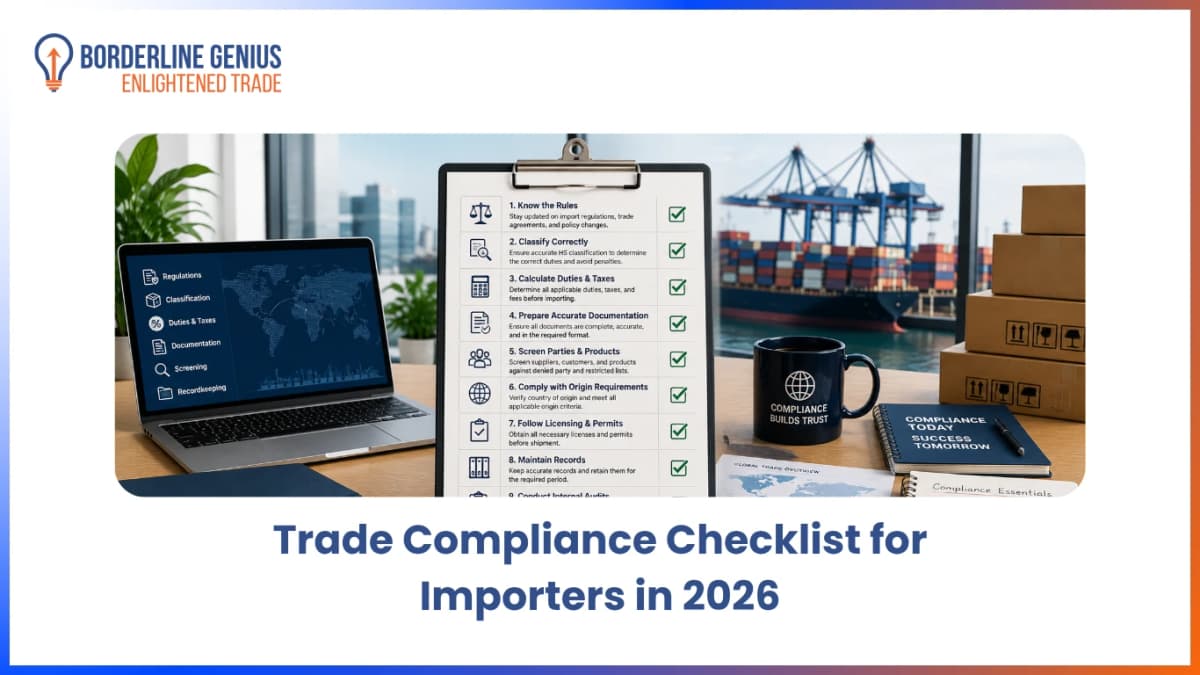
A trade compliance checklist in 2026 can assist importers in maintaining control over their import compliance process. It provides a structured approach for checking whether an import transaction meets the requirements that apply to it. As a guide, it can cover several areas of an import transaction. Some of the key examples include HS code classification, customs valuation, licensing, duties, and product-specific needs.
In 2026, importers face a changing compliance environment. Regulatory requirements can change as products, markets, and trade relationships evolve. The set of checks can enable businesses to review relevant needs consistently before goods are imported. It can also support better recordkeeping and help compliance teams identify gaps before they affect customs clearance. When used with appropriate processes and technology, the checklist can make import compliance easier to manage across recurring transactions.
Hence, it is important to know what this checklist is, why it is essential, and which vital elements it covers.
What is a Trade Compliance Checklist for Importers?
A trade compliance checklist for importers is a structured set of checks used to verify that an import transaction meets applicable customs, trade, and regulatory requirements. Functional as a guide, it provides a consistent framework for reviewing goods, documentation, parties, and declarations before and during the import process.
Note that unlike a simple shipping document list, such a checklist can cover the regulatory decisions behind an import transaction.
Why is a Trade Compliance Checklist Important for Importers?
Primarily, a trade compliance checklist is important because it helps importers identify and address compliance needs. Before errors result in customs delays, incorrect duty payments, penalties, or other regulatory consequences, it creates a consistent process for checking global trade requirements prior to submission.
7 other reasons indicate the importance of this checklist:
-
This guide helps identify incorrect classifications, valuations, origins, and declarations before they affect an import transaction.
-
Essentially, it ensures that the required information and supporting documents are available when goods are presented to customs.
-
For reviewing similar transactions across shipments, suppliers, and products, it provides a repeatable process.
-
It can support accurate assessment of duties, taxes, fees, and other import-related charges.
-
The checklist creates a structured record of the information and evidence supporting compliance decisions.
-
It can help identify licenses, permits, certificates, restrictions, and product-specific controls that may apply.
-
Also, it simplifies reviewing declarations, identifying discrepancies, and addressing errors after customs clearance.
Trade Compliance Checklist for Importers: Key Requirements to Know
A trade compliance checklist mainly covers classification, customs valuation, import licenses/permits, and other necessary checks. In 2026, they matter as importers should maintain accurate declarations, meet changing regulatory requirements, control duty exposure, and reduce the risk of delays, penalties, or other compliance issues.
Confirm the HS Code
As part of the 2026 checklist, importers should verify the correct HS code for each product before shipment. The classification should reflect the product’s composition, characteristics, function, and applicable tariff rules, including relevant Section Notes and Chapter Notes as well as national tariff provisions.
Verify Customs Valuation
The declared customs value should be reviewed against the applicable valuation rules in the checklist for trade compliance. Importers should verify the transaction value, identify any required additions or adjustments, and maintain supporting records for the value declared to customs.
Maintain Compliance Records
Importers should maintain an import compliance checklist that records the key customs and trade compliance checks completed for each transaction. Supporting records may include invoices, classification analyses, valuation records, origin documentation, licenses, certificates, and customs declarations.
Determine the Country of Origin
The applicable country of origin, under the 2026 checklist for trade compliance, should be established before importation. Importers should distinguish between preferential and non-preferential origin rules and maintain evidence supporting any origin determination or preferential tariff claim.
Check Import Licenses and Permits
Importers should determine whether the goods need licenses, permits, registrations, certificates, or other government approvals, in sync with the trade compliance checklist. Product type, destination, end use, and applicable regulations can affect whether additional authorization is required before importation.
Verify Preferential Tariff Eligibility
Importers should determine whether shipments qualify for reduced or zero-duty treatment under an applicable free trade agreement or preference program. The relevant rules of origin and documentation requirements should be satisfied before preferential treatment is claimed.
Verify Customs Declaration Details
Importantly, the customs declaration should reflect the imported goods and supporting commercial information with accuracy. A customs entry checklist can help importers verify the classification, customs value, origin, quantity, product description, and supporting documents before submission.
Calculate Duties and Taxes
The checklist for importers should essentially include the applicable customs duties, import taxes, fees, quotas, and other government charges. These should be checked before the shipment is declared. Classification, customs value, origin, and trade measures can all affect the final amount payable.
Check Product-Specific Regulations
One of the trade compliance checklist measures is reviewing goods for product-specific requirements in the importing market. Depending on the article, these may include safety standards, labeling, marking, testing, conformity assessment, health controls, environmental needs, or other regulatory measures.
How can Trade Compliance Software Help Manage Import Compliance?
Knowing what a trade compliance checklist covers is important. But managing each check consistently can be challenging when the process relies on manual reviews. Trade compliance software can enable importers to apply these checks more efficiently.
Trade compliance software can centralize compliance data, making it easier for importers to access and review information needed for import decisions. Centralized records can improve consistency across transactions and reduce the manual effort involved in maintaining separate compliance information.
Depending on the specific software, other ways in which it can support import compliance requirements include:
-
Importers can oversee product classification information and maintain related compliance records.
-
Compliance teams can organize customs documentation and import data within the system.
-
Businesses can monitor regulatory requirements and identify relevant changes that may affect import transactions.
-
Audit trails can provide supporting evidence for compliance decisions as well as subsequent reviews.
-
Teams can track compliance activities, assigned tasks, review status, and completion records.
Which Software can Help Importers Manage Trade Compliance Checks?
Borderline Genius Inc. is among the leading global trade compliance software systems that can assist importers in managing vital checks. It can automate key classification and regulatory assessment activities within the import workflow.
This software can analyze product data, support HS code classification, identify product-specific regulatory requirements, as well as provide tariff and duty information relevant to the import transaction.
Based on the specific compliance needs, the platform can also support the following:
-
Importers can classify large numbers of SKUs, parts, and components without relying entirely on manual classification.
-
Product-specific PGA flags can enable identifying regulatory requirements that may affect customs clearance.
-
Real-time duty, VAT, and special tariff information can be used to assess the cost of an import.
-
Audit-ready workflows can help validate HS codes and identify potential errors before regulatory review.
In a Nutshell
A trade compliance checklist is useful for importers to review classification, valuation, origin, documentation, and other regulatory requirements. In 2026, maintaining accurate checks can reduce compliance risks and improve import processes. Trade compliance software can further support these activities by organizing data and automating checks for a smooth import lifecycle.
Frequently asked questions
Navigate Global Trade With Greater Confidence
Access expert guidance to help your organization address complex trade, classification, tariff, and compliance challenges.
Talk to a Trade ExpertRelated articles
Keep reading with more guidance on trade compliance and classification.
 Trade ComplianceTrade Compliance TeamsGenius Workspace9 min read
What is Trade Compliance? A Complete Guide
Learn what trade compliance is, how it works, key compliance areas, risks of non-compliance, and how software can support global trade operations.
Read article Genius WorkspaceTrade ComplianceAI12 min read
Choosing the Right Trade Compliance Software in 2026
Choose the right trade compliance software in 2026. Compare key features, integrations, evaluation criteria, and best practices to find the right fit.
Read article 8 min read
What is Trade Compliance Software & Why Do Modern Businesses Need it in 2026?
Learn what trade compliance software is, how it works, its key features, benefits, and why businesses need AI-powered trade compliance solutions in 2026.
Read article