
What is Landed Cost for Importers? Definition, Importance, and Calculation
Understand the meaning of landed cost for importers and its importance, what it includes, key components, factors that influence it, and how to calculate it.
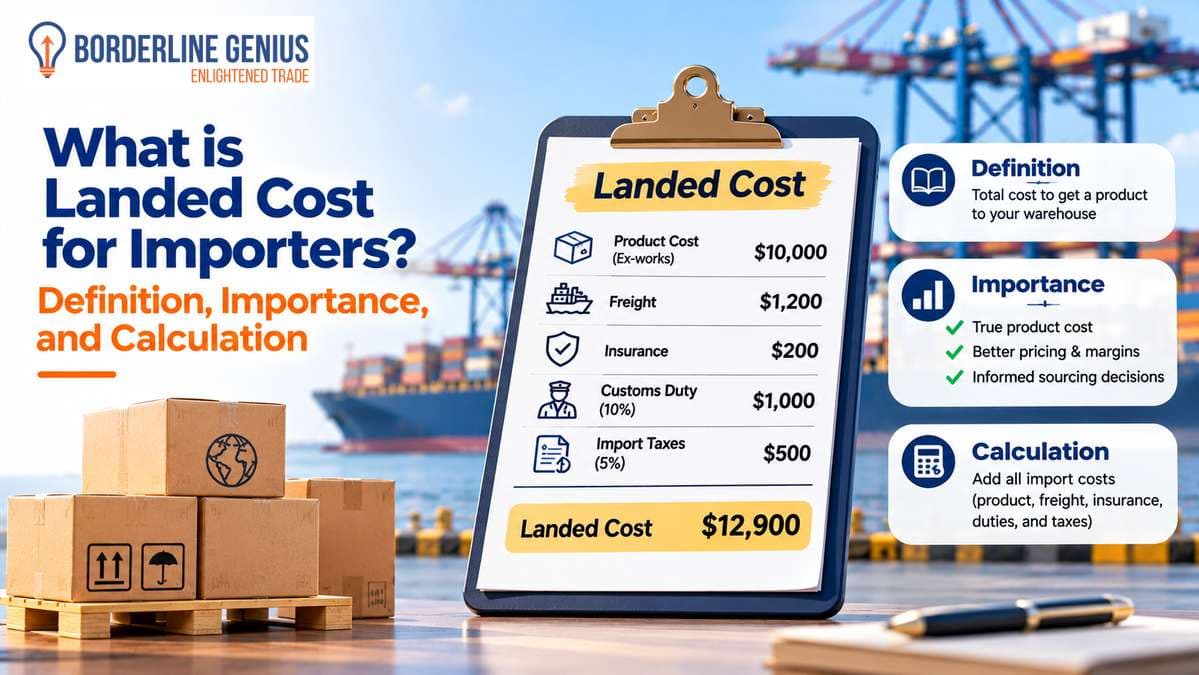
Landed cost is the total expense of bringing a product from its supplier to its final destination. It includes the product’s purchase price and the additional costs required to receive the goods. These expenses can affect the final selling price and overall profit margins. Understanding this cost is important for importers involved in international trade. Importers can use it to evaluate the actual cost of acquiring products. The amount may vary depending on the shipping method and country of origin. Customs duties and product classification can further influence the final value. Its accurate calculation requires finding the relevant expenses and allocating them to the products being shipped.
What Does Landed Cost Mean?
In simple words, landed cost refers to the total cost of acquiring and transporting a product to its intended destination. It includes the purchase price and other expenses incurred during shipping, customs clearance, as well as delivery.
Why is Landed Cost Important for Importers?
Landed cost is important for importers because it helps them understand the total expense of bringing goods into a country. Knowing this amount supports better pricing decisions because a company can account for costs beyond the supplier’s quoted price. This can help in setting prices that cover expenses and maintain expected profit margins.
Understanding total landed cost also helps importers make informed decisions about their purchasing and shipping activities:
-
This value can enable comparing suppliers based on the total cost of importing their products.
-
It can support accurate budgeting and financial planning for international shipments.
-
This cost supports evaluating the profitability of individual products after import-related expenses.
-
It can provide better visibility into transportation and customs-related expenses.
-
Using this, one can identify opportunities to reduce freight, customs, and other supply chain costs.
-
Moreover, it facilitates informed decisions when selecting shipping methods or sourcing locations for imported goods.
What Does Landed Cost Include?
Primarily, landed cost includes the expenses associated with purchasing and delivering goods from a supplier in another country to their intended destination. The exact components may differ depending on the product, shipment, and applicable trade requirements.
Common landed cost components for imported goods include the following:
-
Product purchase price
-
International shipping and freight costs
-
Customs duties and tariffs
-
Insurance costs
-
Customs clearance fees
-
Inland transportation and handling charges
-
Other shipment-related costs
What Factors Affect the Landed Cost of Imported Goods?
Factors like the country of origin can affect the landed cost of imported goods. This is because customs duties may vary depending on where a product is manufactured or produced. The duty rate applicable is determined by the good’s origin under the importing country’s rules.
Other such landed cost factors are inclusive of these:
-
The HS code determines the applicable tariff classification and can affect the duties charged.
-
Air freight may cost more than sea freight, considering the shipment.
-
Longer transportation routes can increase freight and handling expenses.
-
The purchase price can influence customs duties and other charges.
-
Changes in tariff policies may impact the cost of importing certain goods.
-
Changes in exchange rates can influence the amount paid to overseas suppliers.
-
The type and value of articles can have effects on insurance costs.
How to Calculate Landed Cost for Imported Goods?
One can calculate the landed cost for imported goods by adding the purchase price of the goods to all applicable expenses incurred to deliver them to their destination. Businesses should identify the costs associated with a shipment before estimating the total.
Generally, the landed cost formula is:
Landed cost = Product cost + Shipping costs + Insurance + Customs duties + Taxes + Other applicable charges
Steps to Calculate Landed Cost
Landed cost for imported goods can be calculated by following a series of steps that account for the expenses involved in moving goods from the supplier to their final destination. Through this process, the total cost of a shipment can be estimated and the cost per unit can be determined.
-
Start by finding the total purchase price of the products.
-
Add the freight and transportation expenses.
-
Include applicable insurance costs.
-
Calculate customs duties using the relevant classification and tariff information.
-
Add applicable taxes and customs clearance fees.
-
Then include other shipment-related charges.
-
Divide the total landed cost by the number of units for landed cost calculation per unit.
Note: One can also use a landed cost calculator to receive accurate values.
How Does Landed Cost Software Help Calculate Landed Cost for Importers?
Landed cost software helps importers organize shipment expenses and estimate the total cost of acquiring goods. It can provide visibility into the costs associated with a shipment and support consistent calculations. The usefulness of the software is linked to the data and features it provides.
-
Such software can organize product costs and shipment-related expenses.
-
It can review applicable duties and tariffs using product classification information.
-
This system can estimate landed cost for different shipping options.
-
It can compare costs across suppliers or sourcing locations.
-
The software can calculate landed cost per unit for pricing and profitability analysis.
-
Also, it can maintain records of shipment expenses for reporting and review.
Landed Cost Genius for Accurate Landed Cost Calculation
With Landed Cost Genius, businesses can estimate the total cost of importing products using shipment details and current tariff, duty, tax, and shipping information. The landed cost calculation software by Borderline Genius Inc. provides a detailed breakdown of cost components, enabling teams to review import expenses before goods cross borders.
By and Large
Landed cost represents the total expense of acquiring and delivering goods to their destination. For importers, understanding its components is of use for evaluating product costs and making informed pricing decisions. Accurate calculations can eventually support budgeting, profitability analysis, and better supply chain planning for imported goods.
Frequently asked questions
Navigate Global Trade With Greater Confidence
Access expert guidance to help your organization address complex trade, classification, tariff, and compliance challenges.
Talk to a Trade ExpertRelated articles
Keep reading with more guidance on trade compliance and classification.
 Importers & ExportersImport DutyTrade Compliance6 min read
Import Compliance Software: Features that Matter for Importers
Explore essential features of import compliance software that help importers manage regulations, classification, tariffs, and compliance workflows.
Read article 20 min read
How to Calculate Landed Cost for Cross-Border eCommerce?
Learn how to calculate landed cost for cross-border ecommerce, including product costs, shipping, duties, taxes and checkout considerations.
Read article 19 min read
What is Landed Cost? Formula, Components, and How to Calculate it
What is landed cost? Learn the landed cost formula, key components, calculation methods, examples, and how Landed Cost Genius helps simplify import cost analysis.
Read article