
Automated HS Code Classification for Large Product Catalogs
Learn how automated HS code classification works for large product catalogs and how AI, bulk processing, APIs, and review workflows can improve classification.

In the competitive global trade landscape, automated HS code classification is useful for managing high classification volumes with more consistency. Manually classifying a large product catalog becomes difficult when thousands of items require individual research and review. AI, structured product data, and review workflows can make the process more manageable. However, automation should improve efficiency without removing appropriate human oversight. A process through which software handles repetitive classification activities while compliance teams review results that require additional consideration is important. This approach can help limit extensive manual effort while maintaining greater consistency across product classifications and supporting the ongoing management of large catalogs.
What is Automated HS Code Classification?
Automated HS code classification uses software to analyze product information and identify potential codes for goods. It applies classification data and automated processes to handle high volumes of items. Depending on the system, the process may also facilitate research, review, and classification record management.
Why should You Automate HS Code Classification for Large Product Catalogs?
Through manual effort, classifying thousands of products can become difficult to manage because each item may require separate research and review. As their volumes increase, repetitive classification work can consume substantial time. It can make consistent processing harder.
Concerning manual vs. automated HS classification, the new-age approach can resolve such challenges. Besides this, automation can address several other challenges as well.
-
Automated classification can reduce repetitive research across large product catalogs.
-
It can create more consistent processes for handling classification at scale.
-
Bulk HS code lookup can make processing large numbers of goods more efficient.
-
An inventory classification system can connect related activities with broader product management processes.
-
Automated workflows can help teams detect items that need additional review.
How to Automate HS Code Classification at Scale?
Automating HS code classification requires more than processing products in bulk. Businesses should first prepare product information and then establish a workflow for classification, review, integration, and ongoing maintenance.
The following steps provide a practical summary of how businesses can structure the process.
Prepare Product Information
Accurate and sufficiently detailed product information provides the foundation for automated classification. AI HS classification software uses information about goods to identify potential HS codes. Incomplete or inconsistent descriptions can make classification more difficult. So businesses should organize relevant product data before beginning automated processing.
Connect Product Data with Classification Software
The product information should be connected with classification software to process goods without repeatedly entering the same data. An HS code API can also facilitate communication between the software and existing business systems where integration is essential.
Process Products in Bulk
Bulk processing allows businesses to apply a standardized classification workflow across large product catalogs. This can be useful when thousands of goods need to be reviewed within a defined process. Tariff classification in bulk can similarly help manage high-volume classification requirements.
Generate Potential HS Codes
Classification software can analyze available product information and identify potential HS codes. AI can assist this process by evaluating relevant characteristics and classification information of items. The resulting classifications should be treated according to the organization's review requirements rather than automatically accepted in every case.
Review Classification Results
While automated HS code classification is a need, human review remains important when goods are complex or classification information is incomplete. One can establish review workflows that direct uncertain or potentially sensitive classifications to qualified personnel for additional research and validation.
Record Classification Decisions
Recording classification decisions creates a reference for future reviews and helps teams understand how products were classified. Maintaining relevant records can further make it easier to revisit classifications when product information or applicable classification requirements change.
Monitor and Update Classifications
Automated classification should be treated as an ongoing process rather than a one-time exercise. Businesses should review classifications when product details change, or relevant trade information is updated. Regular maintenance helps keep large catalogs aligned with current requirements for assigning HS codes.
How Does Borderline Genius Inc. Help Automate HS Code Classification?
Borderline Genius Inc. helps automate product classification through Classification Genius. The AI-powered classification software is a system that analyzes goods' information to identify potential HS classifications. Then it facilitates research and review when a classification requires additional consideration.
For product classification automation, the software works through several capabilities:
-
Classification Genius uses AI to assess the information of products.
-
It detects potential HS classifications from the available product information.
-
Users can conduct further research within the workflow.
-
The software can spot classifications that may require additional review for trade compliance.
-
API and integration capabilities can connect classification information with business systems.
Benefits of Automating HS Code Classification with Borderline Genius Inc.
Automating classification with Borderline Genius Inc. can reduce the manual effort involved in reviewing large product catalogs. Classification Genius helps users process product data and look for potential HS classifications. Thus, teams can focus their attention on research and review where further consideration is needed.
Other benefits of the automated HS code classification software include:
-
This software can facilitate classification across large catalogs of products.
-
It can lead to a decline in repetitive classification research effort.
-
The system can help identify goods requiring review for trade compliance.
-
It can connect classification information with existing business systems.
-
Also, it can maintain records that improve classification traceability.
Conclusion
Automated HS code classification can assist in managing large product catalogs. Mainly, it limits time and effort in repetitive research and organizing classification workflows. Effective automation depends on accurate product data, suitable software, and appropriate human review. Businesses can, therefore, improve efficiency while retaining oversight of classification-related decisions.
Frequently asked questions
Navigate Global Trade With Greater Confidence
Access expert guidance to help your organization address complex trade, classification, tariff, and compliance challenges.
Talk to a Trade ExpertRelated articles
Keep reading with more guidance on trade compliance and classification.
 Classification GeniusHS ClassificationTrade Compliance5 min read
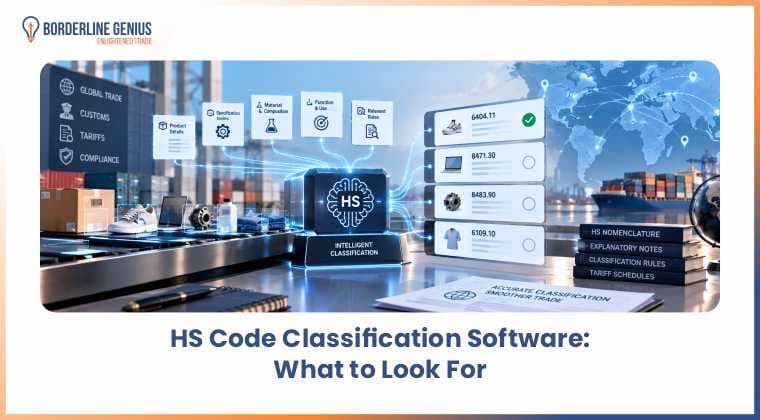
HS Code Classification Software: What to Look For
Find out how to choose HS code classification software by assessing key features that can improve classification accuracy, research, and review.
Read article Classification GeniusHS ClassificationTrade News11 min read
HS 2028: What is Changing, When, and How to Prepare?
As HS 2028 will take effect on 1 January 2028, learn about the key changes, implementation timeline, business impact, and steps to prepare classifications.
Read article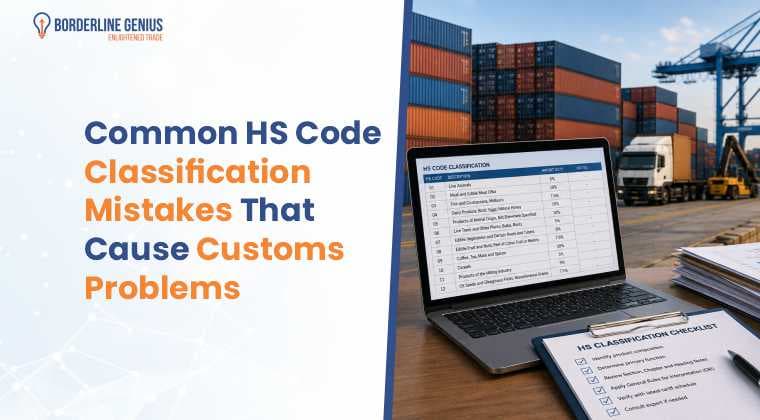 14 min read
Common HS Code Classification Mistakes that Cause Customs Problems
Learn the most common HS code classification mistakes, why they happen, and how businesses can reduce product misclassification, customs delays, and unexpected costs.
Read article