
Global Trade Compliance: A Practical Guide for Importers
Understand global trade compliance for importers and identify requirements that matter, including regulations, documentation, duties, and common mistakes.
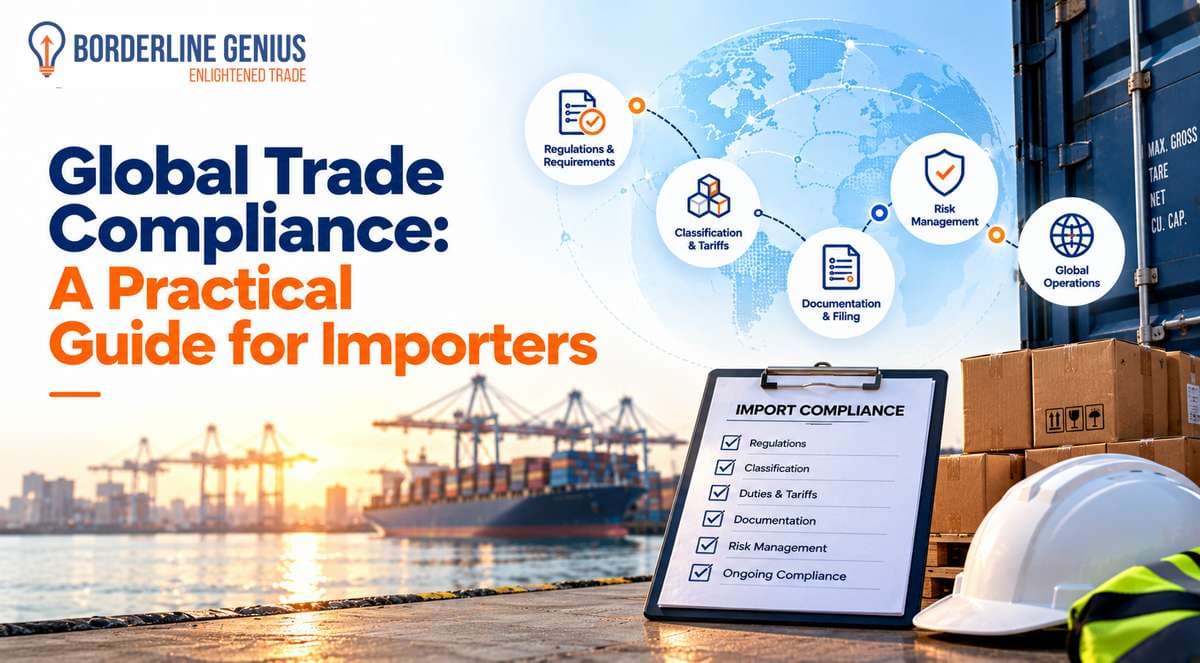
Global trade compliance is essential for businesses importing goods across international borders. Every shipment must meet applicable customs regulations and import requirements. Failure to comply with these can lead to costly penalties and shipment delays. Hence, importers should understand their responsibilities to maintain smooth operations. A systematic compliance process can help them reduce risks and avoid unnecessary expenses. Also, it can support accurate documentation and better supply chain management.
For this, importers should understand global trade compliance and its importance. In addition, they should know the practical steps to meet regulatory requirements to avoid such consequences.
What is Global Trade Compliance?
Simply put, global trade compliance is the practice of adhering to the laws and regulations that govern international trade. For importers, it involves meeting customs requirements, classifying products correctly, and paying applicable duties. The framework also includes maintaining accurate documentation and following relevant trade restrictions.
Why Does International Trade Compliance Matter for Importers?
International trade compliance matters for importers to move goods across borders without unnecessary disruptions. As they follow applicable regulations, they can reduce the risk of penalties and customs delays. Thus, they can prevent fines and additional charges caused by regulatory violations.
-
Besides, this process is important for reducing shipment delays.
-
It can help calculate import duties and taxes more accurately.
-
This framework allows meeting country-specific requirements for importing regulated products.
-
To strengthen supply chain visibility, it plays a key role.
How to Meet Global Trade Compliance Requirements for Importers?
To meet global trade compliance requirements, importers need a consistent process that can manage regulatory obligations across international markets. This starts with understanding destination-country rules and verifying supplier information.
Additionally, importers should maintain accurate documentation and calculate duties correctly. Regular compliance reviews help identify gaps before shipments arrive.
The following measures can make import operations more compliant:
Understanding Import Regulations
For cross-border compliance, research the import regulations of every destination market before shipping goods. Requirements may vary depending on the product category and country of origin. Check applicable permits, certifications, restricted-goods rules, and customs procedures. Consult official government sources to verify current requirements and avoid relying on outdated information.
Ensure Accurate HS Code Classification
To comply with international trade requirements, it is important to know that Harmonized System (HS) codes determine how products are classified for customs purposes. These codes influence applicable duties and may trigger additional regulatory requirements.
Importers should review product specifications, composition, function, and intended use before assigning a code. They should verify the classification against official tariff schedules to reduce errors and prevent incorrect declarations.
Maintain Complete Import Documentation
Prepare accurate commercial invoices, packing lists, and bills of lading for global trade compliance when importing products. Also, collect the certificates of origin and other required documents.
-
The exact essentials depend on the shipment and destination country.
-
Ensure that product descriptions, quantities, values, and country-of-origin details match across records for import compliance.
-
Organize documentation to help customs authorities verify shipments and resolve discrepancies.
Calculate Duties and Taxes Correctly
For import processes to be compliant with international trade regulations, determine the correct customs value and then calculate import duties/taxes. Consider applicable valuation rules, freight costs, insurance, and other required adjustments.
-
Besides, check the relevant tariff rates and available trade agreement benefits.
-
Accurate calculations can prevent underpayment and overpayment.
-
They can further improve landed cost estimates.
Use Global Trade Compliance Software for Importers
Global trade compliance software can assist an importer in managing product classifications and trade regulations. It can help with shipment documentation as well as compliance records in one place.
-
Depending on its capabilities, the software can automate routine checks too.
-
Accordingly, it can flag potential errors.
-
It can improve visibility into regulatory changes.
Note: One should still verify critical decisions against official sources and legal requirements.
Additionally, knowing the best trade compliance practices for importers can simplify meeting these requirements.
5 Common Trade Compliance Mistakes Importers Should Avoid
Incorrect product classification is a common trade compliance mistake that importers should avoid while adhering to important regulations. An inaccurate HS code can result in incorrect duty payments and additional customs scrutiny. Thus, they should review product information carefully before submitting declarations.
Besides this, to maintain international trade compliance, they should refrain from:
-
Using outdated tariff rates or regulatory information.
-
Declaring incorrect customs values for imported goods.
-
Providing inconsistent details across shipping documents.
-
Overlooking import permits and product certification requirements.
-
Misrepresenting the country of origin.
Conclusion
Global trade compliance is a fundamental responsibility for every importer. Businesses should establish clear procedures for classification, documentation, duty calculations, and regulatory checks. Regular audits and the right global trade compliance system can strengthen these efforts. Understanding applicable requirements early can prevent costly mistakes, supporting smoother trade operations.
Frequently asked questions
Navigate Global Trade With Greater Confidence
Access expert guidance to help your organization address complex trade, classification, tariff, and compliance challenges.
Talk to a Trade ExpertRelated articles
Keep reading with more guidance on trade compliance and classification.
 Trade ComplianceTrade Compliance TeamsGenius Workspace7 min read
Trade Compliance Checklist for Importers in 2026
Find an essential trade compliance checklist in 2026 to ensure accurate declarations, consistent compliance checks, and timely identification of requirements.
Read article 17 min read
How are Import Duties Calculated?
Learn how import duties are calculated using product classification, origin, customs value, and quantity. Understand import duty calculations, duty rates, customs valuation, and additional trade measures with practical examples.
Read article 13 min read
Import Compliance: Duties, Taxes & OGA/PGA Rules
Understand import compliance requirements beyond tariffs, including duties, taxes, restrictions, licenses and OGA/PGA requirements.
Read article